What does a Auditor do?
An auditor plays a crucial role in ensuring that financial records are accurate and compliant with regulations. They review and analyze financial documents, such as balance sheets, income statements, and tax returns. Auditors check for any discrepancies or errors in the records. They ensure that the company follows the correct accounting standards. Auditors also assess the internal controls within a company to improve efficiency and reduce risk.
Auditors often work in various environments, including public accounting firms, government agencies, and corporations. They must be detail-oriented and have a strong understanding of financial regulations and laws. Auditors prepare detailed reports of their findings and recommendations. Their work helps companies maintain transparency and accountability. This role is essential for maintaining trust in financial reporting.
How to become a Auditor?
Becoming an auditor is a rewarding career choice that can lead to many opportunities. It requires a mix of education, experience, and certifications. The process involves several steps, each crucial to ensuring a successful transition into this field. Here are five key steps to guide anyone aspiring to become an auditor.
The first step is to gain a solid educational foundation. Most auditors hold a bachelor’s degree in accounting, finance, or a related field. This education provides the essential knowledge needed to understand financial regulations and auditing processes. A degree from an accredited college or university is highly recommended. Additionally, completing coursework in business and economics can be beneficial.
- Earn a Bachelor's Degree: Obtain a degree in accounting, finance, or a related field. This is the basic requirement for most entry-level auditor positions.
- Gain Relevant Experience: Work in accounting or a related area to build practical skills. Internships and entry-level jobs can be very helpful.
- Obtain Certification: Consider getting certified as a Certified Public Accountant (CPA) or Certified Internal Auditor (CIA). These certifications enhance credibility and job prospects.
- Develop Technical Skills: Learn to use accounting software and other tools commonly used in auditing. Familiarize yourself with data analysis and financial reporting.
- Pursue Continuing Education: Stay updated with the latest trends and regulations in the auditing field. Attend workshops and take additional courses.
How long does it take to become a Auditor?
The path to becoming an auditor offers a rewarding career in finance and accounting. Most auditors start with a bachelor's degree. This step typically takes four years. Many choose to study accounting, finance, or business administration.
After earning a degree, the next step involves gaining experience. Many auditors complete internships or entry-level positions in accounting. This experience can last from one to three years. Some auditors choose to earn a master's degree or a professional certification, such as the Certified Public Accountant (CPA) or Certified Internal Auditor (CIA). These certifications can take additional time, usually a year or more. Finally, auditors may need to pass an exam to become licensed. Each state has different requirements, but this process can take several months. In total, most auditors complete their education and certification in five to eight years.
Auditor Job Description Sample
We are seeking a meticulous and detail-oriented Auditor to join our team. The Auditor will be responsible for conducting internal and external audits, ensuring compliance with regulations, and recommending improvements to processes and systems.
Responsibilities:
- Conduct comprehensive internal and external audits to ensure compliance with regulations and policies.
- Review financial statements, records, and operational procedures to ensure accuracy and efficiency.
- Identify areas of improvement and provide recommendations for process enhancements.
- Collaborate with various departments to understand business operations and risks.
- Prepare detailed audit reports and present findings to senior management.
Qualifications
- Bachelor's degree in Accounting, Finance, or related field.
- Certifications such as CPA, CIA, or CISA are highly desirable.
- Minimum of 3-5 years of experience in auditing or a related role.
- Strong analytical and problem-solving skills.
- Excellent attention to detail and accuracy.
Is becoming a Auditor a good career path?
A career as an auditor offers a clear path and often a strong foundation for those interested in finance, accounting, and compliance. Auditors review financial records and ensure they comply with regulations. This role can lead to various specializations, including internal, external, and government auditing. Auditors may work for public accounting firms, corporations, or government agencies.
Pursuing this career path involves gaining qualifications such as a bachelor’s degree in accounting or a related field, and passing the Certified Public Accountant (CPA) exam. Auditors benefit from strong analytical skills, attention to detail, and the ability to communicate complex information clearly. Opportunities for advancement include positions such as audit manager, compliance officer, or even higher executive roles within finance departments.
Choosing a career as an auditor has both benefits and challenges. Here are some pros and cons to consider:
- Pros:
- Opportunities for career growth and advancement
- Stability and demand in various sectors
- Strong earning potential
- Variety of specializations and industries to work in
- Cons:
- Potential for high-pressure environments, especially during audit periods
- Long hours, particularly during tax season or financial reporting deadlines
- Requirement to keep up with changing regulations and standards
- Sometimes limited opportunities for creativity compared to other roles
What is the job outlook for a Auditor?
Becoming an auditor can lead to a rewarding career path, with consistent job opportunities and solid compensation. Each year, the Bureau of Labor Statistics (BLS) reports around 126,500 job positions for auditors. This consistent demand ensures that job seekers have ample opportunities to explore. Additionally, the BLS predicts a 4.4% job opening change from 2022 to 2032, indicating a steady and optimistic outlook for those pursuing this career.
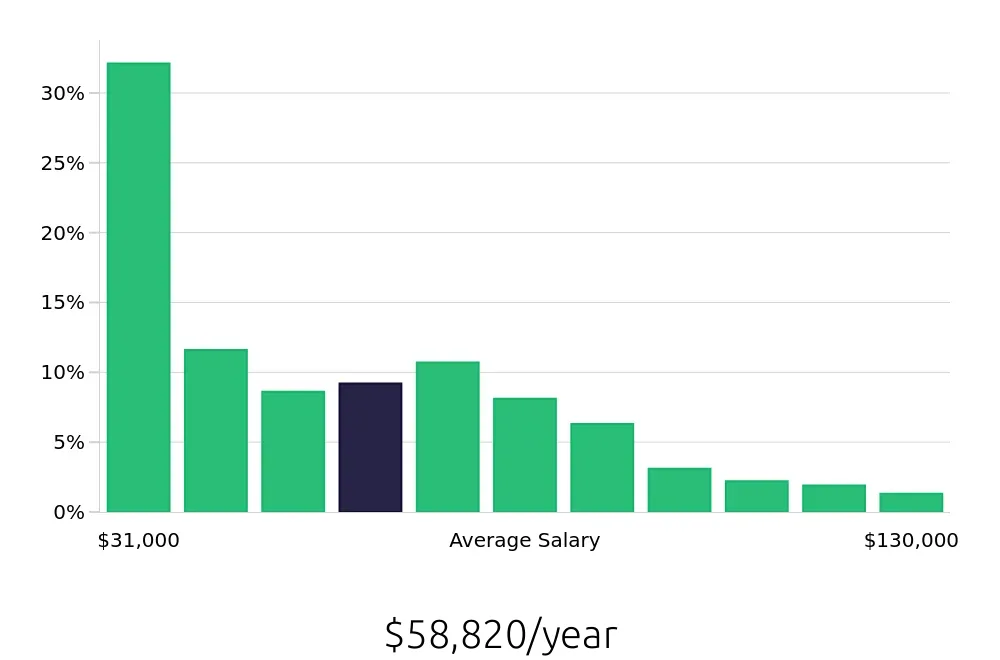
For those considering a career in auditing, the financial rewards are compelling. The average national annual compensation for auditors stands at $90,780, as reported by the BLS. This figure highlights the potential for a stable and lucrative income. Moreover, the average national hourly compensation for auditors is $43.65, further underscoring the value of this profession. These figures make auditing an attractive option for job seekers focused on both career growth and financial security.
Auditing offers not just a job but a career with clear advancement opportunities. The structured nature of the profession often leads to promotions and higher responsibilities. Job seekers can look forward to a path filled with potential for both personal and professional development. With a solid job outlook, competitive compensation, and clear career progression, auditing stands out as a viable and attractive career choice.
Currently 1,125 Auditor job openings, nationwide.
Continue to Salaries for Auditor