What does a Bartender do?
A bartender mixes and serves drinks to customers in bars, restaurants, and other food service settings. This role requires a friendly and efficient approach to customer service, as well as a good knowledge of beverages and mixology. A bartender interacts with guests, takes drink orders, prepares cocktails, and ensures each customer has a satisfying experience.
The duties of a bartender go beyond just preparing drinks. This role also involves managing inventory, keeping the bar area clean, and sometimes helping with other food service tasks. A good bartender must be quick on their feet, able to handle multiple tasks at once, and always maintain a professional demeanor. Bartenders work in dynamic environments, often during evenings and weekends, which can be both exciting and demanding.
How to become a Bartender?
Becoming a bartender can be a fulfilling career choice for those who enjoy a fast-paced environment and interacting with people. This profession not only offers a chance to develop excellent customer service skills but also provides opportunities for growth and advancement. The journey to becoming a bartender involves several key steps that ensure you are well-prepared for this role.
First, it's important to understand the skills and qualifications required. Bartenders need to be knowledgeable about different types of drinks, mixology techniques, and cocktail recipes. They also must be able to handle multiple tasks at once, such as taking orders, serving drinks, and handling payments. Here are the essential steps to embark on this career path:
- Learn the Basics: Start by learning the fundamentals of bartending. This includes understanding various alcoholic beverages, non-alcoholic options, and how to properly mix and serve drinks.
- Gain Experience: Look for entry-level positions in bars, restaurants, or cafes. Gaining hands-on experience is crucial to developing your skills and confidence.
- Consider Certification: While not always mandatory, completing a bartending course can enhance your resume. Certification programs often cover safety, responsible serving, and advanced mixology techniques.
- Develop Customer Service Skills: A bartender must be friendly and attentive. Excellent communication and interpersonal skills are key to ensuring customer satisfaction.
- Network and Apply: Connect with professionals in the industry. Attend bartending events and apply for jobs at various establishments to increase your chances of employment.
How long does it take to become a Bartender?
Pursuing a career as a bartender offers a vibrant and dynamic work environment. Learning how long it takes to master this role can guide job seekers in their planning. Typically, becoming a skilled bartender requires a mix of formal training and hands-on experience.
First, most aspiring bartenders start with formal education. This often includes a mix of classroom instruction and behind-the-bars practice. Many opt for a bartending course at a vocational school or a community college. These programs last from a few weeks to several months. They cover essential skills like mixology, drink presentation, and customer service. After completing a course, graduates may have a solid foundation. However, gaining real-world experience remains crucial to becoming truly proficient.
Practical experience can vary greatly. Some new bartenders start as barbacks, learning the ropes while assisting more experienced staff. Others take entry-level positions in restaurants or bars. Bartenders often complete a few hundred hours of practice before feeling fully confident. This journey may take several months to a year. Those who continue to learn and refine their craft can advance quickly. Each shift brings new challenges and opportunities to hone their skills.
Bartender Job Description Sample
We are seeking a skilled and energetic Bartender to join our team. The ideal candidate will have a passion for mixology and a keen eye for detail. They will be responsible for creating and serving a wide range of alcoholic and non-alcoholic beverages, ensuring a high level of customer satisfaction.
Responsibilities:
- Prepare and serve a variety of cocktails, beers, wines, and non-alcoholic beverages.
- Maintain a clean and organized bar area, including glassware, equipment, and supplies.
- Monitor inventory levels and notify management of low stock or expired products.
- Upsell food and beverage items to customers to increase sales.
- Manage cash, credit, and gift card transactions accurately.
Qualifications
- Previous experience as a Bartender or in a similar role.
- Knowledge of various types of alcohol and non-alcoholic beverages, including proper preparation and serving techniques.
- Excellent interpersonal and communication skills.
- Ability to multitask and work well under pressure.
- Strong attention to detail and accuracy in measurements and transactions.
Is becoming a Bartender a good career path?
Bartending offers an exciting career path with a vibrant social environment. Bartenders mix and serve drinks in bars, restaurants, and events. They need good attention to detail to ensure drinks are prepared correctly. Creativity plays a role in crafting unique cocktails. Customer service skills are essential, as bartenders interact closely with patrons. This job can be fast-paced, especially during busy hours.
Choosing a career as a bartender has both advantages and challenges. It allows for flexibility in work hours and often offers opportunities to work in dynamic settings. Bartenders can earn tips, which can boost income. This job also provides the chance to learn from experienced professionals. However, the work can be physically demanding and requires standing for long periods. Shifts can be irregular, including evenings and weekends. Despite these challenges, the role can be highly rewarding for those who enjoy social interaction and creativity in a lively atmosphere.
Consider these pros and cons when thinking about a career in bartending:
- Pros:
- Vibrant and social work environment
- Opportunities for creativity in drink preparation
- Potential for flexible work hours
- Chance to earn tips
- Cons:
- Physical demands of standing for long periods
- Irregular and potentially late work hours
- Fast-paced work during busy times
What is the job outlook for a Bartender?
Becoming a bartender offers a promising career path with a steady job market. The Bureau of Labor Statistics (BLS) reports that there are about 113,500 job positions available each year. This steady demand indicates a reliable career for those interested in hospitality. Bartenders can find opportunities in a variety of settings, from restaurants and bars to hotels and event venues.
Job outlook for bartenders is also positive, with a projected growth of 3.3% from 2022 to 2032. This growth suggests more opportunities will open up over the next decade. Bartenders can expect a stable career with potential for advancement. With the right skills and experience, bartenders can move into management roles or specialize in craft cocktails and mixology.
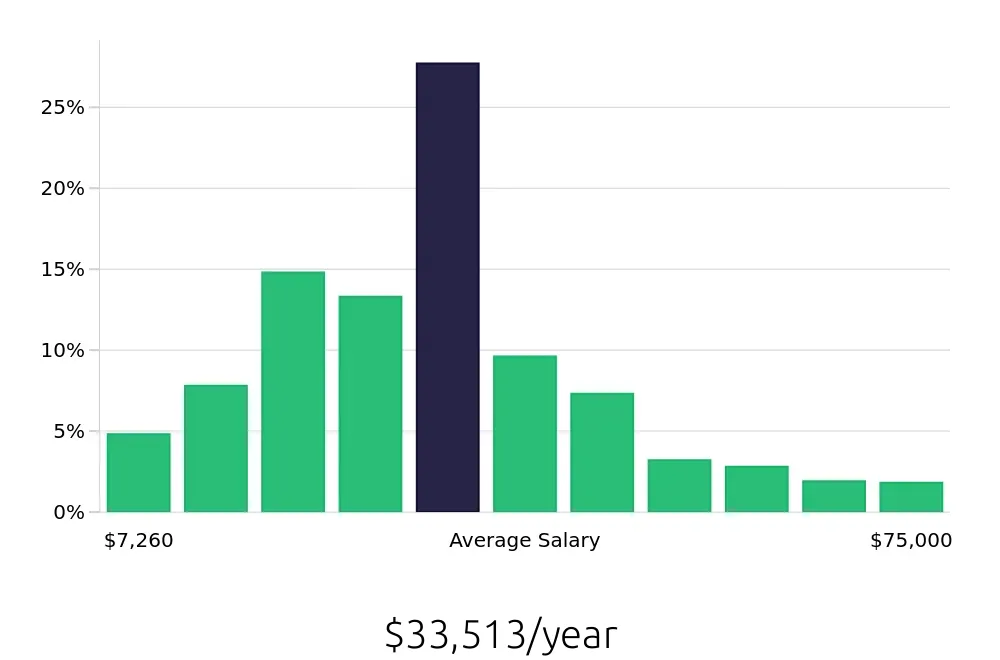
While the average national annual compensation for bartenders is about $37,090, the hourly rate stands at $17.83. This pay reflects the skills and service bartenders provide. Bartenders often earn tips, which can significantly boost their earnings. Those who excel in customer service and have a passion for mixology may find even greater earning potential in this field.
Currently 6,190 Bartender job openings, nationwide.
Continue to Salaries for Bartender