What does a Calibration Technician do?
A Calibration Technician plays a vital role in ensuring the precision of various measuring instruments and equipment. They perform regular checks and adjustments to guarantee that devices provide accurate results. This position demands a keen eye for detail and a thorough understanding of both mechanical and electronic systems.
Responsibilities typically include the calibration of instruments such as gauges, thermometers, and sensors. The technician uses specialized equipment to measure and adjust these instruments. They also document every calibration process, maintain detailed records, and ensure compliance with industry standards. The goal is to prevent measurement errors, which can lead to costly mistakes and inefficiencies in production or testing environments. This position requires precision, technical knowledge, and the ability to follow strict protocols.
How to become a Calibration Technician?
Becoming a Calibration Technician involves a clear and structured process that ensures individuals are well-prepared for this specialized role. This career path requires specific skills and knowledge, making the journey both educational and rewarding.
The process includes several steps, each essential for developing the necessary expertise. First, one must obtain a high school diploma or equivalent. This foundational education is crucial for understanding the principles that will be applied in calibration work. Second, gain relevant experience through internships or entry-level positions in related fields. This hands-on experience is key to learning the practical aspects of the job.
- Education and Training: Start with a high school diploma. Consider taking courses in math, science, and technology.
- Gain Experience: Work in related fields to build skills and knowledge. Internships can be very helpful.
- Certification: Pursue certification through recognized organizations. This step enhances credibility and job prospects.
- Specialization: Focus on specific types of equipment or industries. Specialization can open up niche opportunities.
- Continued Learning: Stay updated with the latest technologies and techniques. Attend workshops and courses.
Professional development is continuous in this field. Certification from accredited bodies like the National Institute of Standards and Technology (NIST) is highly recommended. Specialization in areas such as electrical, mechanical, or optical devices can make a candidate more competitive. Finally, investing in ongoing education ensures that a Calibration Technician remains at the forefront of the industry.
How long does it take to become a Calibration Technician?
To start a career as a Calibration Technician, individuals can expect a path that combines education, training, and experience. The time it takes can vary depending on several factors. Most people complete a certificate or associate's degree in a related field, which usually takes about one to two years. These programs provide foundational knowledge in measurement science and technology.
After completing formal education, new technicians often gain practical experience through apprenticeships or entry-level jobs. This on-the-job training can last from several months to a couple of years. Gaining certification can further enhance job prospects and often requires passing exams. Employers often value certified technicians, making this step important for career growth. In total, becoming a fully qualified Calibration Technician may take between two to four years, combining education, training, and certification.
Calibration Technician Job Description Sample
A Calibration Technician is responsible for ensuring that all measurement and testing equipment is accurate and reliable. They perform calibrations, maintenance, and repairs on various instruments and tools to meet industry standards and regulatory requirements.
Responsibilities:
- Perform calibrations and adjustments on a variety of equipment including gauges, instruments, and tools using calibration equipment.
- Conduct routine maintenance and repairs on calibration equipment.
- Document calibration processes, adjustments, and maintenance activities in accordance with regulatory standards and company policies.
- Develop and maintain calibration schedules and records to ensure equipment is serviced on time.
- Collaborate with engineering, production, and quality assurance teams to ensure all equipment meets required specifications and standards.
Qualifications
- High school diploma or equivalent required; associate's degree in electronics, instrumentation, or a related field preferred.
- Minimum of 2-4 years of experience in calibration or a related field.
- Strong understanding of calibration principles and practices, as well as knowledge of industry standards and regulations.
- Proficiency in using calibration equipment and tools, including micrometers, calipers, and oscilloscopes.
- Excellent problem-solving skills and attention to detail.
Is becoming a Calibration Technician a good career path?
The role of a Calibration Technician involves working with precision instruments to ensure that equipment functions correctly. This career offers a mix of technical challenges and problem-solving opportunities. Technicians often work in laboratories, manufacturing plants, and other specialized environments. They adjust, test, and certify instruments, playing a critical role in maintaining quality control across various industries.
Becoming a Calibration Technician has its advantages and drawbacks. Each potential employer has unique requirements, but skills in mathematics, attention to detail, and a solid understanding of scientific principles are often necessary. Technicians enjoy the opportunity to work independently and as part of a team, often handling a variety of tasks that keep the job interesting.
- Pros:
- Steady employment with a growing demand for skilled technicians.
- Opportunities to work in various industries, including manufacturing and healthcare.
- Potential for career advancement into supervisory or management roles.
- Cons:
- Requires precision and accuracy, which can be stressful.
- May involve working in environments with hazardous materials or conditions.
- Often requires ongoing education and certification to stay current with industry standards.
What is the job outlook for a Calibration Technician?
The job outlook for Calibration Technicians looks strong, with an average of 37,800 positions available each year, according to the Bureau of Labor Statistics (BLS). This steady demand shows that companies continue to value skilled professionals who ensure equipment operates accurately. Job seekers can expect a 1.8% increase in openings from 2022 to 2032, signaling a positive trend in this field.
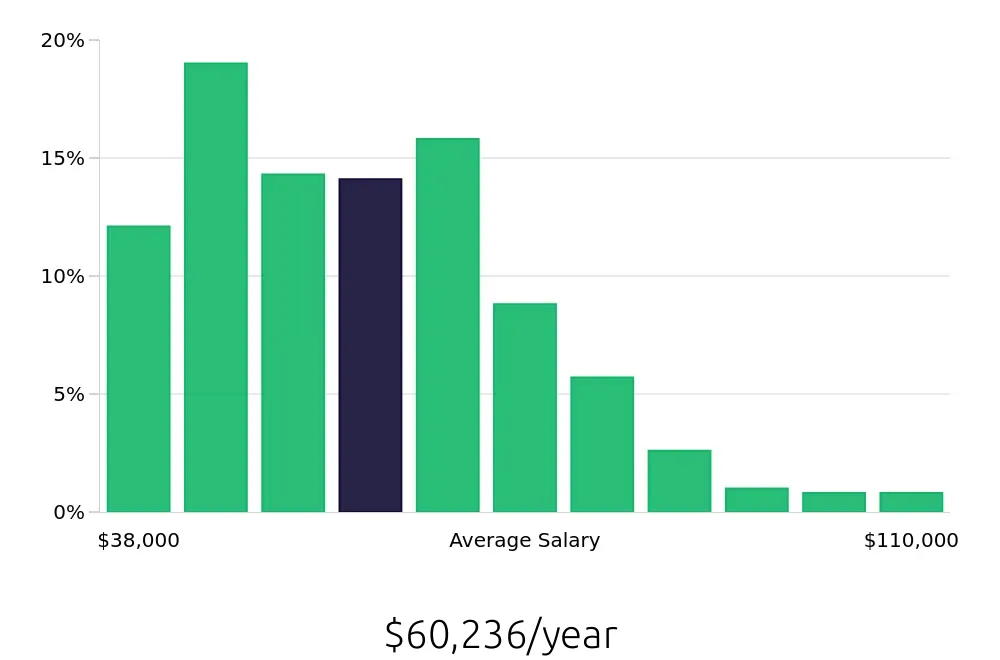
Calibration Technicians earn a competitive salary, with an average national annual compensation of $70,080, as reported by the BLS. This figure highlights the value employers place on their expertise and the importance of precision in various industries. Additionally, the average hourly wage stands at $33.69, providing a clear picture of the financial rewards for those entering or advancing in this career.
For job seekers, the prospects in this field are promising. With a stable number of annual job openings and a growing demand for accurate equipment, becoming a Calibration Technician offers both job security and a rewarding salary. The combination of consistent job opportunities and a favorable compensation package makes this a viable career path for many professionals.
Currently 345 Calibration Technician job openings, nationwide.
Continue to Salaries for Calibration Technician