What does a Corrections Officer do?
A Corrections Officer plays a key role in maintaining safety and order within a correctional facility. This individual supervises inmates, ensuring they follow rules and regulations. Officers also conduct regular checks to prevent security issues. They work closely with other staff to address any behavioral problems among inmates. The position requires a strong sense of responsibility and the ability to handle stressful situations.
In addition to supervision, a Corrections Officer prepares and reviews reports. This includes documenting incidents and inmate behavior. Officers may also assist with the intake process, ensuring new inmates have what they need. This position demands excellent communication skills and the ability to remain calm under pressure. A Corrections Officer must also be trained in emergency procedures to handle situations like riots or escapes. This role is crucial for the smooth operation of the correctional facility.
How to become a Corrections Officer?
Becoming a Corrections Officer offers a rewarding career path. This job involves ensuring safety and security in prisons and jails. It requires dedication and a strong sense of responsibility. Follow these steps to begin your journey in corrections.
First, check the eligibility requirements. Ensure you meet the age and education criteria. Most agencies require a high school diploma or GED. Look for any additional requirements, such as a clean criminal record. Some agencies may require a certain level of physical fitness. Prepare early by meeting these criteria.
- Education and Training: Complete the required education. This often includes courses in criminal justice or related fields. Some agencies offer on-the-job training. Look for academies that provide comprehensive training programs.
- Pass the Physical Exam: Prepare for a physical fitness test. This test often includes running, push-ups, and other exercises. Training beforehand can help you pass this test with ease.
- Background Check: Undergo a thorough background check. This process can take several weeks. Be honest and thorough when completing this part of the application.
- Written Test: Take a written examination. This test evaluates your knowledge of criminal justice and law enforcement. Study well in advance to increase your chances of success.
- Interview: Prepare for a job interview. Practice common interview questions. Dress professionally and arrive on time. Show your dedication and willingness to serve the community.
With these steps, you can start your career as a Corrections Officer. Follow these guidelines to secure your place in this vital role. Commitment and hard work will lead to a fulfilling career in corrections.
How long does it take to become a Corrections Officer?
To start a career as a Corrections Officer, one must first complete a training program. This training can take several months. Corrections Officers must go through both classroom and on-the-job training. Classroom training covers important topics like laws and emergency response. On-the-job training happens at a correctional facility. Trainees learn how to manage inmates and handle security issues.
After finishing training, new officers enter a probation period. This period can last anywhere from six months to two years. During this time, officers must prove they can handle the job. They work closely with experienced officers who guide them. The probation period often ends with a final evaluation. Passing this evaluation means the officer becomes fully certified. This certification allows them to work independently as a Corrections Officer.
Corrections Officer Job Description Sample
Corrections Officers are responsible for maintaining security and order within correctional facilities, ensuring the safety of inmates, staff, and the public, and enforcing institutional rules and regulations.
Responsibilities:
- Monitor and supervise inmates to prevent unauthorized activities.
- Conduct regular rounds of the facility to ensure security and order.
- Respond to emergencies and disturbances within the facility.
- Maintain accurate records of inmate behavior, activities, and incidents.
- Prepare reports and documentation related to inmate behavior and facility operations.
Qualifications
- A high school diploma or equivalent is required.
- Completion of a training program in corrections or a related field is preferred.
- Must have a valid driver’s license and a clean driving record.
- Physical fitness and the ability to pass a physical fitness test.
- Background check and clearance from law enforcement agencies.
Is becoming a Corrections Officer a good career path?
Working as a Corrections Officer involves ensuring safety and order within a correctional facility. This role requires vigilance, discipline, and a strong moral compass. Officers must maintain a safe environment for both inmates and staff. They oversee daily activities, manage security, and enforce rules. This job demands attention to detail and the ability to handle stressful situations.
Corrections Officers play a critical role in the criminal justice system. They interact with individuals who have committed crimes, which can be challenging. The job provides a sense of purpose and the opportunity to make a difference in people's lives. It can also offer job stability and the chance for career advancement. However, it is important to consider the pros and cons before pursuing this career path.
Here are some pros of being a Corrections Officer:
- Job security and stability
- Opportunities for career advancement
- Potential to make a difference in people's lives
- Competitive salary and benefits
- Sense of purpose and community service
On the other hand, there are some cons to think about:
- Exposure to stressful and sometimes dangerous situations
- Long and irregular hours, including nights and weekends
- Potential for emotional strain due to interactions with inmates
- Physical demands of the job
- Limited opportunities for interaction with the public
What is the job outlook for a Corrections Officer?
Becoming a corrections officer presents a unique opportunity in a stable career path. According to the Bureau of Labor Statistics (BLS), about 30,900 positions open up each year. This number may change slightly, but the field remains steady. Understanding these trends helps job seekers make informed choices about their career paths.
The outlook for corrections officers shows some changes ahead. The BLS predicts a -7.3% change in job openings from 2022 to 2032. While this may sound like a decline, it is important to note that the field remains essential. Therefore, those interested in this career can still find many opportunities.
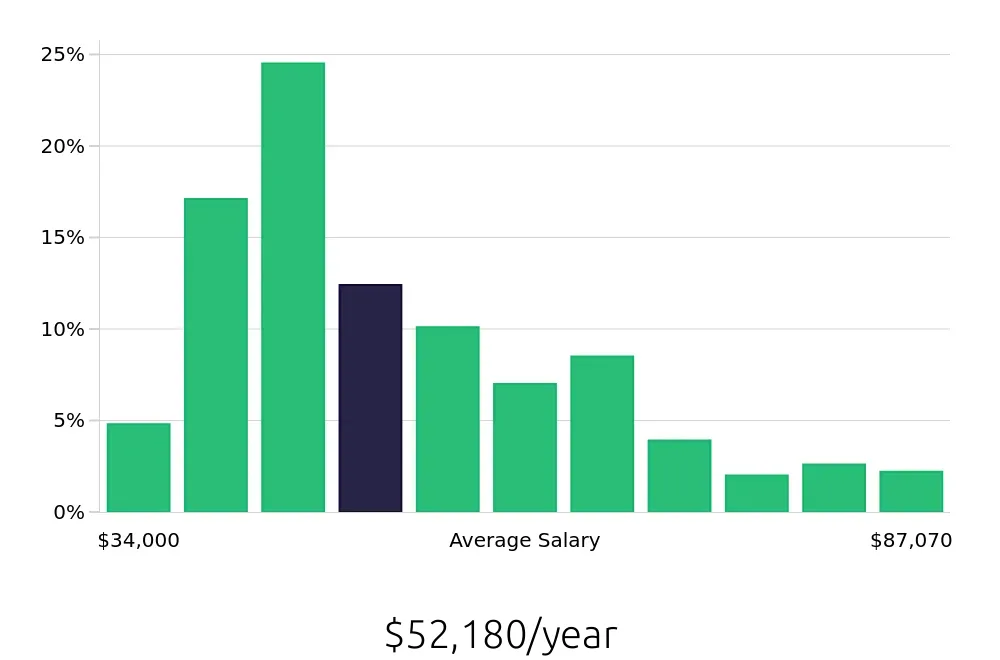
Prospective corrections officers can also look forward to a solid salary. The average national annual compensation stands at $58,790, according to the BLS. This figure highlights the financial rewards of this career. Hourly compensation averages $28.27, offering a clear view of earnings potential. These figures make corrections a viable and rewarding career choice.
Currently 705 Corrections Officer job openings, nationwide.
Continue to Salaries for Corrections Officer