Position
Overview
A Grocery Clerk plays an essential role in retail environments. They help keep shelves stocked and organized, ensuring customers can easily find what they need. Grocery Clerks handle a variety of tasks including stocking shelves, organizing products, and maintaining a clean store environment. They also assist customers with inquiries and sometimes operate cash registers.
Grocery Clerks need strong attention to detail to ensure products are placed correctly and neatly. They should be comfortable with repetitive tasks but also enjoy interacting with customers. This position requires a basic understanding of retail operations and often includes early morning and weekend hours. A friendly demeanor and a commitment to customer service are key strengths for success in this role.
Becoming a grocery clerk offers a rewarding career in the retail sector. This role involves working in a fast-paced environment, helping customers, and managing stock. Here are five steps to start your journey in this field.
First, check the job requirements. Most grocery stores need candidates with a high school diploma or equivalent. Some employers may prefer experience in customer service or retail. Having a friendly personality and good communication skills will help in this role.
Pursuing a career as a Grocery Clerk offers a straightforward path with a manageable timeline. Generally, the journey to this role takes a few months to a year, depending on the individual's prior experience and educational background. Some grocery stores may require formal training, which usually lasts from a few weeks to a couple of months. Others might offer on-the-job training, allowing new hires to learn as they go.
Individuals with no prior experience in retail or customer service can expect to spend more time in training. This training covers basic tasks like operating cash registers, stocking shelves, and handling customer inquiries. A high school diploma or equivalent is often the only formal education needed. For those with previous experience in similar roles, the transition to a Grocery Clerk position can be quicker. Many grocery stores value the skills and knowledge gained from related jobs, such as cashier, stock clerk, or customer service representative. This experience can reduce the training period significantly.
A Grocery Clerk is responsible for assisting customers, maintaining store inventory, and ensuring the overall cleanliness and organization of the grocery department. This role requires attention to detail, excellent customer service skills, and the ability to work efficiently in a fast-paced environment.
Responsibilities:
Qualifications
Working as a Grocery Clerk offers a stable career with various opportunities. Grocery Clerks help customers by checking out groceries, bagging items, and ensuring the checkout area stays organized. This role often requires interacting with many people each day, making it a great choice for those who enjoy social work. Additionally, many grocery stores offer flexible hours, which can be convenient for those balancing other commitments.
The job has its pros and cons. On the positive side, it often requires minimal formal education, making it accessible to a wide range of people. Most grocery stores also provide on-the-job training. This career can be a stepping stone to other roles within the retail or grocery industry. However, the job may involve long hours, sometimes early mornings or late evenings. The work can be repetitive and physically demanding, which may not suit everyone. Pay in this role tends to be modest, but it provides a good foundation for those starting in the workforce or looking to gain retail experience.
The job market for grocery clerks offers stable opportunities for job seekers. According to the Bureau of Labor Statistics (BLS), there are around 581,200 job positions available each year. This role is accessible and frequently in demand across various retail settings. Aspiring grocery clerks can find numerous openings nationwide.
Job outlook data from the BLS indicates a projected decline of 10.4% in job openings for grocery clerks from 2022 to 2032. Despite this expected decrease, the role remains a cornerstone in the retail industry. This decline may reflect changes in automation and retail trends, but positions will still be available.
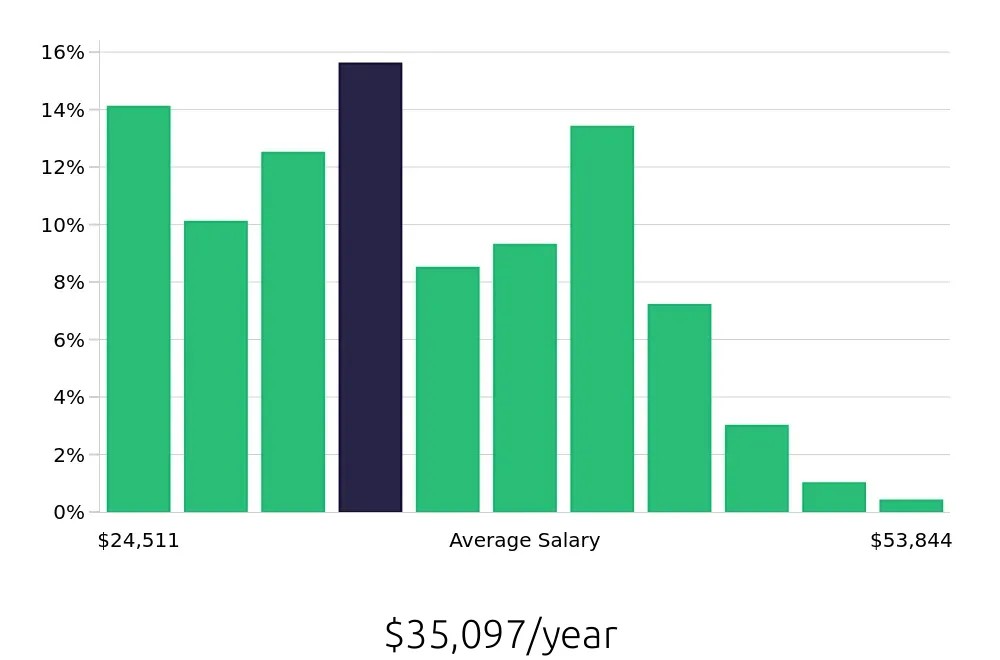
The average annual salary for grocery clerks stands at $30,750, with an hourly wage of $14.78. This compensation reflects the essential role these workers play in the retail sector. Job seekers can look forward to competitive wages and the chance to build a stable career in retail. For more details, visit the BLS website.