Position
Overview

What does a Host do?

A Host plays a key role in ensuring guests have a welcoming and enjoyable experience. They greet visitors as they arrive and guide them to their destination. A Host answers questions, provides information about the facility or event, and offers assistance as needed. They maintain a friendly and professional demeanor, addressing any concerns promptly. Hosts often coordinate with other staff to ensure smooth operations and guest satisfaction.

Responsibilities include managing reservations, checking guests in and out, and maintaining accurate records. They also handle phone calls, emails, and other forms of communication to support guests before their visit. A Host collaborates with different departments to handle special requests or needs. Their primary goal is to make each guest feel valued and welcome, contributing to a positive overall experience.

View Host jobs nearby

How to become a Host?

Becoming a host is an exciting career path. It offers flexibility and the chance to meet new people. To succeed, follow these steps. Each step is important and builds on the one before it.

Start with research. Know what hosting means in your area. Understand the rules and what guests expect. Learn from others who have done it before. This knowledge is the foundation of your success.

  1. Create a listing. Use a popular platform to list your space. Make it attractive and honest. Include clear photos and a detailed description.
  2. Set your prices. Research what similar spaces charge. Price your space to be competitive yet fair.
  3. Prepare your space. Clean thoroughly and make it welcoming. Think about the needs of your guests. Small details make a big difference.
  4. Market your listing. Share it on social media and with friends. Use online ads to reach more people. The more people see your listing, the better.
  5. Manage your bookings. Communicate clearly with guests. Be ready to help them with any questions. Good customer service keeps guests coming back.

How long does it take to become a Host?

With the right education and training, one can become a host in as little as a few months. Most positions require a high school diploma and some customer service experience. Some roles may demand additional certifications or training, which can extend the timeline. Training and certifications can come from community colleges, vocational schools, or online platforms. Many hosts also gain experience through part-time jobs in the service industry, which can speed up the process. The exact time varies based on the individual’s background and the specific requirements of the job.

The journey to becoming a host offers flexibility and potential for personal growth. The timeline varies depending on the type of hosting role one aims to pursue. For those interested in becoming a short-term rental host, such as on platforms like Airbnb, preparation can begin almost immediately.

Firstly, one needs to secure a property. This may involve buying or renting a space suitable for hosting. Preparation includes cleaning, furnishing, and possibly renovating the property to meet guest expectations. Once ready, registering on a platform takes a few hours. Hosts must then set competitive rates and write appealing descriptions. After these initial steps, the property can list and start receiving bookings. The full learning curve, from setting up to mastering guest interactions, typically spans a few months to a year. Continuous learning and adapting to guest feedback enhance hosting skills over time.

For those aspiring to become event hosts or conference facilitators, additional steps are involved. This path often requires formal education, such as a degree in hospitality, event management, or a related field. This academic journey can take two to four years. During these years, students gain knowledge in areas like event planning, marketing, and customer service. After completing education, gaining experience through internships or entry-level positions is crucial. Networking and building a professional reputation help in securing higher-level hosting roles. With experience, hosts can manage larger and more complex events, often requiring several years of dedicated work and continual professional development.

Host Job Description Sample

The Host is responsible for greeting guests, ensuring they have a positive experience, and managing reservations. This role requires a friendly and professional demeanor, excellent communication skills, and the ability to handle multiple tasks in a fast-paced environment.

Responsibilities:

  • Welcome and greet guests upon arrival, providing exceptional customer service.
  • Manage reservations and seating arrangements efficiently.
  • Take and communicate food and beverage orders to the kitchen staff.
  • Provide recommendations and answer questions about the menu.
  • Handle payment transactions and provide receipts.

Qualifications

  • High school diploma or equivalent required; additional education in hospitality or related field is a plus.
  • Previous experience as a Host or in a similar role.
  • Excellent communication and interpersonal skills.
  • Ability to multitask and remain composed under pressure.
  • Strong organizational and time management skills.

Is becoming a Host a good career path?

Working as a host provides a unique blend of customer service and restaurant management skills. This role often involves greeting guests, seating them, and ensuring they have everything they need. Hosts must be friendly and professional at all times. They work closely with servers and kitchen staff to keep the flow smooth. This job can lead to opportunities in management.

There are several pros and cons to consider when thinking about a career as a host. One advantage is the chance to interact with many different people every day. This can be enjoyable for those who love meeting new people. Another benefit is the potential to learn valuable skills in customer service and communication. Hosts also often get to work in a fast-paced environment, which can be exciting. However, there are some downsides to consider. One major con is the potential for long hours, including evenings, weekends, and holidays. The job can also be physically demanding, as hosts spend a lot of time standing. Additionally, the pay can be low, especially in entry-level positions.

Here are some pros and cons to think about:

  • Pros:
  • Opportunities to meet new people
  • Skills in customer service and communication
  • Exciting, fast-paced work environment

And here are some cons:

  1. Cons:
  2. Long hours, including evenings, weekends, and holidays
  3. Physically demanding work
  4. Potentially low pay, especially for entry-level positions

What is the job outlook for a Host?

Job seekers looking to become a host will find plenty of opportunities in the years to come. According to the Bureau of Labor Statistics (BLS), there are about 104,200 job positions available each year. This means that new openings arise regularly, giving job seekers a solid chance to secure employment. Additionally, the BLS projects a 0.5% growth in job openings from 2022 to 2032, indicating a stable and growing job market for hosts.

The BLS reports an average national annual compensation of $30,750 for hosts. While this is not the highest paying job, it offers a stable income with room for growth. The average national hourly compensation stands at $14.78, providing a realistic financial outlook for those entering the field. Job seekers can expect fair compensation that reflects their skills and experience in the hospitality industry.

Overall, the job outlook for hosts is positive. With a consistent number of job positions opening each year and a slight growth projection, hosts can look forward to a steady job market. The average compensation offers a reliable income, making it a viable career choice for many job seekers. For more detailed information, visit the Bureau of Labor Statistics website.

Currently 5,541 Host job openings, nationwide.

Continue to Salaries for Host

Learn about Host salaries, top-paying cities, and hiring companies. See how much you could earn!
Position
Salary
Salaries For Host
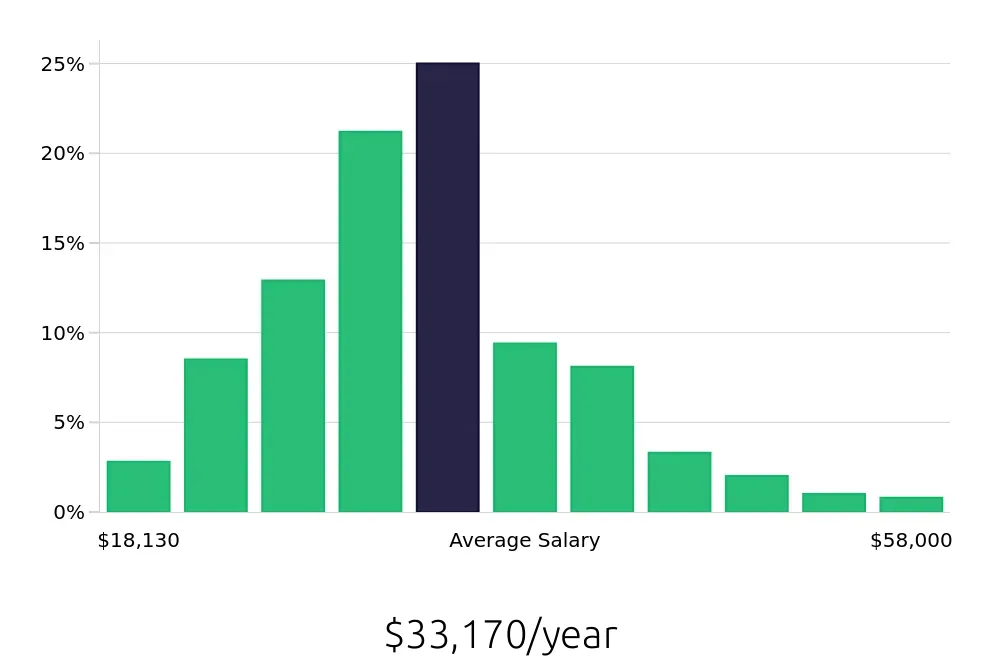
Averge salary $32,741 per year
Graph depicting the yearly salary distribution for Host positions, showing an average salary of $32,741 with varying distribution percentages across salary ranges.