What does a Interviewer do?
An interviewer plays a crucial role in the hiring process. They speak with candidates to learn more about their skills, experience, and fit for the role. Interviewers prepare questions ahead of time to ask during the interview. They listen carefully to the answers and take notes. This helps them decide if the candidate is a good match for the job.
Interviewers work with hiring managers and HR teams. They coordinate schedules and make sure the interview process runs smoothly. After the interview, interviewers share their notes and recommendations. This helps the hiring team make an informed decision. A good interviewer asks thoughtful questions and creates a comfortable environment. This allows candidates to show their best qualities.
How to become a Interviewer?
Becoming an interviewer is a rewarding career path for those who enjoy assessing talent and making hiring decisions. The process involves several steps, each designed to ensure that the interviewer is well-prepared and capable of evaluating candidates effectively.
Here are the key steps to becoming an interviewer:
- Gain Relevant Experience: Start by acquiring experience in the field where you wish to interview. This could be in human resources, recruitment, or a specific industry.
- Learn Interview Techniques: Study various interview styles, including behavioral, situational, and technical interviews. Understand how to ask effective questions and evaluate responses.
- Develop Soft Skills: Hone your communication, critical thinking, and decision-making skills. These are crucial for conducting interviews and making informed hiring decisions.
- Attend Training: Participate in workshops or training sessions focused on interviewing skills. These can provide practical insights and tips from experienced professionals.
- Practice Regularly: Conduct mock interviews to gain confidence. Practice with colleagues or friends to refine your technique and receive feedback.
Following these steps can help aspiring interviewers become competent and confident in their role. With dedication and continuous learning, one can excel in the challenging and impactful job of being an interviewer.
How long does it take to become a Interviewer?
To become an interviewer, one must gain experience and develop specific skills. Generally, this process takes a few steps. First, someone interested in interviews should find a job in human resources or a related field. They might start as an HR assistant or in another entry-level position.
After gaining some experience, the individual can move up to a role as an interviewer. This role involves asking questions to candidates, evaluating responses, and making hiring decisions. Most people need at least a few years of experience in HR to become a skilled interviewer. Some organizations may require additional training or certification, which can add to the time it takes. Over time, with practice and feedback, one can become an experienced interviewer.
Interviewer Job Description Sample
We are seeking an experienced and skilled Interviewer to join our team. The ideal candidate will have strong communication skills, the ability to ask insightful questions, and the capability to assess candidates effectively. The Interviewer will play a crucial role in our recruitment process and will work closely with HR and hiring managers to identify top talent for our organization.
Responsibilities:
- Conduct in-depth interviews with job candidates to evaluate their qualifications, skills, and cultural fit for the company.
- Collaborate with hiring managers to develop interview questions and criteria for candidate evaluation.
- Provide feedback to hiring managers on candidate performance and suitability for the role.
- Stay updated on industry trends and best practices in recruitment and talent acquisition.
- Maintain accurate and up-to-date records of interview notes and candidate evaluations.
Qualifications
- Bachelor’s degree in Human Resources, Psychology, Business Administration, or a related field.
- Previous experience in a recruitment or human resources role, preferably with interviewing responsibilities.
- Strong interpersonal and communication skills, with the ability to build rapport with candidates.
- Ability to think critically and ask insightful questions to assess a candidate’s qualifications and fit for the role.
- Detail-oriented with excellent organizational and time management skills.
Is becoming a Interviewer a good career path?
An Interviewer evaluates job candidates for a company. This role requires strong communication and analytical skills. Interviewers meet with candidates, ask questions, and assess if they fit the job. They work in human resources, corporate, and recruitment firms. This job offers a variety of work environments and industries.
A career as an Interviewer has several benefits and challenges. Here are some things to consider. Interviewers enjoy meeting many people. They get to learn about different backgrounds and experiences. This job can be rewarding when finding the right person for a role. Interviewers also develop critical thinking and decision-making skills. They must ask the right questions and interpret answers accurately.
However, this job has its challenges. Interviewers face pressure to make the right choices. They must be unbiased and fair. Some may find the role stressful, especially in a busy hiring season. The job can also be repetitive, asking similar questions to many candidates. Job seekers considering this path should weigh these pros and cons carefully.
In summary, being an Interviewer offers an engaging way to interact with people and contribute to a company's success. It demands both soft skills and the ability to handle pressure.
Here are some pros and cons of this career path:
- Pros:
- Opportunities to meet many people
- Develops communication and analytical skills
- Can be rewarding to find the right candidate
- Cons:
- Pressure to make the right decisions
- Requires being unbiased and fair
- May be stressful during hiring seasons
- Can be repetitive, asking similar questions
What is the job outlook for a Interviewer?
Job seekers looking to become interviewers can find a steady job market. According to the Bureau of Labor Statistics (BLS), there are about 18,200 new job openings for interviewers each year. This number shows a stable demand for professionals in this field. Although the job outlook from 2022 to 2032 shows a decline of 10.1%, this figure still suggests a steady job market. This steady job market reflects the ongoing need for skilled interviewers in various industries.
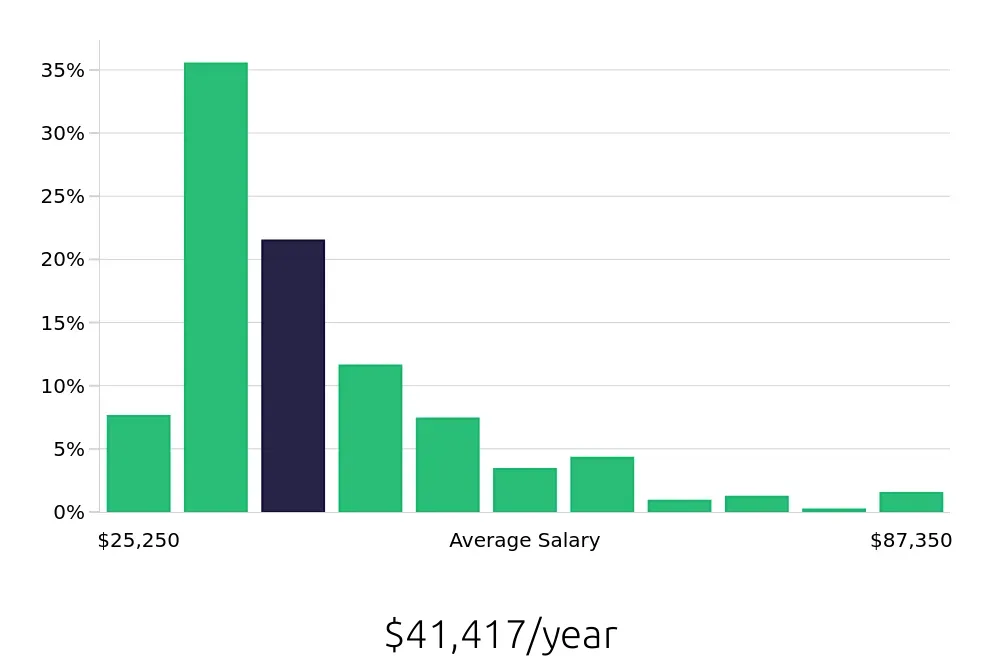
For those entering this field, understanding the compensation is important. The BLS reports that the average annual salary for interviewers is $42,750. This figure indicates a good earning potential for professionals in this role. In addition, the average hourly wage is $20.55. This competitive pay can make interviewer roles attractive to job seekers. Higher wages can also make this field more appealing for those looking for stable and rewarding career paths.
Becoming an interviewer can offer a rewarding career. It provides a chance to engage with candidates and help companies find the right talent. Despite a projected decrease in job openings, the role remains crucial in the hiring process. This career path offers stability, competitive pay, and the opportunity to contribute to a company's success. Job seekers can find these factors appealing when considering a career as an interviewer.
Currently 126 Interviewer job openings, nationwide.
Continue to Salaries for Interviewer