What does a UI/UX Designer do?
A UI/UX Designer creates user-friendly interfaces and experiences for digital products. They focus on how users interact with a product. This role involves understanding user needs and designing solutions that meet those needs. UI/UX Designers work closely with developers and product managers to ensure the design is both functional and appealing. They create wireframes, prototypes, and mockups to visualize the design.
Key responsibilities of a UI/UX Designer include conducting user research, creating user personas, and designing wireframes. They also test prototypes and gather feedback to improve the design. Collaboration is essential, as UI/UX Designers often work with cross-functional teams to bring designs to life. They use tools like Sketch, Adobe XD, and Figma to create their designs. A strong understanding of usability principles and design trends is crucial in this role. UI/UX Designers aim to enhance the user experience, making products easier and more enjoyable to use.
How to become a UI/UX Designer?
Becoming a UI/UX Designer opens doors to a dynamic and rewarding career. It requires a blend of creativity and technical skills. This process involves several key steps to ensure a smooth transition into this field. Each step builds upon the previous one, leading to mastery in the craft.
First, start with gaining a solid foundation in design principles. Understanding core concepts such as layout, color theory, and typography is crucial. This knowledge forms the basis for all future work. Next, focus on developing technical skills. Proficiency in design software like Adobe XD, Sketch, or Figma is essential. Practice designing different projects to get hands-on experience. After mastering the basics, it is important to build a strong portfolio. Showcase the best of your work to demonstrate skills and creativity. Networking with other designers and industry professionals can also provide valuable insights and opportunities. Finally, consider pursuing formal education or certifications to enhance credentials. Continuous learning and staying updated with industry trends are key to long-term success in this field.
To outline the journey, here are five key steps:
- Learn design principles.
- Develop technical skills.
- Build a portfolio.
- Network with professionals.
- Pursue formal education or certifications.
How long does it take to become a UI/UX Designer?
UI/UX design combines user interface (UI) and user experience (UX) design. It focuses on creating digital products that are both visually appealing and easy to use. To pursue this career, one must understand design principles, tools, and user needs. Many professionals enter this field through formal education or self-study.
The journey to becoming a UI/UX designer often takes several months to a few years. Here are typical steps along the way:
- Education: A bachelor's degree in graphic design, computer science, or a related field can take four years.
- Skill Development: Learning design software like Adobe XD, Sketch, or Figma can take several months of practice.
- Portfolio Creation: Building a portfolio with real projects takes around three to six months.
- Experience: Gaining internships or working on freelance projects can add one to two years.
UI/UX Designer Job Description Sample
We are seeking a creative and detail-oriented UI/UX Designer to join our dynamic team. The ideal candidate will have a strong portfolio showcasing innovative and user-centric design solutions. The role involves collaborating with cross-functional teams to design intuitive user interfaces and exceptional user experiences for our products.
Responsibilities:
- Design and create user interfaces that are visually appealing and user-friendly.
- Conduct user research and analysis to understand user needs and behaviors.
- Develop wireframes, mockups, and prototypes for web and mobile applications.
- Collaborate with product managers, developers, and other stakeholders to ensure design requirements are met.
- Conduct usability testing and iterate on designs based on feedback.
Qualifications
- Bachelor's degree in Graphic Design, Human-Computer Interaction, or a related field.
- Proven experience as a UI/UX Designer with a strong portfolio showcasing various projects.
- Proficiency in design tools such as Adobe Creative Suite (Photoshop, Illustrator, XD), Sketch, or Figma.
- Strong understanding of user-centered design principles and best practices.
- Experience with usability testing and user research methodologies.
Is becoming a UI/UX Designer a good career path?
UI/UX designers create the look and feel of websites and apps. They make sure the user interface (UI) is easy to use and the user experience (UX) is smooth. This role mixes creativity with technical skills. UI/UX designers work with teams to understand what users need. They design layouts, choose colors, and test designs to ensure they work well.
Being a UI/UX designer has many benefits. The job often includes working with the latest technology. Designers get to meet and work with different people, such as developers and marketers. They have the chance to improve how people interact with technology, which can be very rewarding. However, the job also comes with challenges. UI/UX designers need to keep learning and updating their skills. Sometimes, the work can be stressful, especially when meeting tight deadlines. Communication with non-designers can also be tricky, as they may not fully understand design concepts.
Below are some pros and cons of being a UI/UX designer:
- Pros:
- Opportunity to create visually appealing and user-friendly products
- Collaboration with various teams to understand user needs
- Use of cutting-edge technology and tools
- Potential for a high salary in the tech industry
- Cons:
- Need to continuously update skills and knowledge
- Pressure to meet deadlines and deliver high-quality work
- Difficulty in communicating design concepts to non-designers
- Possibility of working long hours, especially during project launches
What is the job outlook for a UI/UX Designer?
The job outlook for UI/UX designers shines with potential, making it a promising field for job seekers. The Bureau of Labor Statistics (BLS) reports an average of 179,500 job positions available each year. This constant demand suggests a stable career path for those entering this industry.
Job growth for UI/UX designers is also on the rise, with a projected increase of 21.7% from 2022 to 2032. This growth stems from the increasing importance of user experience in digital products. Companies recognize the need for professionals who can create intuitive, engaging interfaces. This expanding market offers exciting opportunities for skilled designers looking to advance their careers.
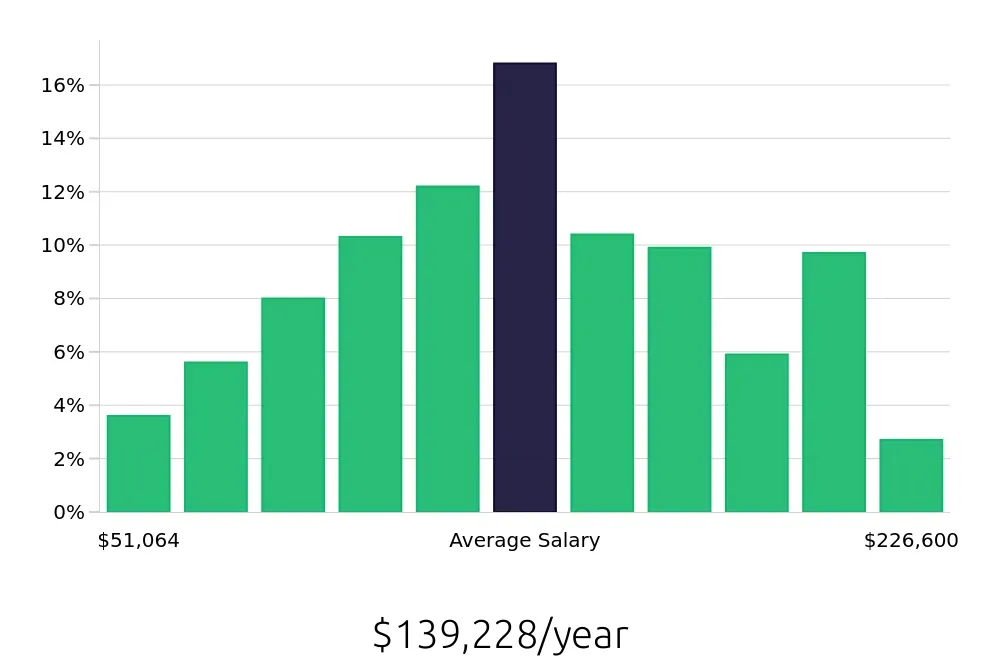
UI/UX designers can also look forward to competitive compensation. The BLS reports an average national annual salary of $130,500. Additionally, the hourly wage stands at $62.74. These figures highlight the value placed on expertise in designing user-friendly and visually appealing products. For those seeking a rewarding career, UI/UX design presents a lucrative path.
Currently 225 UI/UX Designer job openings, nationwide.
Continue to Salaries for UI/UX Designer