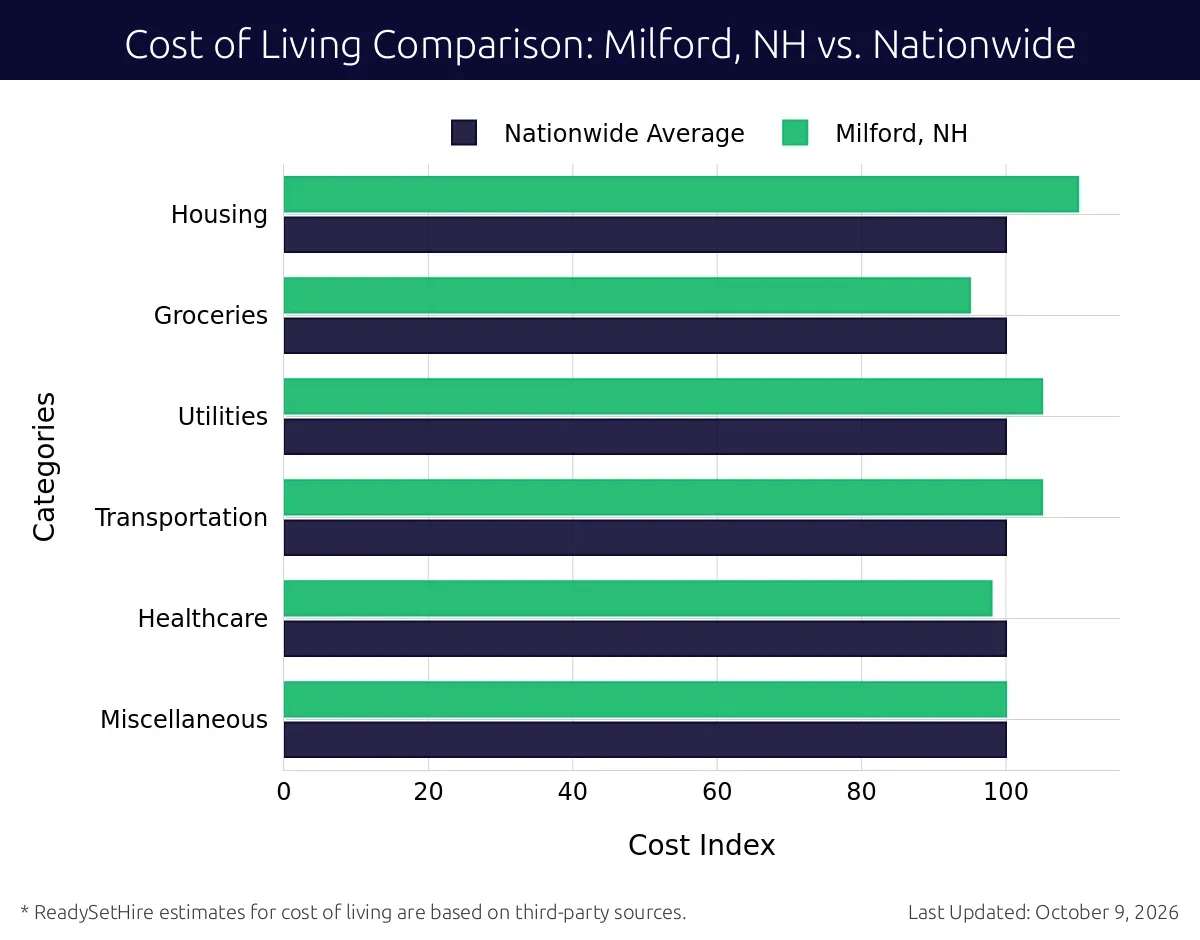
Milford, NH, has a higher cost of living than the nationwide average. Housing costs 10% more, and utilities 5% more, while groceries and healthcare are slightly below the national average. This balance makes Milford an attractive option for those seeking affordable healthcare without sacrificing too much on other essentials. Overall, the cost of living in Milford is 5% higher than the national average. Despite some areas like groceries and healthcare being cheaper, increased housing and utility costs influence the overall higher index. Job seekers considering Milford can expect a balanced but moderately pricier living experience.
Milford, NH, presents a cost of living that is generally higher than the nationwide average. Specifically, the housing index in Milford stands at 110, which means housing costs there are 10% higher than the national average. This increase could significantly impact potential residents, making it important for job seekers to consider this aspect when planning their move.
Comparing other expenses, the transportation index in Milford is also 5% above the average at 105. Utilities are similarly priced at 105, reflecting a 5% rise in this category. Groceries and healthcare in Milford are relatively close to the national average, with groceries at 95 and healthcare at 98, both indicating minimal deviations from the national standard. The miscellaneous index matches the national average, sitting at 100, suggesting that other miscellaneous expenses are in line with what one might expect nationwide. These factors combined suggest that while some costs are higher in Milford, others remain comparable or slightly lower than average, offering a mixed picture for prospective residents.