What is the average salary in Victoria, BC?
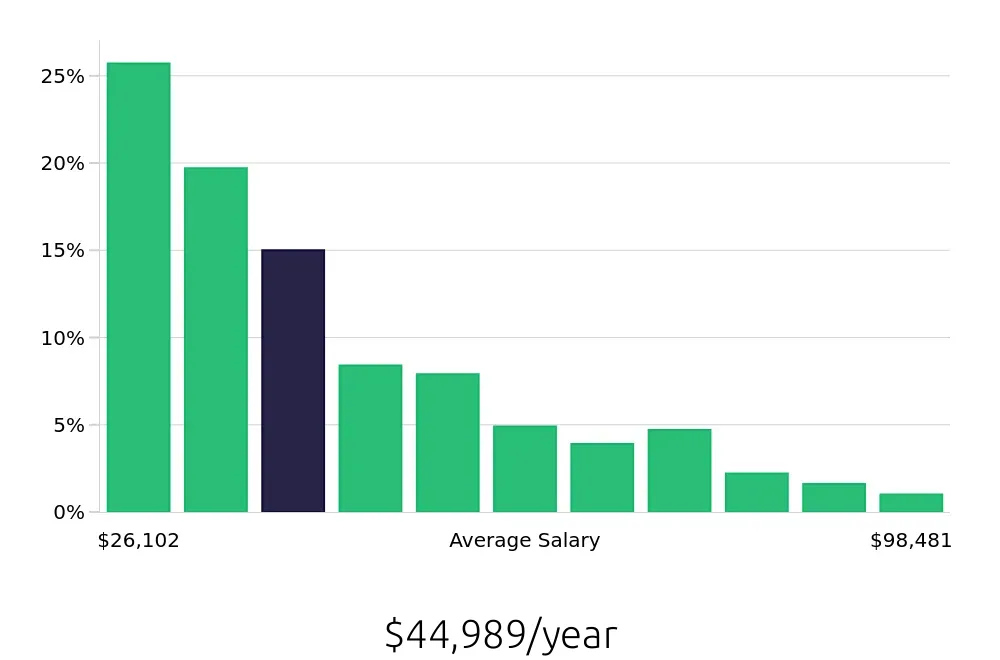
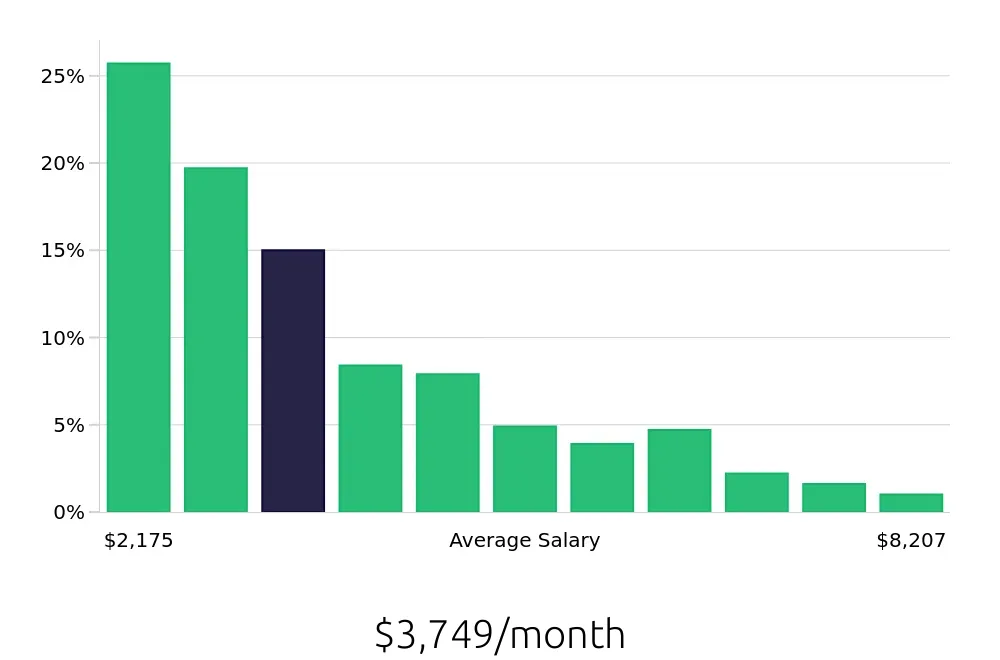
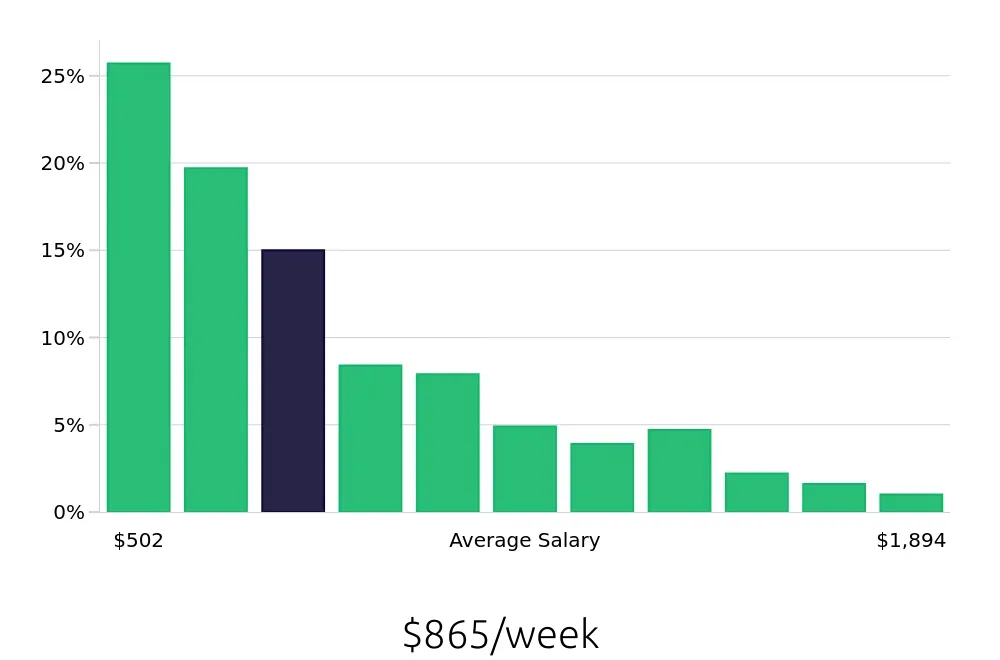
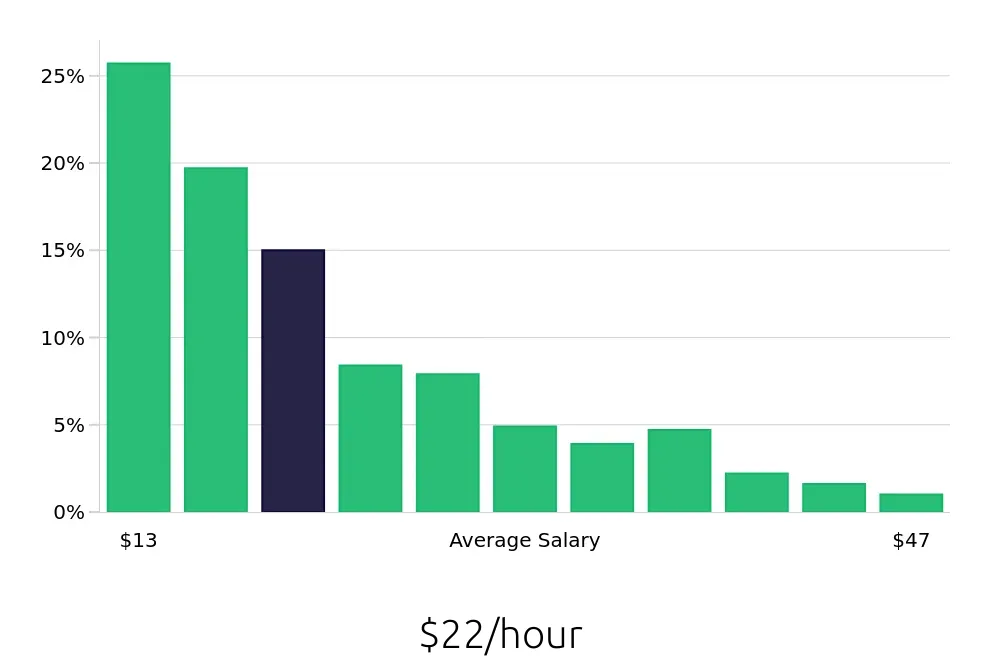
Victoria, BC, offers a range of salary opportunities across various sectors. The average yearly salary in Victoria is $44,989. This average reflects the diverse economic landscape of the city, with many industries offering competitive pay.
The distribution of salaries shows that a significant portion of workers earn between $26,102 and $72,162 annually. The higher end of this range attracts professionals in key areas like healthcare, education, and technology. These industries often provide benefits and opportunities for growth, making them attractive to job seekers. With careful planning and skill development, many can find rewarding positions in Victoria.
What are the best paying jobs in Victoria, BC?
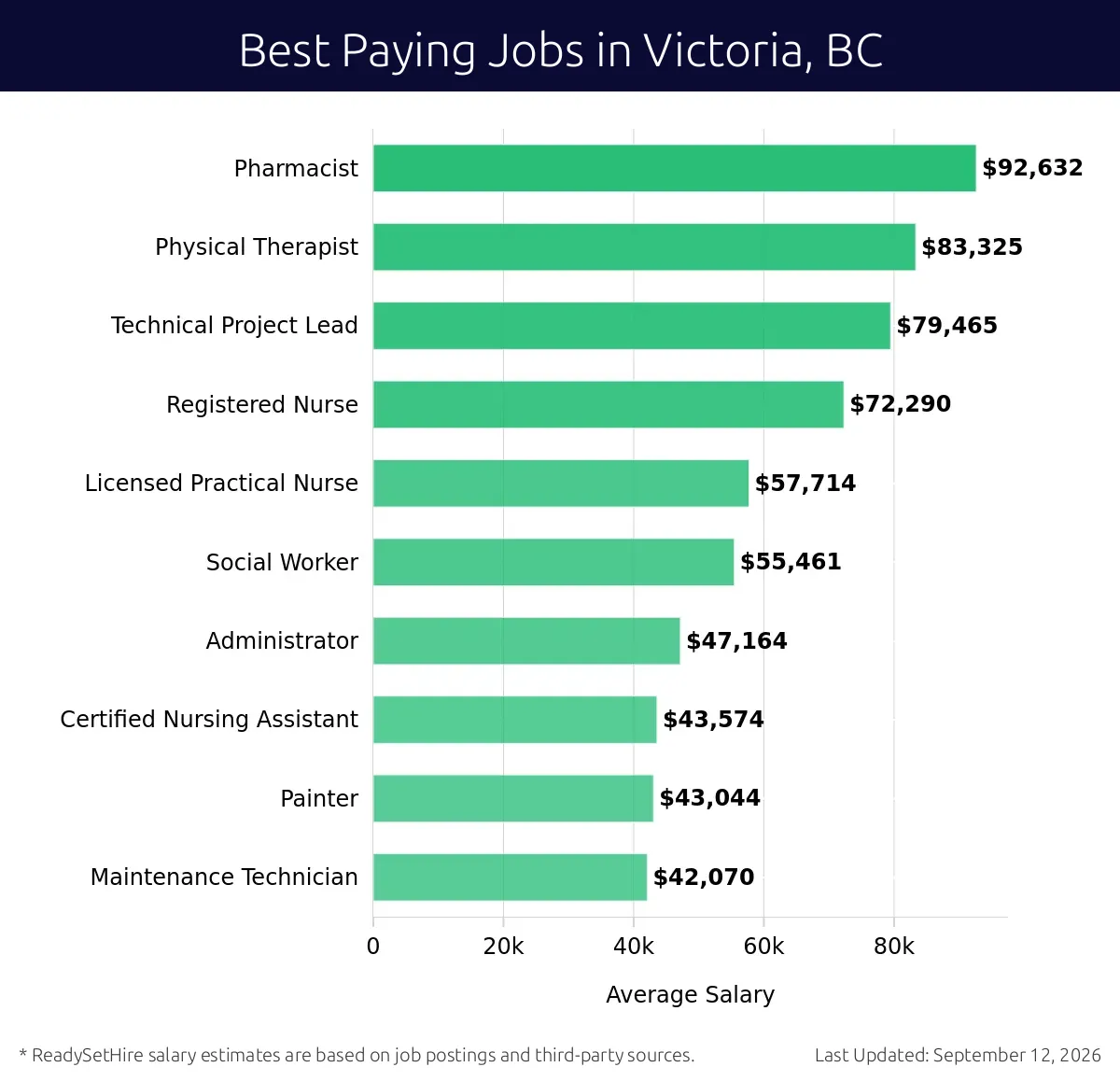
-
Pharmacist
Average Salary: $92,632
Pharmacists play a key role in healthcare. They help patients by reviewing prescriptions and offering advice. They work in local pharmacies and big retail chains.
Find Pharmacist jobs in Victoria, BC
-
Physical Therapist
Average Salary: $83,325
These professionals help people recover from injuries and illnesses. They design exercise programs and use equipment. They often work in hospitals and rehabilitation centers.
Find Physical Therapist jobs in Victoria, BC
-
Technical Project Lead
Average Salary: $79,465
They manage technical projects for software companies and tech firms. They ensure projects stay on track and meet deadlines. They work with cross-functional teams.
Find Technical Project Lead jobs in Victoria, BC
-
Registered Nurse
Average Salary: $72,290
RNs provide essential patient care. They administer treatments and monitor health. They work in hospitals, clinics, and care facilities.
Find Registered Nurse jobs in Victoria, BC
-
Licensed Practical Nurse
Average Salary: $57,714
LPNs support doctors and RNs. They take vital signs and help with basic care. They work in hospitals, nursing homes, and clinics.
Find Licensed Practical Nurse jobs in Victoria, BC
-
Social Worker
Average Salary: $55,461
Social workers help individuals and families. They provide resources and support services. They work in schools, hospitals, and social service agencies.
Find Social Worker jobs in Victoria, BC
-
Administrator
Average Salary: $47,164
Administrators manage office operations. They handle scheduling and correspondence. They work in schools, hospitals, and businesses.
Find Administrator jobs in Victoria, BC
-
Certified Nursing Assistant
Average Salary: $43,574
CNAs provide basic care to patients. They assist with daily activities. They work in nursing homes, hospitals, and care facilities.
Find Certified Nursing Assistant jobs in Victoria, BC
-
Painter
Average Salary: $43,044
Painters apply paint to different surfaces. They work on buildings, homes, and commercial spaces. They use various tools and techniques.
Find Painter jobs in Victoria, BC
-
Maintenance Technician
Average Salary: $42,070
Maintenance technicians repair and maintain equipment. They troubleshoot issues and perform routine checks. They work in various industries.
Find Maintenance Technician jobs in Victoria, BC
What are the best paying jobs in Victoria, BC without a degree?
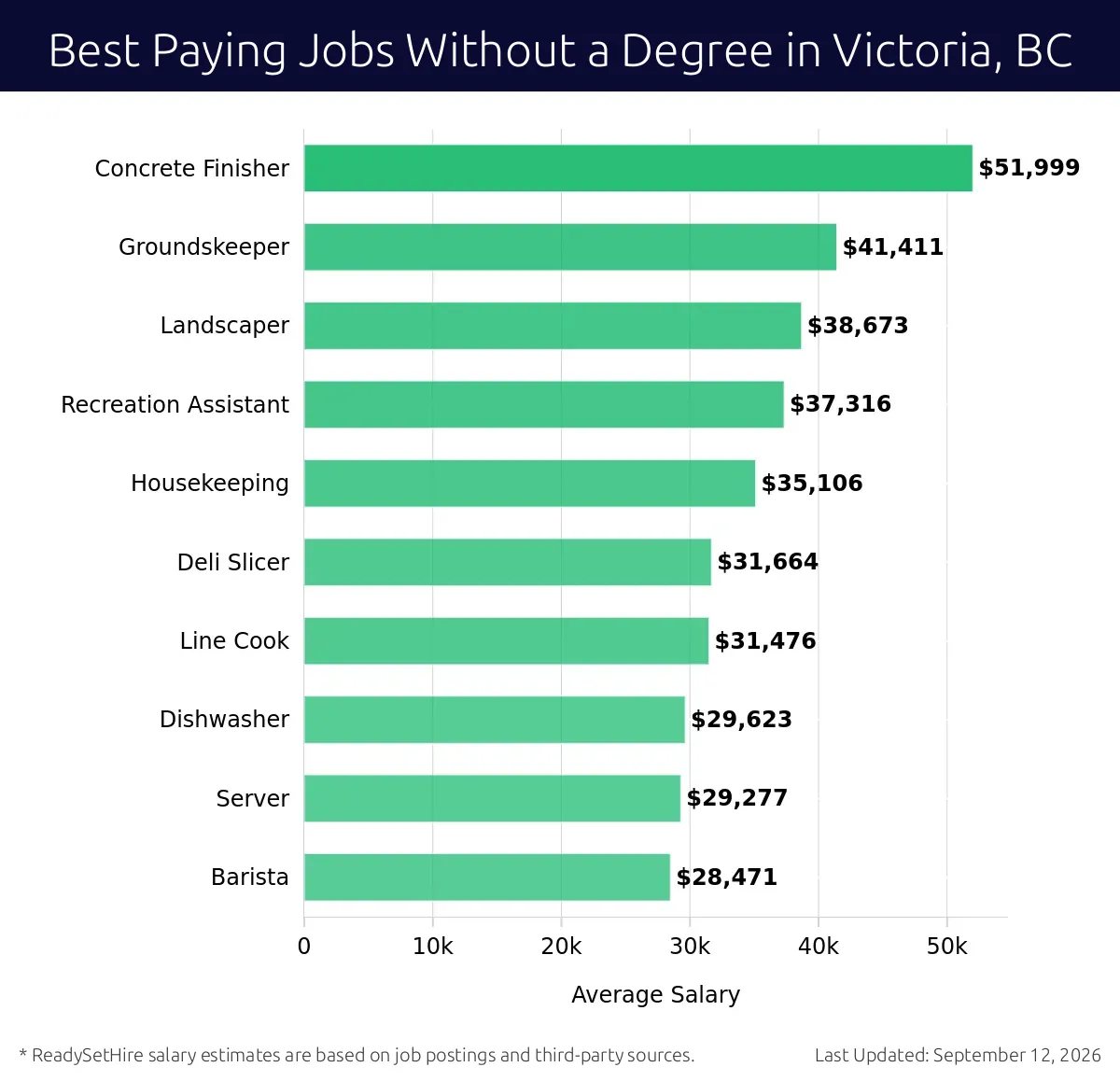
-
Concrete Finisher
Average Salary: $51,999
In this role, you work with concrete for buildings and roads. This position involves mixing, pouring, and smoothing concrete. Companies in Victoria hire for this job. The job requires good physical fitness and attention to detail.
Find Concrete Finisher jobs in Victoria, BC
-
Groundskeeper
Average Salary: $41,411
You maintain parks, gardens, and recreational areas. This position involves planting, trimming, and general yard upkeep. Parks departments and landscape companies seek people for these roles. The job requires a love of nature and outdoor work.
Find Groundskeeper jobs in Victoria, BC
-
Landscaper
Average Salary: $38,673
You design and create outdoor spaces for homes and businesses. This position involves laying sod, planting trees, and creating garden layouts. Companies in Victoria hire for this job. The role requires creativity and knowledge of plants.
Find Landscaper jobs in Victoria, BC
-
Recreation Assistant
Average Salary: $37,316
You assist in organizing activities and programs at community centers. This position involves managing children’s activities and sports events. Local recreation departments hire for this role. The job requires good communication and leadership skills.
Find Recreation Assistant jobs in Victoria, BC
-
Housekeeping
Average Salary: $35,106
You clean and maintain hotel rooms and public areas. This position involves making beds, cleaning bathrooms, and tidying up rooms. Hotels and motels in Victoria seek people for these roles. The job requires attention to detail and a friendly attitude.
Find Housekeeping jobs in Victoria, BC
-
Deli Slicer
Average Salary: $31,664
You slice and package deli meats and cheeses. This position involves using slicers and serving customers. Grocery stores and delis in Victoria hire for this role. The job requires accuracy and good customer service skills.
Find Deli Slicer jobs in Victoria, BC
-
Line Cook
Average Salary: $31,476
You prepare meals in a fast-paced kitchen. This position involves chopping, frying, and boiling ingredients. Restaurants and cafes in Victoria seek people for these roles. The job requires quick thinking and teamwork.
Find Line Cook jobs in Victoria, BC
-
Dishwasher
Average Salary: $29,623
You wash dishes, pots, and pans in a restaurant. This position involves using commercial dishwashers and ensuring cleanliness. Restaurants in Victoria hire for this role. The job requires hard work and attention to detail.
Find Dishwasher jobs in Victoria, BC
-
Server
Average Salary: $29,277
You take orders and serve food and drinks to customers. This position involves communicating with kitchen staff and ensuring a positive dining experience. Restaurants and cafes in Victoria hire for these roles. The job requires good customer service and time management skills.
Find Server jobs in Victoria, BC
-
Barista
Average Salary: $28,471
You prepare coffee and other beverages. This position involves using espresso machines and creating specialty drinks. Coffee shops in Victoria hire for this role. The job requires creativity and knowledge of coffee.
Find Barista jobs in Victoria, BC
Which companies offer the top salaries in Victoria, BC?
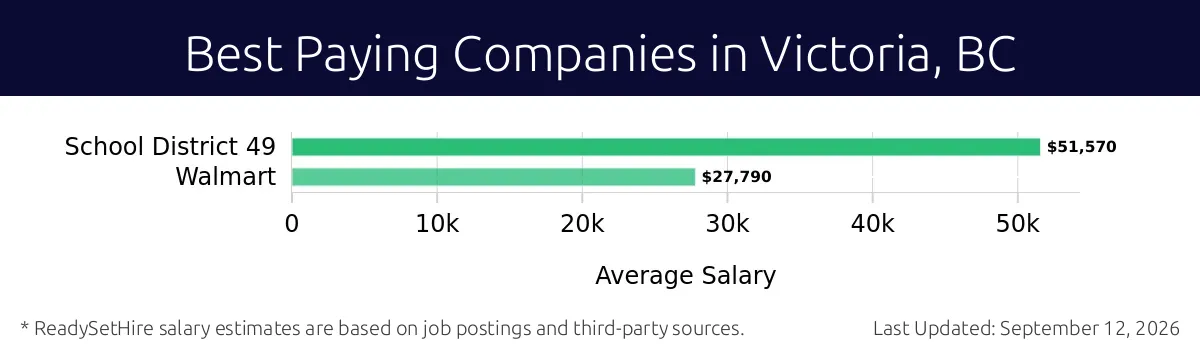
-
School District 49
Average Salary: $51,570
School District 49 is one of the largest employers in Victoria, BC. They provide a range of educational services and are committed to offering competitive salaries to attract and retain top talent.
-
Walmart
Average Salary: $27,790
Walmart is a well-known global retailer with a strong presence in Victoria. While their wages may be lower than some specialized sectors, the company offers various benefits and opportunities for growth.
How does the cost of living in Victoria, BC compare to the national average?
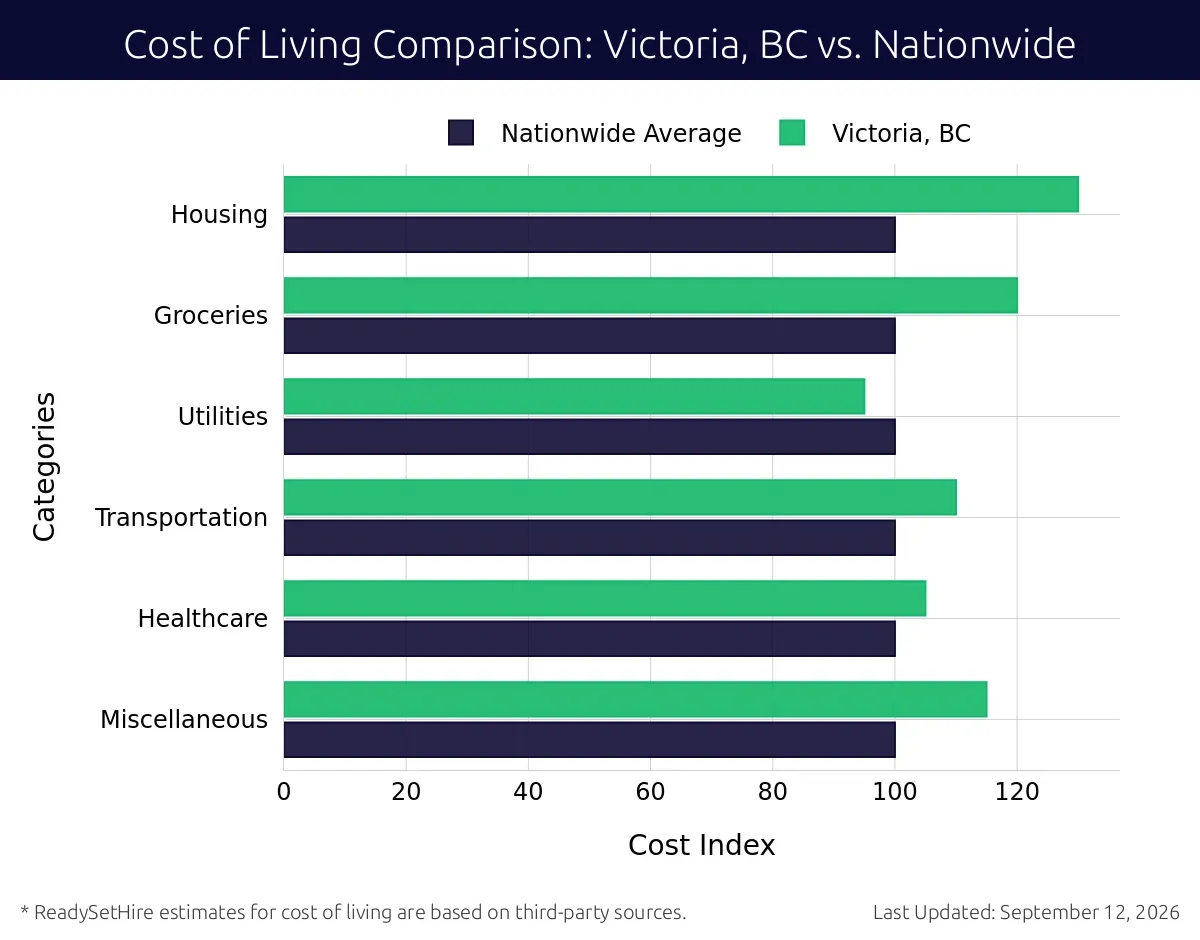
The cost of living in Victoria, British Columbia, often exceeds the nationwide average. Housing costs in Victoria stand at an index of 130, which means they are 30% higher than the average. Job seekers moving to Victoria should prepare for significantly higher housing expenses compared to other areas in the country. Groceries are also pricier in Victoria, with an index of 120, translating to a 20% increase over the average cost.
In addition to housing and groceries, other areas such as utilities, transportation, healthcare, and miscellaneous costs also show variations from the national average. Utilities in Victoria cost about 5% less, with an index of 95. Transportation costs are 10% higher, standing at an index of 110. Healthcare expenses are slightly above the average, at 105, which means they are 5% higher. Miscellaneous costs follow a similar trend, with an index of 115, indicating a 15% increase over the nationwide average. These differences highlight the importance of considering all aspects of living costs when relocating to Victoria.