What does a Accounting Clerk do?
An Accounting Clerk plays a vital role in managing a company's financial records. This position requires attention to detail and a solid understanding of accounting principles. Duties often include preparing financial documents, processing transactions, and ensuring accuracy in record-keeping.
The Accounting Clerk must work closely with other team members to support financial operations. They may assist in creating budgets, reconciling accounts, and generating financial reports. Strong organizational skills and the ability to use accounting software are essential. Attention to deadlines and confidentiality is crucial in this role.
Key responsibilities include:
- Recording financial transactions accurately
- Maintaining updated ledgers and journals
- Assisting with bank reconciliations
- Supporting the preparation of financial statements
This position demands reliability and a proactive approach to problem-solving. The Accounting Clerk helps ensure the company's financial health and compliance with regulations.
How to become a Accounting Clerk?
Becoming an accounting clerk involves several steps that lead to a rewarding career in finance. Start by obtaining a high school diploma or GED. This is the foundation for entering the field of accounting. Next, consider taking courses in accounting or business at a community college or vocational school. These courses can provide valuable knowledge and skills.
Additionally, gaining experience through internships or part-time jobs in accounting can be very beneficial. Look for opportunities to work in offices where accounting tasks are performed. This hands-on experience will make a strong addition to a resume. After acquiring some experience, obtaining a professional certification can enhance job prospects. Certifications like the Certified Accounting Clerk (CAC) can demonstrate competence and dedication.
Finally, prepare for the job search by crafting a professional resume and cover letter. Highlight any relevant coursework, certifications, and experience. Networking with professionals in the field can also open doors to job opportunities. With dedication and the right steps, anyone can become an accounting clerk.
- Get a high school diploma or GED.
- Take courses in accounting or business.
- Gain experience through internships or part-time jobs.
- Obtain professional certifications, if possible.
- Prepare and submit a professional resume and cover letter.
How long does it take to become a Accounting Clerk?
Starting a career as an Accounting Clerk can open many doors in the business world. This role offers various opportunities for growth and advancement. To understand what this career path involves, it’s helpful to know the time it takes to become qualified. On average, it takes about one to two years to become an Accounting Clerk. This includes both formal education and on-the-job training.
Most employers require a high school diploma or equivalent for entry-level positions. Some may prefer or require a post-secondary certificate in accounting or a related field. Training programs can be found at community colleges, technical schools, and online. These programs typically last one year or less. They cover essential skills like bookkeeping, financial reporting, and tax preparation. Employers may also provide additional training once hired. This ensures new clerks meet company-specific needs and procedures.
Accounting Clerk Job Description Sample
An Accounting Clerk is responsible for managing financial transactions and maintaining financial records for an organization. This role involves tasks such as bookkeeping, accounts payable, accounts receivable, payroll processing, and preparing financial reports. The ideal candidate should have strong attention to detail, proficiency in accounting software, and the ability to work accurately under pressure.
Responsibilities:
- Prepare, process, and manage financial transactions including accounts payable, accounts receivable, and payroll.
- Maintain accurate and up-to-date financial records, ledgers, and journals.
- Assist in the preparation of financial statements, budgets, and reports.
- Perform bank reconciliations and ensure all financial transactions are accurately recorded.
- Process invoices, payments, and vendor payments in a timely manner.
Qualifications
- High school diploma or equivalent; bachelor’s degree in Accounting, Finance, or related field preferred.
- Proven experience as an Accounting Clerk or similar role.
- Proficiency in accounting software (e.g., QuickBooks, Sage, Microsoft Excel).
- Strong understanding of accounting principles and practices.
- Attention to detail with high accuracy in financial record-keeping.
Is becoming a Accounting Clerk a good career path?
Working as an Accounting Clerk offers a solid entry point into the finance sector. This role involves handling basic financial transactions and supporting more experienced accountants. It requires attention to detail and a good grasp of financial principles. Many find it a stepping stone to more advanced positions in accounting and finance.
Accounting Clerks benefit from clear, repetitive tasks. They often work in an office setting, which provides a stable and predictable environment. This role may include tasks like bookkeeping, preparing financial reports, and assisting in audits. It provides hands-on experience with financial software and tools. Many clerks find it a good match if they enjoy numbers and want to make a steady career start.
- Pros:
- Clear and repetitive tasks
- Opportunity to learn financial principles
- Potential for career advancement
- Stable and predictable office environment
- Cons:
- May require attention to detail
- Often involves long hours during tax season
- Limited opportunities for creativity
- Potential for low entry-level salary
What is the job outlook for a Accounting Clerk?
The role of an Accounting Clerk is integral in various industries, offering a stable career path for many. With an average of 183,900 job positions opening each year, professionals in this field can find ample opportunities. These positions cater to a range of businesses, including finance, healthcare, and retail, ensuring diverse application of skills.
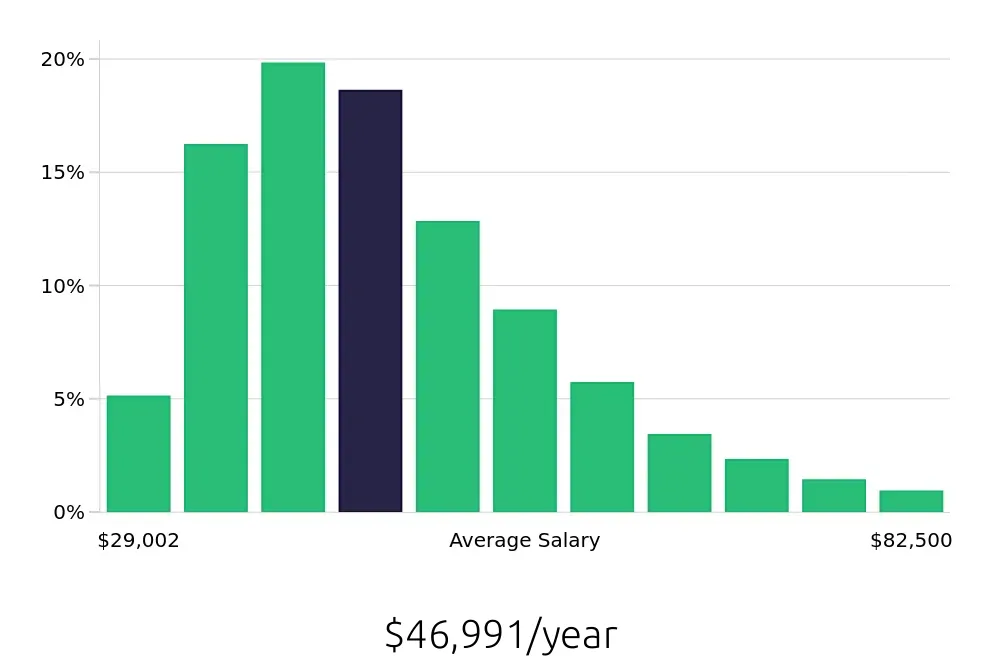
Despite the projected decline of 6.2% in job openings from 2022 to 2032, according to the Bureau of Labor Statistics (BLS), Accounting Clerks can still anticipate a steady job market. The average national annual compensation stands at $49,580, reflecting a stable income potential. Hourly compensation averages $23.84, which is competitive for entry-level roles in the accounting sector.
Job seekers entering this field will find it rewarding, with opportunities to grow and specialize in areas like payroll, accounts receivable, or tax preparation. The consistent demand for accounting clerks, coupled with a respectable salary, makes this a viable career choice for those interested in finance and numbers.
Currently 3,151 Accounting Clerk job openings, nationwide.
Continue to Salaries for Accounting Clerk