What does a Alterations Specialist do?
An Alterations Specialist plays a crucial role in the fashion industry. This professional helps customers find the perfect fit for clothing and accessories. They use measuring tools and their expertise to make adjustments. Alterations Specialists work with various materials, including fabric and leather. They ensure that each piece meets the customer's needs and preferences.
The job involves more than just sewing. Alterations Specialists must communicate clearly with customers. They take detailed measurements and discuss desired changes. They also keep track of multiple projects at once. This role requires patience and attention to detail. Successful Alterations Specialists create a positive shopping experience. They help customers feel confident and stylish in their purchases.
How to become a Alterations Specialist?
Becoming an Alterations Specialist combines creativity with technical skills, offering a rewarding career in the fashion industry. Tailoring clothes to fit perfectly requires both artistic flair and precision. This profession demands a keen eye for detail and a commitment to customer satisfaction.
To pursue this career, one must follow a structured path. Below are five essential steps to guide anyone interested in becoming an Alterations Specialist.
- Education and Training: Start with formal education. Attend a fashion design or apparel manufacturing program. This provides a foundation in garment construction and fabric understanding. Seek out specialized courses in garment alterations for practical skills.
- Gain Experience: Look for internships or entry-level positions at tailor shops or clothing stores. Working under experienced professionals helps build hands-on skills and industry knowledge.
- Develop Skills: Master the tools and techniques used in alterations. Learn to use sewing machines, tailor’s chalk, measuring tape, and pattern-making tools. Practice taking accurate measurements and making adjustments.
- Build a Portfolio: Create a portfolio showcasing your work. Include before-and-after photos of alterations. Highlight various skills like hemming, taking in seams, and making custom alterations.
- Network and Market Yourself: Join professional associations and attend industry events. Connect with other specialists and potential clients. Use social media to showcase your portfolio and share tips on alterations.
How long does it take to become a Alterations Specialist?
Pursuing a career as an Alterations Specialist can lead to fulfilling work in the fashion industry. The time it takes to get started can vary. Most specialists finish a formal training program in a few months. Some might complete high school courses in fashion or sewing. A shorter on-the-job training might take a few weeks.
To work as an Alterations Specialist, some key steps include formal education, practical experience, and understanding customer needs. A formal education can be a certificate or an associate’s degree from a fashion or trade school. Practical experience comes from internships or working under a seasoned specialist. Understanding customer needs builds from real interactions and learning various sewing techniques. This combination of education and experience can help a person start a career in this field in a short amount of time.
Alterations Specialist Job Description Sample
An Alterations Specialist is responsible for modifying and repairing clothing and garments to meet the specific needs and measurements of customers. This role involves using a variety of tools and techniques to ensure that each piece of clothing fits perfectly and maintains its quality.
Responsibilities:
- Take precise measurements of customers to ensure accurate alterations.
- Interpret design and construction details of various garments.
- Perform repairs such as hemming, patching, and replacing missing parts.
- Make alterations to clothing such as resizing, adjusting fit, and adapting styles.
- Utilize tools like needles, thread, scissors, and sewing machines for alterations.
Qualifications
- High school diploma or equivalent required; additional education in fashion design or tailoring is a plus.
- Proven experience as an Alterations Specialist or similar role.
- Strong understanding of garment construction and alteration techniques.
- Excellent attention to detail and precision.
- Good communication skills and ability to understand customer needs.
Is becoming a Alterations Specialist a good career path?
An Alterations Specialist plays a crucial role in the fashion industry. This professional works with customers to modify clothing and other garments to fit perfectly. It involves taking precise measurements and making adjustments to ensure a perfect fit. The role combines creativity with technical skills. It offers a unique way to interact with clients and enhance their fashion experience.
Working as an Alterations Specialist has many benefits. First, it allows one to work in a creative environment. Specialists often come up with innovative solutions to fit issues. They also enjoy the satisfaction of seeing happy customers. This job can lead to a variety of career opportunities within the fashion industry. However, it also comes with some challenges. Specialists may work long hours, especially during busy seasons. The job requires attention to detail and can be quite demanding. It is important to be patient and have strong communication skills.
Here are some pros and cons to consider:
- Pros:
- Opportunity to work with fashion and garments
- Creative problem-solving skills are needed
- Possibility to help customers look and feel better
- Potential for career growth in the fashion industry
- Cons:
- Long hours, especially during peak seasons
- Requires precision and attention to detail
- Can be physically and mentally demanding
- May require working under pressure
What is the job outlook for a Alterations Specialist?
If you are considering a career as an Alterations Specialist, it's important to understand the job outlook. According to the Bureau of Labor Statistics (BLS), there are about 4,600 job positions available each year. This means steady opportunities for those who are skilled and qualified. However, job openings are expected to decrease by 14% from 2022 to 2032. This could make competition a bit tougher, so it’s wise to focus on gaining experience and expertise in the field.
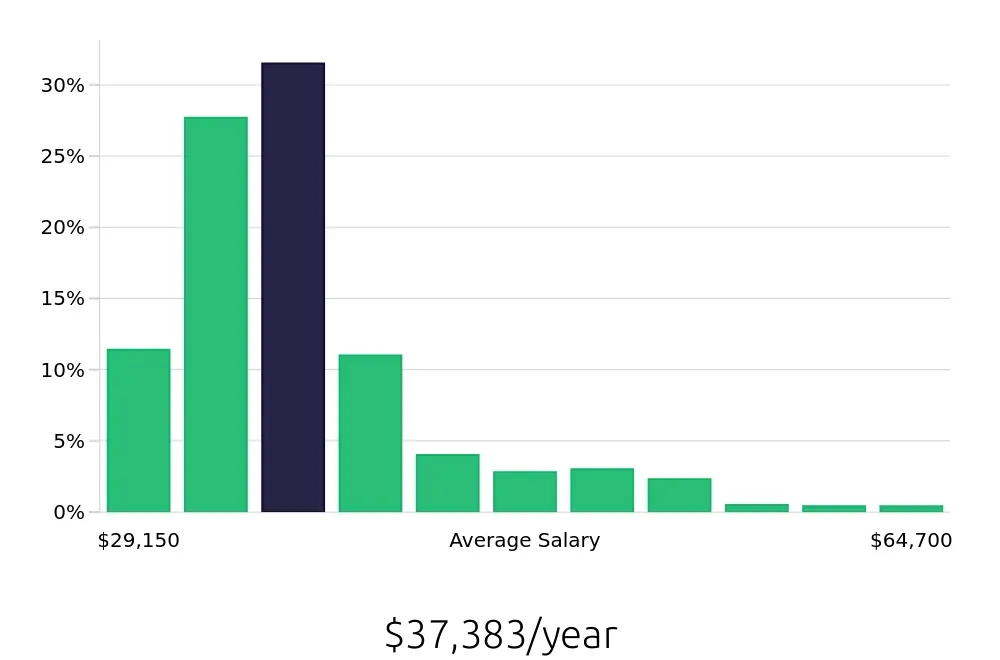
The average annual compensation for Alterations Specialists is $39,020, based on data from the BLS. Hourly wages average $18.76. These figures show that this career can be financially rewarding. With the right experience and skill set, specialists can expect to earn a good income. This compensation makes it a viable career option for many job seekers.
Apart from the numbers, the role of an Alterations Specialist offers a chance to work in a creative and dynamic environment. Tailoring and fitting garments require attention to detail and artistic flair. This profession allows individuals to use their skills to help others look and feel their best. For those who enjoy working with their hands and making a tangible difference, this could be a fulfilling career choice.
Currently 53 Alterations Specialist job openings, nationwide.
Continue to Salaries for Alterations Specialist