What does a Banquet Houseperson do?
A Banquet Houseperson plays a crucial role in ensuring that events run smoothly. They prepare the event space, set up tables, and arrange chairs. They also assist with serving food and beverages to guests. This position requires attention to detail and the ability to work well under pressure. Each task needs careful completion to ensure a pleasant experience for guests.
Responsibilities of a Banquet Houseperson include cleaning and maintaining the event area before and after events. They ensure all equipment is in good working order. They may also help with decorating the space according to event themes. This role often involves working closely with other staff members to coordinate the event. Communication skills are essential for success in this position. A Banquet Houseperson must be able to follow instructions and work as part of a team.
How to become a Banquet Houseperson?
Becoming a Banquet Houseperson is a great way to start a rewarding career in the hospitality industry. This role involves preparing and maintaining spaces for events and ensuring everything runs smoothly. Here is a clear path to achieving this position.
First, gaining relevant experience can set someone apart. This includes working in restaurants, hotels, or event spaces. Experience in customer service is also valuable. Networking with industry professionals can lead to job opportunities. Volunteering at events can provide hands-on experience. Building a strong resume with these experiences makes it easier to find a job.
- Get Experience: Work in food service, hospitality, or event planning. Each role builds skills needed for this job.
- Network: Connect with people already in the industry. Attend events and meet professionals. They may offer job leads or advice.
- Volunteer: Offer to help at local events. This shows dedication and gives real-world experience.
- Build a Resume: Highlight all relevant experience. Include skills such as teamwork, time management, and customer service.
- Apply for Jobs: Look for job openings online and in local papers. Tailor each application to the job description.
By following these steps, a professional can successfully become a Banquet Houseperson. This role requires attention to detail and the ability to handle tasks under pressure. With the right preparation, one can thrive in this exciting field.
How long does it take to become a Banquet Houseperson?
Starting a career as a Banquet Houseperson offers a dynamic entry into the hospitality industry. This role typically requires minimal formal education, making it accessible to many. On average, individuals can enter this profession after completing high school or obtaining a GED. Many employers provide on-the-job training to prepare new hires for their duties.
Training programs can last from a few weeks to a few months. These programs cover essential skills such as setting up banquet spaces, serving food and beverages, and cleaning up after events. Certification in food safety may also be necessary, which usually takes about a day to complete. With dedication and practice, new housepersons can become proficient in their roles quickly.
Banquet Houseperson Job Description Sample
The Banquet Houseperson is responsible for ensuring a clean, safe, and welcoming environment for banquet guests and staff before, during, and after events. This role requires attention to detail, strong organizational skills, and the ability to work in a fast-paced setting.
Responsibilities:
- Set up and break down banquet spaces, including arranging furniture, decorating with flowers and linens, and setting up audio-visual equipment.
- Maintain a clean and orderly environment, including trash removal, recycling, and waste disposal.
- Stock and replenish supplies such as tableware, glassware, and serving utensils.
- Assist with serving food and beverages to guests as needed.
- Coordinate with kitchen staff to ensure timely delivery and setup of food and beverages.
Qualifications
- High school diploma or equivalent required; additional education or training in hospitality or related fields is a plus.
- Previous experience in a banquet or hospitality setting is preferred.
- Strong attention to detail and ability to follow instructions precisely.
- Ability to work in a team environment and communicate effectively with others.
- Physical stamina to lift and move heavy items and work in a variety of settings.
Is becoming a Banquet Houseperson a good career path?
A Banquet Houseperson plays a key role in the smooth operation of events at banquet halls and hotels. They prepare the space, set up tables, and ensure everything runs smoothly during the event. This job offers a mix of physical work and customer service skills. Those interested in this role should know the ins and outs to decide if it fits them.
Being a Banquet Houseperson comes with both advantages and challenges. Here are some pros and cons to consider:
- Pros:
- Gain experience in hospitality and customer service.
- Opportunity to work on various events, from weddings to corporate functions.
- Potential for flexible hours, including evenings and weekends.
- Possibility to earn tips, especially at busy events.
- Cons:
- Physical demands, including lifting and standing for long periods.
- Irregular hours that may include early mornings and late nights.
- High-pressure environment during busy events.
- Income can be variable, depending on the number of events and tips.
What is the job outlook for a Banquet Houseperson?
The job outlook for Banquet Housepersons looks promising for those seeking employment in the hospitality industry. According to the Bureau of Labor Statistics (BLS), this role sees an average of 89,100 job positions available each year. This consistent number of openings ensures that job seekers have numerous opportunities to find employment in this field.
Professionals in this sector can also look forward to a positive job outlook as the number of openings is expected to grow by 4.2% from 2022 to 2032. This steady increase highlights a strong demand for skilled Banquet Housepersons, making it an attractive career path for aspiring hospitality workers. With the anticipated growth in job openings, individuals in this role can expect ample chances to advance their careers.
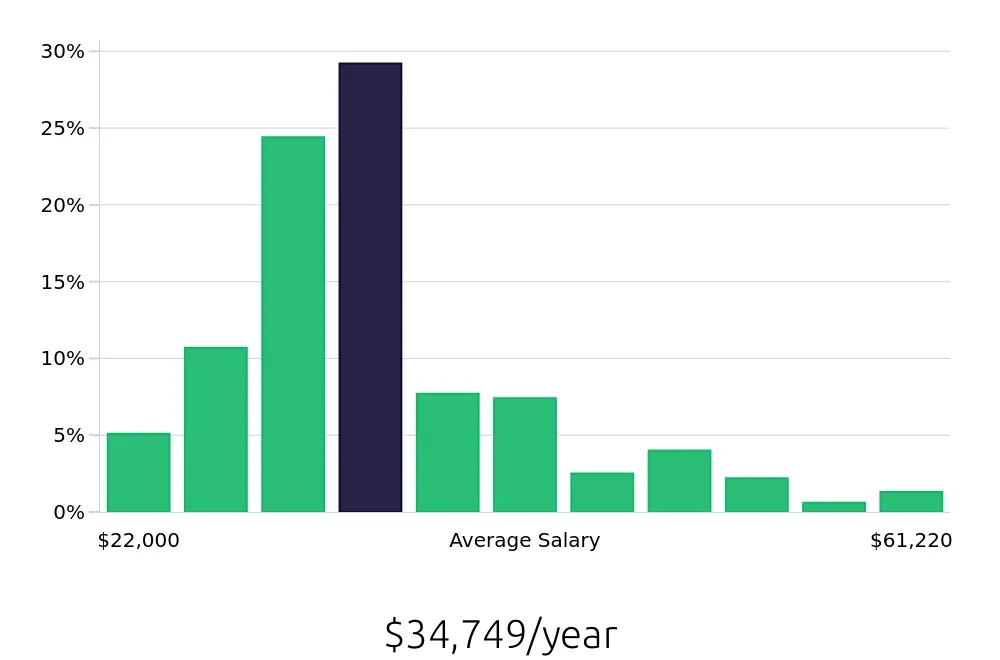
Banquet Housepersons can earn a competitive salary, with an average national annual compensation of $32,730. On an hourly basis, the average pay is $15.74, offering a solid income for those who pursue this profession. The combination of steady job availability and respectable compensation makes this career option highly favorable for job seekers in the hospitality industry.
Currently 145 Banquet Houseperson job openings, nationwide.
Continue to Salaries for Banquet Houseperson