What does a Border Patrol Agent do?
A Border Patrol Agent plays a key role in safeguarding national security. This position requires patrolling land borders to prevent illegal crossings and apprehend those who try to enter the country without authorization. Border Patrol Agents also work closely with other law enforcement agencies to ensure border areas remain safe and secure. They carry out inspections, operate surveillance equipment, and gather information to identify potential threats. The job demands strong observation skills, quick decision-making, and the ability to handle stressful situations.
In addition to preventing illegal crossings, Border Patrol Agents may engage in community outreach. They educate local populations about legal immigration processes and work to build trust with border communities. Agents may also assist in search and rescue operations if someone is lost or in need of help. This role is critical in maintaining the safety and integrity of a nation’s borders. The work is challenging and requires dedication, but it offers the opportunity to serve and protect the country.
To be an effective Border Patrol Agent, one must possess certain qualities. Candidates should have a strong sense of duty, excellent communication skills, and the physical fitness to perform demanding tasks. The ability to work in a team and make swift, informed decisions are essential. This position offers a chance to make a significant impact on public safety and national security.
How to become a Border Patrol Agent?
Becoming a Border Patrol Agent is a rewarding career choice. It offers the opportunity to protect national borders and serve the community. The process involves several steps that ensure candidates meet the necessary requirements. This section outlines the steps to embark on this career path.
Start by meeting the basic requirements. Applicants need to be U.S. citizens, at least 18 years old, and have a high school diploma or GED. It is also important to have a clean criminal record. Following these requirements sets the foundation for the next steps in the process.
Complete the required training. Border Patrol Agents undergo rigorous training at the U.S. Customs and Border Protection (CBP) Training Academy. This training covers various skills, including firearms handling, defensive tactics, and survival techniques. Agents also receive instruction in immigration laws and border security procedures.
- Apply online through the USAJOBS website. Submit an application and required documents.
- Take the Physical Fitness Test (PFT). This test includes a run, push-ups, sit-ups, and a flexibility test.
- Complete a medical examination. This ensures the candidate is in good health and can perform the job duties.
- Pass a background investigation. This includes fingerprinting and a review of the candidate’s history.
- Attend an interview. This step assesses the candidate’s suitability for the role.
How long does it take to become a Border Patrol Agent?
Getting ready to join the Border Patrol involves several steps that each take time. Candidates need to pass a series of tests and evaluations. They must pass a physical fitness test, a medical exam, and a background check. Each of these steps can take a few weeks to several months, depending on how quickly the candidate can complete them.
After clearing these steps, candidates go through basic training at the Border Patrol Academy. This training lasts about 12 weeks. During this time, new agents learn how to perform their duties safely and effectively. The academy covers many topics, such as law enforcement, border security, and first aid. After completing basic training, agents receive on-the-job training. This training often lasts for several months and helps new agents apply what they learned in real situations.
In total, it can take anywhere from six months to a year or more to become a fully trained Border Patrol Agent. The exact time can vary based on each individual's circumstances and how quickly they complete each step.
Border Patrol Agent Job Description Sample
Border Patrol Agents are responsible for ensuring the safety and security of the United States' borders. They enforce immigration laws and regulations, prevent illegal entry of people and goods, and protect against smuggling activities.
Responsibilities:
- Conduct patrols along the borders to detect and prevent illegal entry of people and goods.
- Inspect vehicles, vessels, aircraft, cargo, mail, and persons for violations of U.S. laws and regulations.
- Apprehend individuals suspected of unlawful entry into the United States.
- Collect and analyze information related to illegal activities and smuggling operations.
- Prepare reports and maintain accurate records of all activities and incidents.
Qualifications
- U.S. citizenship required.
- Bachelor’s degree or equivalent experience preferred.
- Completion of the U.S. Border Patrol Academy training program.
- Valid driver’s license.
- Ability to pass a physical fitness test and background check.
Is becoming a Border Patrol Agent a good career path?
Working as a Border Patrol Agent involves patrolling the United States' borders to ensure safety and security. This career combines law enforcement with investigative duties. It requires a mix of physical fitness, strong decision-making skills, and the ability to handle high-pressure situations. Agents must be vigilant and ready to respond to various challenges they face along the border.
Choosing this career path comes with several advantages and disadvantages. Understanding these can help job seekers decide if this is the right job for them. Let’s look at some pros and cons of being a Border Patrol Agent.
The benefits of this job include:
- The chance to protect national borders and ensure the safety of the community.
- Opportunities for job advancement and specialization.
- The potential for a pension and retirement benefits.
- Training and education provided by the U.S. Customs and Border Protection (CBP).
- The possibility of working in various environments, from urban to rural areas.
However, there are also some challenges to consider:
- The job can be physically demanding and sometimes dangerous.
- Shifts may include nights, weekends, and holidays, affecting work-life balance.
- The emotional toll of dealing with people in crisis can be significant.
- Agents may face a high-stress work environment with strict regulations.
- There is a need for constant vigilance and readiness, which can be mentally exhausting.
What is the job outlook for a Border Patrol Agent?
Becoming a Border Patrol Agent offers a promising career path with consistent demand. The Bureau of Labor Statistics (BLS) reports an average of 55,300 job positions open each year for this role. This steady flow of opportunities ensures that job seekers have regular chances to enter this field.
The outlook for Border Patrol Agent positions is positive, with a projected growth of 3.3% from 2022 to 2032. This growth reflects ongoing needs for border security and immigration enforcement, offering stability and potential for career advancement. Job seekers can feel confident in the longevity and relevance of this career choice.
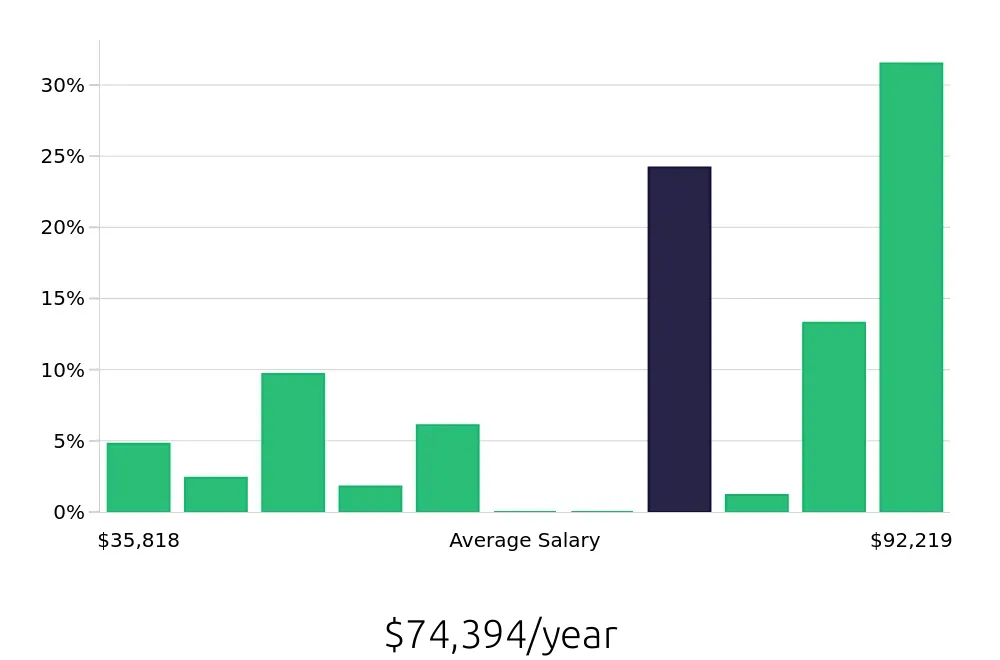
Border Patrol Agents enjoy a competitive salary that reflects the importance of their work. The BLS reports an average annual compensation of $76,550, with an hourly rate of $36.80. This compensation package not only rewards the demanding nature of the job but also provides financial security and benefits for agents and their families. Aspiring Border Patrol Agents can look forward to a rewarding career with both personal fulfillment and professional growth.
Currently 53 Border Patrol Agent job openings, nationwide.
Continue to Salaries for Border Patrol Agent