Position
Overview

What does a Certified Shorthand Reporter do?

A Certified Shorthand Reporter plays a crucial role in various legal, medical, and business settings. This professional captures and transcribes spoken words accurately and efficiently, ensuring that meetings, interviews, and other verbal exchanges are documented in writing. The job requires a keen ear, fast typing skills, and a deep understanding of the context to capture nuances and details.

Responsibilities include preparing official transcripts, maintaining confidentiality, and using specialized software to transcribe audio files. The ability to work under pressure and meet tight deadlines is essential. Certified Shorthand Reporters often work independently or in teams, collaborating with attorneys, doctors, and business executives to ensure accurate documentation. This role requires strong attention to detail, excellent listening skills, and a commitment to maintaining the integrity of the recorded information.

View Certified Shorthand Reporter jobs nearby

How to become a Certified Shorthand Reporter?

Becoming a Certified Shorthand Reporter involves several key steps. This role requires the ability to quickly transcribe spoken words into written form. It is a valuable skill in many professional settings.

The journey to certification begins with education. Most aspiring reporters start with a high school diploma or GED. Following this, they often pursue a certificate or degree in shorthand or a related field. This foundational knowledge sets the stage for specialized training.

The following steps outline the path to becoming a Certified Shorthand Reporter:

  1. Complete a relevant educational program.
  2. Gain practical experience through internships or entry-level positions.
  3. Prepare for certification exams by studying and practicing shorthand techniques.
  4. Take and pass the required certification exams.
  5. Maintain certification by continuing education and staying updated on industry standards.

How long does it take to become a Certified Shorthand Reporter?

To become a Certified Shorthand Reporter, most people spend about two to four years in a specialized program. These programs cover typing, grammar, and legal terminology. Participants usually complete coursework and pass a final exam to earn the certification. Training often includes hands-on practice in various settings, like courtrooms or meetings. Employers may prefer candidates with experience, so some choose to gain work in the field while still in school. This path combines education with practical skills, making it easier to find job opportunities.

The journey to becoming a Certified Shorthand Reporter (CSR) involves a blend of education, practice, and formal certification. On average, it can take about two to four years to complete the necessary training. This includes formal coursework, often through an accredited institution or specialized training program. Some learners may also choose to pursue an associate’s degree in shorthand or a related field, which typically adds another year to the timeline.

During this period, aspiring CSRs undergo extensive training in stenography, shorthand, and transcription. They practice transcribing spoken words at high speeds, ensuring accuracy and fluency. Additionally, individuals often engage in supervised practice to refine their skills. After completing the required training, candidates must then pass a certification exam. This exam tests their ability to transcribe at a fast pace with high accuracy. Once successful, they earn their Certified Shorthand Reporter title, opening doors to various career opportunities in legal, medical, and business settings.

Certified Shorthand Reporter Job Description Sample

We are seeking a skilled Certified Shorthand Reporter to provide accurate and timely transcription of spoken words into written text. The ideal candidate will have a strong command of stenography and exceptional attention to detail.

Responsibilities:

  • Provide accurate and timely transcription of spoken words into written text using stenography.
  • Ensure all documents are formatted correctly and meet the highest standards of quality.
  • Prepare and review transcripts for accuracy and completeness.
  • Work collaboratively with attorneys, judges, and other professionals during legal proceedings, depositions, and meetings.
  • Manage and maintain records of transcripts and related documents.

Qualifications

  • Certification as a Shorthand Reporter from an accredited institution.
  • Proven experience as a Certified Shorthand Reporter in a legal or similar environment.
  • Proficient in using stenography equipment and software.
  • Excellent listening and typing skills.
  • Strong attention to detail and accuracy.

Is becoming a Certified Shorthand Reporter a good career path?

A Certified Shorthand Reporter plays a vital role in legal, medical, and business settings by capturing spoken words in real-time. This profession requires exceptional typing speed, accuracy, and knowledge of specialized terminology. Reporters often work in fast-paced environments, ensuring that every detail is documented correctly. The job provides the satisfaction of contributing to important records and the chance to specialize in specific fields.

Choosing this career path has both benefits and challenges. Here are some pros and cons to consider:

  • Pros:
  • High demand in legal, medical, and business sectors.
  • Opportunities for specialization in areas like law or medicine.
  • Good earning potential for experienced reporters.
  • Job stability due to the ongoing need for documentation.
  • Flexible work options, including freelance and part-time positions.
  • Cons:
  • Requires intense training and certification.
  • Can be physically demanding with long hours of typing.
  • May involve working in stressful or high-pressure situations.
  • Limited career advancement without additional education.
  • Potential for repetitive strain injuries from prolonged typing.

What is the job outlook for a Certified Shorthand Reporter?

If you are a job seeker looking to enter the field of court reporting, becoming a Certified Shorthand Reporter offers promising job prospects. The Bureau of Labor Statistics (BLS) reports an average of 11,600 job openings per year for this profession. This consistent demand highlights the need for skilled professionals who can accurately document legal and business proceedings.

Prospective job seekers can look forward to a positive job outlook with a 4% growth projection from 2022 to 2032. This growth rate is steady, indicating a reliable demand for Certified Shorthand Reporters. With the ongoing need for precise court and business documentation, this career path is expected to remain stable and rewarding.

In addition to a positive job outlook, Certified Shorthand Reporters enjoy a competitive salary. According to the BLS, the average national annual compensation is $70,620, with an hourly rate of $33.95. These figures reflect the valuable skill set and expertise required for this role. For those interested in a lucrative and secure career, becoming a Certified Shorthand Reporter is a smart choice.

Currently 112 Certified Shorthand Reporter job openings, nationwide.

Continue to Salaries for Certified Shorthand Reporter

Learn about Certified Shorthand Reporter salaries, top-paying cities, and hiring companies. See how much you could earn!
Position
Salary
Salaries For Certified Shorthand Reporter
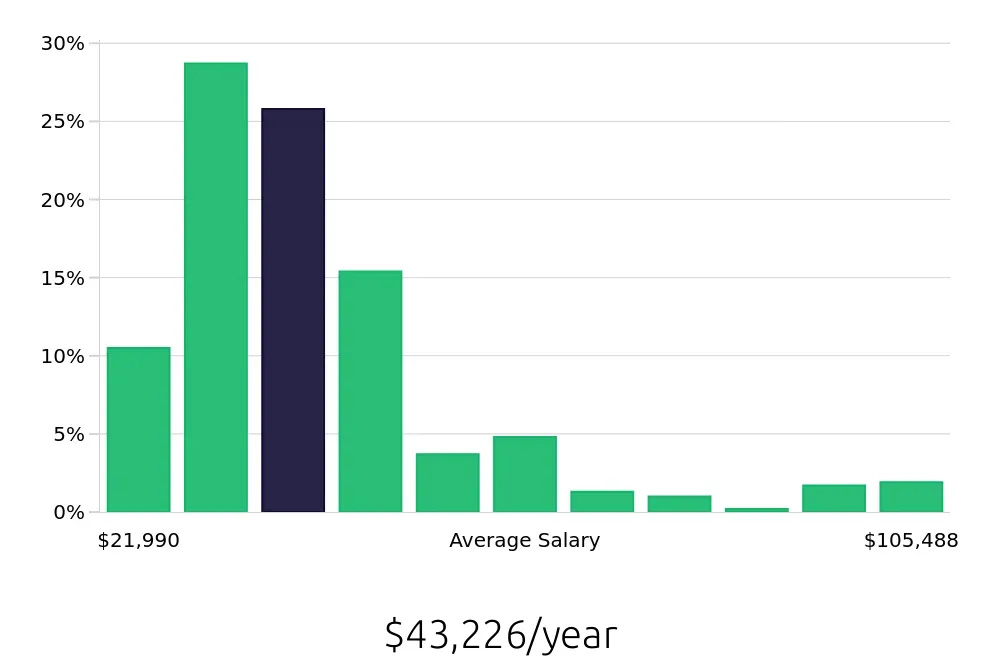
Averge salary $38,628 per year
Graph depicting the yearly salary distribution for Certified Shorthand Reporter positions, showing an average salary of $38,628 with varying distribution percentages across salary ranges.