What does a Credit Assistant do?
A Credit Assistant plays a crucial role in managing financial transactions and ensuring the accuracy of credit information. This position involves monitoring credit limits, analyzing credit applications, and maintaining client accounts. The Credit Assistant works closely with clients to provide timely and accurate information about their credit status. They also collaborate with other departments to resolve any credit-related issues efficiently.
Responsibilities of a Credit Assistant include assessing the creditworthiness of potential clients, verifying financial details, and communicating with clients regarding credit terms. They ensure that all credit records are up-to-date and report any discrepancies to the credit manager. A Credit Assistant must have strong analytical skills and attention to detail. They often use various software and tools to track credit data and manage client accounts. This role is vital for maintaining the financial health of a company and ensuring smooth credit operations.
How to become a Credit Assistant?
Becoming a Credit Assistant involves a structured path with clear steps to ensure success in this role. It is important to understand the qualifications and skills needed to excel in this field. Below are the essential steps to embark on this career.
Firstly, gaining a solid foundation in finance or a related field is crucial. This often involves completing a degree program. Employers typically prefer candidates with at least a bachelor's degree in finance, business, or economics. This educational background provides the necessary knowledge of financial principles and practices.
- Obtain a relevant degree: Start with a bachelor's degree in finance, business, or economics. This education lays the groundwork for understanding financial concepts.
- Gain relevant experience: Seek internships or entry-level positions in finance or credit departments. This experience helps build practical skills and industry connections.
- Develop key skills: Focus on enhancing skills such as attention to detail, analytical thinking, and communication. These skills are vital for assessing credit applications and managing accounts.
- Obtain necessary certifications: Consider certifications like Certified Credit Specialist (CCS) or Credit Risk Analyst (CRA). These credentials can boost your resume and demonstrate your expertise.
- Network and apply: Use professional networks and job boards to find opportunities. Tailor your resume and cover letter to highlight your skills and experience.
Secondly, gaining practical experience through internships or entry-level positions is crucial. Working in finance or credit departments allows you to apply your knowledge and gain hands-on experience. This practical exposure helps you understand the day-to-day tasks of a Credit Assistant. Additionally, developing key skills such as attention to detail, analytical thinking, and communication is essential. These skills help in assessing credit applications and managing accounts effectively. Finally, obtaining certifications can enhance your resume and showcase your expertise in the field. Networking with professionals and applying for relevant positions is the last step to successfully transition into this role.
How long does it take to become a Credit Assistant?
Interested in a career as a Credit Assistant? This role often serves as a stepping stone to more advanced positions in finance. The time it takes to get there can vary. Generally, most individuals complete their training in about one to two years. This includes both formal education and on-the-job training.
Credit Assistants typically start with a high school diploma or GED. Many take additional courses in business or finance to better prepare for the job. Some opt for a two-year associate degree. These programs provide valuable knowledge in areas like accounting and credit management. Experience gained during internships or entry-level positions also helps. Employers often value hands-on experience as much as formal education.
Credit Assistant Job Description Sample
We are seeking a Credit Assistant to join our finance team. The Credit Assistant will be responsible for assisting with credit analysis, managing credit accounts, and ensuring the accuracy of credit-related data. The ideal candidate will have strong analytical skills, attention to detail, and excellent communication abilities.
Responsibilities:
- Assist in the evaluation of credit applications and financial statements.
- Monitor and manage credit accounts, ensuring timely collection of payments.
- Prepare and maintain credit reports and analyses.
- Communicate with clients to resolve credit issues and answer inquiries.
- Collaborate with the finance team to develop credit policies and procedures.
Qualifications
- High school diploma or equivalent required; associate or bachelor’s degree in finance or a related field is preferred.
- Previous experience in credit analysis, collections, or a similar role.
- Strong understanding of credit principles, financial statements, and credit scoring models.
- Proficient in Microsoft Office Suite (Excel, Word, etc.) and credit management software.
- Excellent analytical and problem-solving skills.
Is becoming a Credit Assistant a good career path?
A Credit Assistant plays a key role in financial management for businesses. This role involves checking credit reports, verifying customer information, and ensuring that credit limits are managed correctly. Companies need reliable Credit Assistants to help maintain good relationships with clients and ensure smooth financial operations.
Working as a Credit Assistant offers many benefits. It provides a stable career path with opportunities for growth. You will learn a lot about financial processes and customer interactions. A Credit Assistant can often advance to higher positions such as Credit Manager or Financial Analyst. However, it is important to be aware of some challenges. The job can be repetitive and requires attention to detail. You might also face pressure when dealing with customers who have payment issues.
Here are some pros and cons to consider when thinking about this career:
- Pros:
- Steady employment with many opportunities for growth.
- Skills in financial analysis and customer service are valuable.
- Possibility to work in various industries, including retail and finance.
- Cons:
- The job can be repetitive and may require long hours.
- Dealing with upset customers can be stressful.
- Requires careful attention to detail to avoid errors.
What is the job outlook for a Credit Assistant?
The job outlook for Credit Assistants reflects a steady demand within the financial sector. According to the Bureau of Labor Statistics (BLS), this role sees around 1,200 new job positions annually. This steady pace provides ample opportunity for job seekers to enter the field. With a stable demand, Credit Assistants can expect consistent employment opportunities.
Looking ahead, the BLS projects a slight decrease of 5.8% in job openings from 2022 to 2032. Despite this decline, the role remains essential in financial institutions. This slight decrease does not indicate a lack of opportunities but rather reflects a natural shift in industry needs. Candidates should remain adaptable and open to new challenges in their career paths.
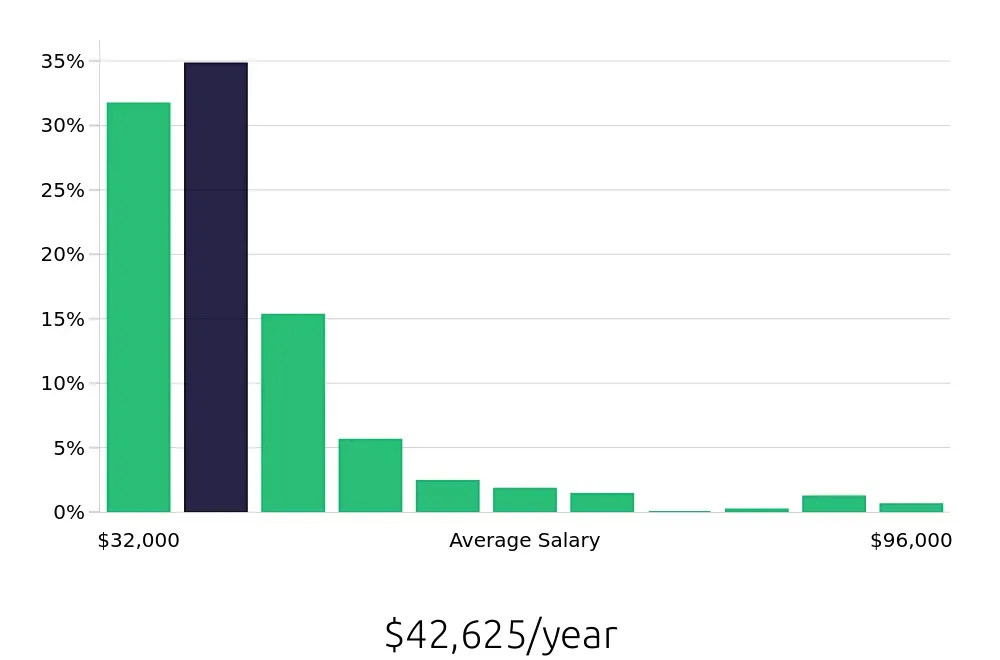
Credit Assistants enjoy a competitive average annual compensation of $50,380, according to the BLS. On an hourly basis, they earn about $24.22. This compensation reflects the important role they play in managing credit operations. Job seekers can look forward to a rewarding career with good earning potential. This salary data makes the role attractive for those entering the financial sector.
Currently 213 Credit Assistant job openings, nationwide.
Continue to Salaries for Credit Assistant