What does a Development Specialist do?
A Development Specialist plays a key role in supporting growth and improvement within a company. They work closely with different teams to identify areas that need enhancement. This position focuses on finding solutions that increase efficiency and productivity. The Development Specialist often conducts training sessions and workshops to help employees learn new skills.
This role involves planning and implementing development programs. The Development Specialist tracks progress and assesses outcomes to ensure objectives are met. They collaborate with managers to align development initiatives with the company's goals. They gather feedback from employees to understand their needs and tailor programs accordingly. This position aims to foster a culture of continuous learning and professional growth.
Key tasks include:
- Conducting needs assessments
- Designing development programs
- Facilitating training sessions
- Evaluating program effectiveness
- Providing coaching and mentoring
How to become a Development Specialist?
Becoming a Development Specialist requires dedication and the right steps. This profession involves planning, designing, and implementing development projects. Individuals in this role must be skilled in project management, technical analysis, and stakeholder communication. The following steps can help anyone achieve this career goal.
First, understanding the role is crucial. A Development Specialist must know the duties, including overseeing projects, managing budgets, and ensuring compliance with regulations. Researching this role helps in preparing for the journey.
- Earn a relevant degree: Most positions require at least a bachelor’s degree in fields like urban planning, civil engineering, or business administration.
- Gain experience: Internships and entry-level jobs in related fields provide practical experience. Working on real projects builds skills and a professional network.
- Develop technical skills: Proficiency in software like AutoCAD, GIS, and project management tools is essential. Taking courses to learn these skills is beneficial.
- Obtain certifications: Certifications in project management (e.g., PMP) or urban planning can enhance credibility. These credentials show a commitment to the profession.
- Network: Connecting with professionals in the industry can open doors to job opportunities. Attending conferences, joining professional groups, and using LinkedIn are effective networking strategies.
How long does it take to become a Development Specialist?
The journey to becoming a Development Specialist involves a mix of education, training, and hands-on experience. Most people start by earning a bachelor's degree in computer science, information technology, or a related field. This academic path typically takes about four years. Completing a degree provides a solid foundation in programming languages, software development, and other key skills.
After earning a degree, gaining practical experience becomes important. This often means working in entry-level positions or internships in the tech industry. This step can take between one to three years, depending on the availability of opportunities and the pace at which one learns. Many Development Specialists choose to further their skills by earning certifications in specific programming languages or tools. This process can add another one to two years to the overall timeline.
In summary, aspiring Development Specialists should plan for a total of six to nine years to gain the necessary education, experience, and certifications. This investment can lead to a rewarding career in technology, with opportunities for growth and advancement.
Development Specialist Job Description Sample
The Development Specialist plays a crucial role in driving the growth and success of the organization by identifying and securing funding opportunities, building partnerships, and managing various development projects. This role requires a proactive and strategic approach to development, with a focus on sustainability and impact.
Responsibilities:
- Identify and secure funding opportunities from government agencies, foundations, corporations, and individual donors.
- Develop and maintain relationships with current and potential donors, including conducting regular donor visits and solicitations.
- Manage and oversee all aspects of grant writing and proposal development, including research, writing, editing, and submission.
- Collaborate with program staff to align fundraising efforts with program goals and objectives.
- Develop and implement fundraising strategies and plans, including special events, major gifts, and planned giving.
Qualifications
- Bachelor’s degree in business, nonprofit management, communications, or a related field. A Master’s degree is preferred.
- Minimum of 3-5 years of experience in fundraising or development, preferably in a nonprofit organization.
- Proven track record of successful grant writing and fundraising, with a strong portfolio of funded proposals.
- Strong written and verbal communication skills, with the ability to effectively communicate complex ideas and concepts to a variety of audiences.
- Excellent interpersonal skills, with the ability to build and maintain strong relationships with donors, partners, and colleagues.
Is becoming a Development Specialist a good career path?
A Development Specialist focuses on creating and managing projects that help organizations grow and improve. This role involves assessing needs, planning strategies, and overseeing projects from start to finish. With a mix of analytical and creative skills, a Development Specialist can work in various sectors, including nonprofit, government, and private industries. This career offers many opportunities for those who enjoy problem-solving and making a positive impact.
Pursuing a career as a Development Specialist has its own set of advantages and challenges. Below are some pros and cons to consider when deciding if this path is right for you.
- Pros:
- Opportunity to make a difference: Development Specialists help organizations achieve their goals and improve communities.
- Variety of sectors: This role can be found in many industries, from nonprofits to government agencies.
- Skill development: Gain experience in project management, research, and strategic planning.
- Cons:
- Pressure to deliver results: Meeting deadlines and achieving goals can be stressful.
- Demanding workload: The job often involves long hours and can be quite demanding.
- Variable income: Salaries can vary greatly depending on the sector and experience level.
What is the job outlook for a Development Specialist?
The job outlook for Development Specialists promises growth and stability in the coming years. According to the Bureau of Labor Statistics (BLS), about 35,400 positions open up each year. This indicates a robust demand for skilled professionals in this field. The BLS projects a 6.3% increase in job openings from 2022 to 2032. This growth reflects a positive trend for those seeking career opportunities in this sector. Securing a position as a Development Specialist can lead to a rewarding and stable career path.
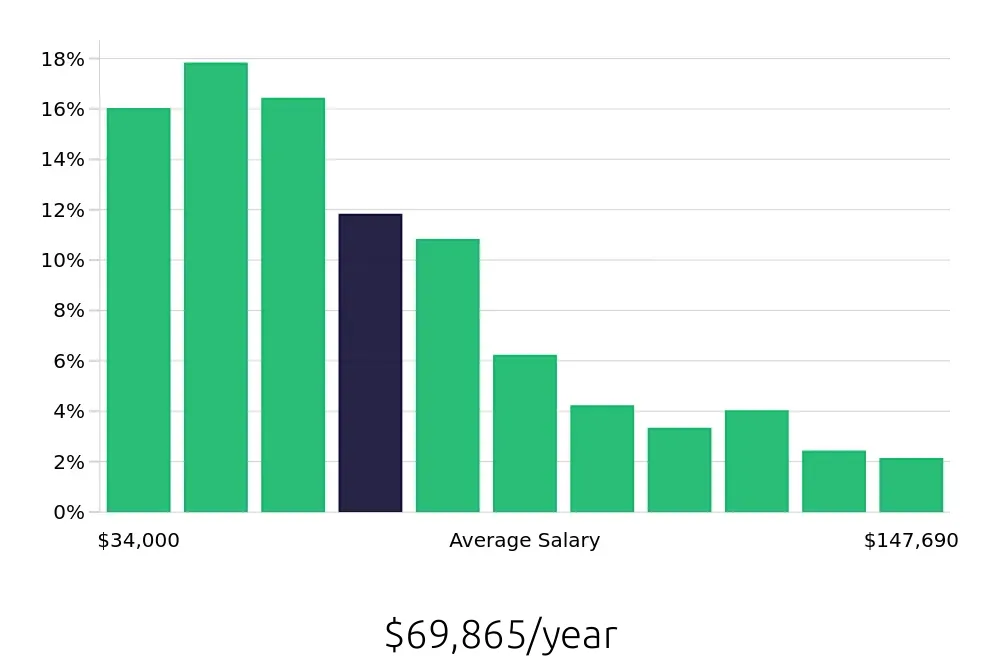
Earnings for Development Specialists are quite attractive. The BLS reports an average national annual compensation of $71,980. This figure highlights the financial benefits associated with this profession. Additionally, the average national hourly compensation stands at $34.6. Such figures suggest that this career offers both financial stability and growth potential. Job seekers can look forward to competitive salaries and benefits packages.
For those considering a career as a Development Specialist, the current job market is promising. The BLS data shows ample job positions each year, along with expected growth in the coming decade. Combined with strong compensation, this makes a compelling case for pursuing this career. The combination of job security, growth prospects, and competitive pay makes it an attractive option for professional job seekers.
Currently 440 Development Specialist job openings, nationwide.
Continue to Salaries for Development Specialist