What does a Dining Room Server do?
A Dining Room Server plays a key role in making dining experiences pleasant and smooth. They work in restaurants, hotels, and private events. Servers greet guests, seat them, and show them their menus. They take orders and ensure guests have everything they need. Servers also clear tables and clean up spills. They keep the dining area clean and neat throughout the meal.
Dining Room Servers must be friendly and attentive. They interact with guests and team members. They need to work well under pressure, especially during busy times. This role demands good communication skills and a positive attitude. It is a great job for someone who enjoys meeting new people and wants to work in a fast-paced environment.
How to become a Dining Room Server?
Becoming a Dining Room Server is a rewarding career choice that offers great opportunities in the food service industry. This role involves serving food and beverages to guests in a restaurant setting and requires a mix of hospitality skills and customer service abilities. Here is a simple guide to becoming a Dining Room Server.
First, find a restaurant that is hiring. Many restaurants look for servers with a friendly personality and a willingness to learn. It is important to have a positive attitude and to be ready to work as part of a team. Start by visiting local restaurants and inquiring about job openings. Many restaurants also post job openings online. Use job search websites and restaurant company websites to find available positions.
- Research restaurants and send a resume.
- Complete any required training.
- Attend interviews and prepare for a possible assessment.
- Undergo a probationary period if hired.
- Start working and continue learning on the job.
Once you have your resume ready, send it to restaurants that interest you. Include your contact information and any relevant experience. If a restaurant likes your resume, they may ask you to come in for an interview. During this time, they may also ask you to complete a training program. This training will teach you how to serve food and drinks and how to handle cash and cards. After training, some restaurants will ask you to serve guests for a short time to test your skills. If you do well, you will start working as a Dining Room Server. Always be ready to learn and improve your skills.
How long does it take to become a Dining Room Server?
The journey to becoming a Dining Room Server can vary based on many factors. Generally, it takes a mix of education, training, and practical experience. Most servers start with a high school diploma or a GED. This basic education sets a solid foundation.
Many take additional steps to enhance their skills. They might enroll in a hospitality or culinary program at a local community college. These programs often last from a few months to a couple of years. They cover topics like table service, customer relations, and food safety. After completing a program, many new servers gain more experience by working entry-level positions in restaurants or cafes. Some people start as bussers, kitchen assistants, or baristas. This hands-on work helps them learn the job quickly. The length of time it takes to become a skilled Dining Room Server can range from several months to a few years, depending on individual circumstances.
Dining Room Server Job Description Sample
A Dining Room Server is responsible for providing high-quality service to restaurant patrons in a fast-paced environment. This role involves taking orders, serving food and beverages, and ensuring a pleasant dining experience for customers. The ideal candidate should have excellent communication skills, a friendly demeanor, and the ability to work efficiently under pressure.
Responsibilities:
- Greet customers warmly and escort them to their tables.
- Take food and beverage orders accurately and deliver them to the kitchen promptly.
- Explain menu items and provide recommendations to customers.
- Serve food and beverages in a timely manner, ensuring high customer satisfaction.
- Restock and maintain the cleanliness of the dining area.
Qualifications
- High school diploma or equivalent required; additional training in food service is a plus.
- Previous experience as a server, host, or in a similar role is preferred.
- Strong communication and interpersonal skills.
- Ability to work in a fast-paced and sometimes stressful environment.
- Knowledge of food and beverage service, including wine and cocktail pairings.
Is becoming a Dining Room Server a good career path?
A career as a dining room server involves working in restaurants, hotels, or banquet facilities, providing food and drink to guests. Servers take orders, deliver meals, and ensure guests have a pleasant dining experience. This role combines customer service with the fast-paced environment of a restaurant. It requires good communication skills and the ability to work well under pressure. Servers often work in shifts, including evenings and weekends, which can be ideal for those who enjoy a dynamic work schedule.
The job of a dining room server comes with its own set of benefits and challenges. Here are some pros and cons to consider:
- Pros:
- Potential for tips, which can increase earnings.
- Opportunities to meet new people daily.
- Ability to work in various settings, from casual cafes to upscale restaurants.
- Skills in customer service that are valuable in many other jobs.
- Cons:
- Standing for long periods can be tiring.
- Variable hours, including nights and weekends, can disrupt personal schedules.
- The job can be physically demanding, with a lot of walking and lifting.
- Income depends on tips, which can fluctuate.
What is the job outlook for a Dining Room Server?
Job seekers interested in becoming a Dining Room Server can find promising opportunities in this field. According to the Bureau of Labor Statistics (BLS), there are around 43,700 job positions available each year. This steady supply of openings means there are consistent chances to find employment. The outlook for this job remains stable, with a projected percent change of 3.1% from 2022 to 2032, indicating a reliable career path.
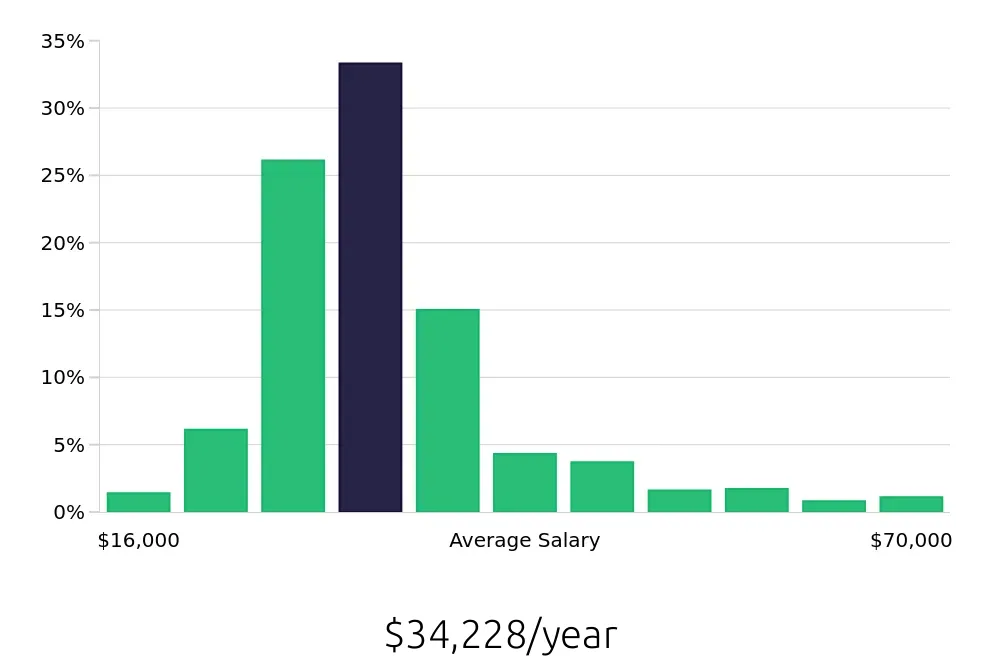
For those entering the job market, the average national annual compensation for Dining Room Servers stands at $33,840, as reported by the BLS. This figure provides a clear expectation of the earning potential for new hires. Additionally, the average hourly compensation is $16.27, offering insight into immediate earnings. These figures reflect a competitive salary within the service industry, making it an attractive option for many job seekers.
In summary, the job market for Dining Room Servers shows a healthy number of positions each year, with stable growth projected through 2032. The average annual and hourly wages are competitive, providing a good financial incentive for those considering this career path. These statistics highlight a solid job outlook for anyone interested in pursuing a role as a Dining Room Server.
Currently 358 Dining Room Server job openings, nationwide.
Continue to Salaries for Dining Room Server