What does a Forensic Specialist do?
A Forensic Specialist plays a critical role in solving crimes by analyzing evidence. This job involves collecting, examining, and interpreting physical evidence found at crime scenes. The specialist uses scientific methods to identify and analyze fingerprints, DNA, and other trace evidence. This helps in building a case and identifying suspects. Their work supports law enforcement and the legal process, ensuring justice is served.
The Forensic Specialist often works in a lab, but also visits crime scenes to collect evidence. They use tools and techniques such as microscopy, chemical analysis, and computer software. Each piece of evidence is carefully documented and preserved. The specialist must maintain accuracy and integrity throughout the process. This job requires attention to detail and a strong understanding of scientific principles. It plays a vital part in the criminal justice system, providing crucial support to investigators and the courts.
How to become a Forensic Specialist?
Becoming a forensic specialist involves a series of steps that prepare professionals to analyze evidence in crime scenes. This career path requires a mix of education, training, and hands-on experience. Each step builds on the previous one, ensuring a solid foundation in forensic science.
Here are the key steps to become a forensic specialist:
- Earn a bachelor's degree: Start with a bachelor’s degree in a field like criminal justice, biology, chemistry, or forensic science. This education provides essential knowledge in the sciences and legal aspects.
- Gain experience: Look for internships or entry-level jobs in crime labs, police departments, or government agencies. Working in these settings offers practical experience and a look into daily tasks.
- Consider further education: Some roles may need a master's degree or specialized certifications. These credentials can enhance skills and job prospects.
- Get certified: Obtaining certifications from organizations like the American Board of Criminalistics can boost credibility and marketability.
- Apply for positions: Use the education, experience, and certifications to apply for jobs in forensic labs, government agencies, or private companies. Each application should highlight relevant skills and experiences.
How long does it take to become a Forensic Specialist?
Becoming a Forensic Specialist can be a rewarding career. It often involves a mix of education, training, and hands-on experience. Many find the journey both challenging and exciting. To work in this field, one typically needs a bachelor’s degree, often in a science-related area like biology or chemistry.
Most universities offer programs that take about four years to complete. Some students might choose to continue with a master’s degree for further specialization. This advanced degree can take an additional two years. Hands-on experience, such as internships or entry-level jobs, is also valuable. This practical work often happens during or after college. Combining education and experience usually takes between six to eight years.
For those ready to dive in, this career path offers many opportunities. The time spent ensures a solid foundation in the necessary skills and knowledge. With dedication, one can enjoy a successful and fulfilling career as a Forensic Specialist.
Forensic Specialist Job Description Sample
We are seeking a highly skilled Forensic Specialist to join our team. The ideal candidate will possess a robust understanding of forensic science, meticulous attention to detail, and the ability to apply scientific principles to solve complex cases. This role involves crime scene investigation, evidence collection, and analysis, as well as providing expert testimony in legal proceedings.
Responsibilities:
- Conduct thorough investigations at crime scenes, ensuring all evidence is collected and documented accurately.
- Perform detailed analysis of physical evidence, including DNA, fingerprints, and other trace evidence.
- Prepare comprehensive reports detailing findings and prepare to testify in court as an expert witness.
- Collaborate with law enforcement agencies, attorneys, and other professionals to ensure accurate interpretation and presentation of forensic evidence.
- Stay updated on the latest forensic techniques, technologies, and legal standards in the field of forensic science.
Qualifications
- Bachelor’s degree in Forensic Science, Criminal Justice, Biology, Chemistry, or a related field. A Master’s degree or higher is preferred.
- Certification from a recognized forensic science board or association (e.g., American Board of Criminalistics, American Academy of Forensic Sciences).
- Proven experience in a forensic laboratory or crime scene investigation, with a strong understanding of forensic techniques and methodologies.
- Excellent analytical skills and the ability to interpret complex data accurately.
- Strong written and verbal communication skills, with the ability to prepare detailed reports and testify in court.
Is becoming a Forensic Specialist a good career path?
A Forensic Specialist analyzes evidence in criminal investigations. They work in labs, crime scenes, and sometimes in the field. Their job involves collecting, examining, and reporting on physical evidence. This evidence helps law enforcement catch criminals. This role requires attention to detail and a solid understanding of scientific methods.
Choosing a career as a Forensic Specialist offers many rewards. Specialists play a key role in the justice system. They help ensure that justice is served. However, the job comes with its own set of challenges. Specialists often work long hours and may face stressful situations. They must maintain high accuracy in their work, as even small mistakes can affect a case.
Consider the following pros and cons of this career:
- Pros:
- Helps solve crimes and support law enforcement.
- Opportunities for specialization in areas like DNA analysis or toxicology.
- Job stability and demand in the justice system.
- Cons:
- Potential exposure to distressing and gruesome evidence.
- Long and irregular hours, including nights and weekends.
- High stress due to the critical nature of the work.
What is the job outlook for a Forensic Specialist?
The job outlook for Forensic Specialists is promising, with an average of 12,800 job positions available each year. This steady demand provides a stable career path for those entering the field. According to the Bureau of Labor Statistics (BLS), job openings are expected to increase by 5.5% from 2022 to 2032, highlighting a positive growth trend. This growth suggests that more opportunities will become available, making it an ideal time for job seekers to pursue a career in forensics.
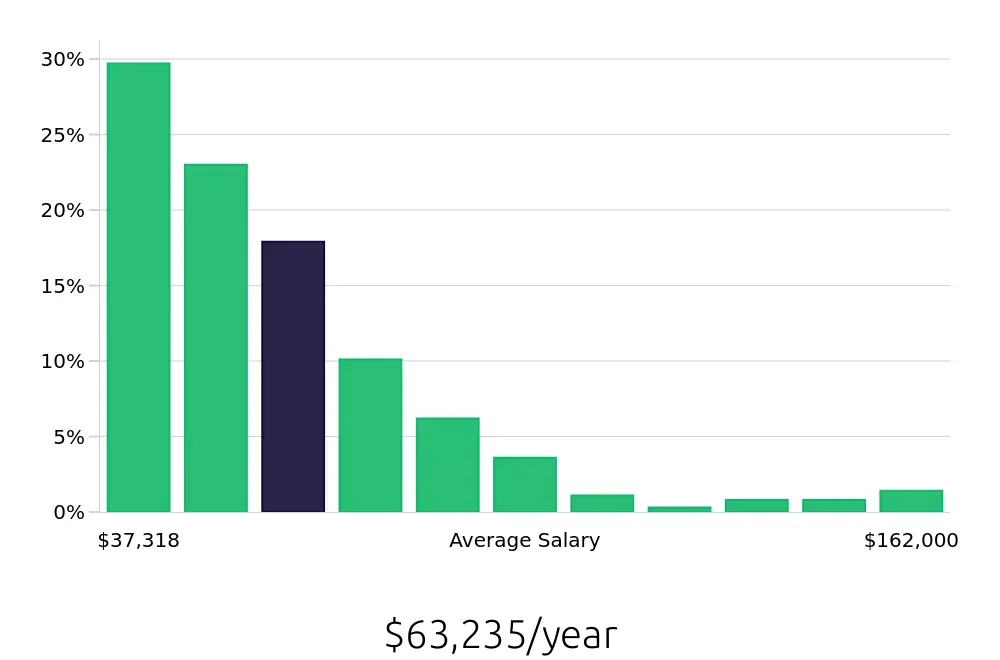
Forensic Specialists can expect a competitive compensation package. The BLS reports an average annual salary of $64,380, reflecting the value of their expertise. Additionally, the average hourly wage stands at $30.95, which can be quite rewarding. These figures indicate that the profession is both financially attractive and secure, making it a desirable choice for many job seekers. With the combination of steady job availability and good compensation, a career in forensics is both viable and lucrative.
For those considering a career as a Forensic Specialist, these statistics paint an encouraging picture. The combination of consistent job opportunities and competitive pay makes it an attractive option. Job seekers should take advantage of this positive outlook and pursue roles in this growing field. With the right qualifications and dedication, a rewarding career in forensic science is within reach.
Currently 38 Forensic Specialist job openings, nationwide.
Continue to Salaries for Forensic Specialist