What does a Funeral Services Assistant do?
A Funeral Services Assistant plays a key role in supporting families during their time of need. This position involves helping to arrange and manage funeral services. The assistant ensures that everything runs smoothly and respectfully for the deceased and their loved ones. They coordinate with funeral directors, families, and other service providers to deliver a seamless experience.
Responsibilities often include preparing the funeral space, handling paperwork, and assisting with the transportation of the deceased. They also support families by providing information about services and options available. The assistant must maintain a compassionate and professional demeanor at all times, offering comfort and support to those in mourning. This role requires excellent communication skills and a keen attention to detail to ensure that all aspects of the funeral service meet the highest standards of care and respect.
Being a Funeral Services Assistant means providing a crucial service to communities, helping families through one of the most challenging times in their lives. It is a role that combines empathy with organizational skills, ensuring that each service is conducted with dignity and respect.
How to become a Funeral Services Assistant?
Becoming a Funeral Services Assistant is a meaningful career path. It involves supporting families during difficult times. The role requires compassion and attention to detail. Understanding the process can help job seekers prepare effectively.
Here are the steps to become a Funeral Services Assistant:
- Complete High School Education: A high school diploma or equivalent is the starting point. It provides the basic education needed for entry-level roles.
- Gain Relevant Experience: Working in roles that involve customer service or caregiving can be beneficial. This experience helps in understanding the needs of others.
- Consider Formal Training: Some states require formal training in mortuary science. Completing a program can enhance job prospects and provide essential skills.
- Obtain Certification: After training, obtaining a license or certification is often necessary. This ensures adherence to legal and professional standards.
- Apply for Positions: Look for job openings at funeral homes, crematoriums, or hospitals. A well-crafted resume highlighting relevant skills and experience will help secure a position.
How long does it take to become a Funeral Services Assistant?
Interested in a career as a Funeral Services Assistant? This role involves many important duties. It includes helping families during difficult times. It also requires working closely with funeral directors and other professionals. Generally, the journey to this career starts with gaining some education and training.
Most people complete a certificate program in funeral services. This typically takes about one year to finish. Some may choose to enroll in a two-year associate’s degree program. These programs cover essential topics. They include the legal aspects of funeral services, grief counseling, and the handling of funeral arrangements. Completing this training equips individuals with the necessary skills. They can then confidently assist families in their times of need. Many programs also offer hands-on experience. This could come through internships or volunteer opportunities at local funeral homes.
Funeral Services Assistant Job Description Sample
The Funeral Services Assistant will provide essential support in the preparation and coordination of funerals, ensuring the smooth operation of all related activities and maintaining a respectful and empathetic environment for families in need.
Responsibilities:
- Assist in the preparation of the deceased, including bathing, dressing, and arranging the body in preparation for the funeral service.
- Coordinate with funeral directors, clergy, and other service providers to ensure all aspects of the funeral service are organized and executed.
- Provide support to families during the funeral service, offering a compassionate presence and ensuring their needs are met.
- Maintain and organize records and paperwork related to funeral arrangements.
- Ensure that all necessary documentation is completed and submitted in a timely manner.
Qualifications
- High school diploma or equivalent required; additional education in mortuary science or funeral service preferred.
- Previous experience in a similar role is advantageous.
- Ability to handle sensitive situations with compassion and empathy.
- Strong communication skills, both verbal and written.
- Attention to detail and the ability to manage multiple tasks simultaneously.
Is becoming a Funeral Services Assistant a good career path?
A Funeral Services Assistant plays a crucial role in helping families during difficult times. This role involves supporting funeral directors and other professionals. They handle tasks like preparing the deceased for viewing, arranging flowers, and assisting with paperwork. This job offers a mix of emotional and practical responsibilities.
Working as a Funeral Services Assistant has its unique benefits and challenges. Consider these factors before pursuing this career path. Here are some pros and cons:
- Pros:
- Provides meaningful work that helps families during tough times.
- Offers opportunities to learn about funeral rites and traditions.
- Often requires minimal formal education, making it accessible.
- Can lead to other roles in the funeral services industry.
- Cons:
- Dealing with death can be emotionally challenging.
- Often requires working irregular hours, including evenings and weekends.
- May have exposure to unpleasant conditions.
- Job satisfaction can vary greatly depending on personal outlook.
What is the job outlook for a Funeral Services Assistant?
The job outlook for Funeral Services Assistants appears promising for those considering a career in this field. According to the Bureau of Labor Statistics (BLS), the average number of job positions available per year is approximately 4,900. This consistent demand points to a stable job market, providing numerous opportunities for job seekers.
The job openings for Funeral Services Assistants are expected to grow by 2.8% from 2022 to 2032. This steady increase suggests a positive trend in the industry, indicating that the demand for these professionals will remain relatively stable over the next decade. Job seekers can expect a fair number of new positions to become available each year.
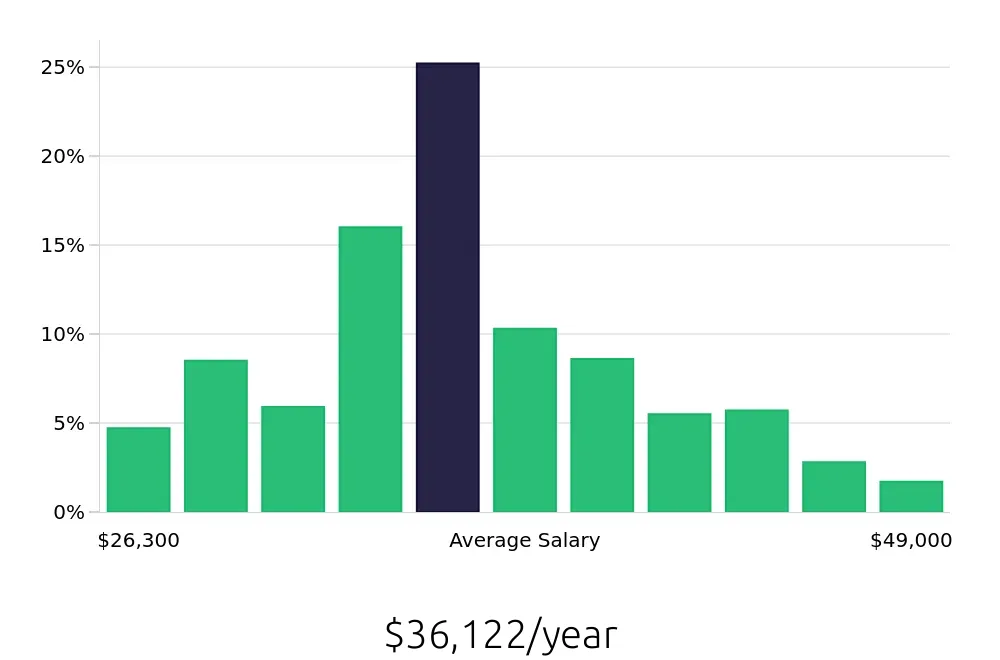
Funeral Services Assistants can expect an average national annual compensation of $35,200. The hourly rate averages around $16.92, offering a decent income for those in the profession. With a stable job market and decent compensation, this career can be both financially rewarding and personally fulfilling for those interested in this line of work. For more detailed information, visit the BLS website.
Currently 118 Funeral Services Assistant job openings, nationwide.
Continue to Salaries for Funeral Services Assistant