Position
Overview

What does a Histology Technician do?

A Histology Technician plays a key role in the medical field. They prepare tissue samples for examination under a microscope. This work helps doctors make accurate diagnoses. They carefully cut, stain, and mount tissue samples. This ensures that the slides are ready for pathologists to study. Accuracy in their work is very important. Each step must be done correctly to ensure reliable results.

In this role, the Histology Technician uses various tools and chemicals. They must follow strict protocols to maintain safety and quality. Attention to detail is crucial. They must document each step they take with precision. This helps in the smooth operation of the lab. The work of a Histology Technician is vital. It directly impacts patient care and treatment decisions. Each day brings new challenges, but also the opportunity to contribute to important medical discoveries.

View Histology Technician jobs nearby

How to become a Histology Technician?

Becoming a Histology Technician involves a series of steps designed to prepare professionals for a rewarding career in medical laboratories. This role is crucial in the healthcare sector, helping doctors diagnose diseases by preparing tissue samples for examination under a microscope. To embark on this path, individuals need to follow a structured process.

The journey starts with acquiring the right education. A high school diploma or equivalent is essential. After that, aspiring Histology Technicians should enroll in a histology program. These programs are often available at community colleges, technical schools, or universities. They provide the necessary training in laboratory techniques and medical terminology. Successful completion of these programs leads to a certificate or an associate's degree, depending on the length and depth of the course.

Once the educational foundation is laid, hands-on experience becomes crucial. Securing an internship or a position in a laboratory during or after the education phase helps gain practical skills. Observing and participating in the preparation of tissue samples, staining procedures, and the operation of laboratory equipment are vital components of this experience. This step not only enhances technical skills but also builds a network within the industry.

  1. Obtain a high school diploma or equivalent.
  2. Enroll in a histology program.
  3. Complete the program to earn a certificate or an associate's degree.
  4. Gain hands-on experience through internships or entry-level positions.
  5. Consider obtaining certification to enhance employability.

Finally, while not always required, obtaining certification can significantly boost a Histology Technician's career prospects. Professional organizations offer certification exams that test knowledge and skills. Passing these exams can lead to higher job opportunities and salaries. Continuous education and staying updated with advancements in laboratory techniques and medical technology are also important for long-term success in this field.

How long does it take to become a Histology Technician?

The path to becoming a Histology Technician usually takes about two years. This process involves earning a certificate or an associate's degree from a community college or vocational school. During this time, students learn essential skills in preparing tissue samples for examination under a microscope. Students focus on practical training, gaining experience in lab settings. They learn how to use special tools and techniques to cut, stain, and prepare tissue samples. After completing the education program, students can take a certification exam to become a registered histology technician. This credential enhances job prospects and opens up more opportunities in the field.

The path to becoming a Histology Technician involves specific education and training. Most enter the field with at least a post-secondary certificate. This program often takes about one to two years to complete. During this time, students learn about tissue preparation and slide staining.

Some professionals choose to enhance their knowledge and job prospects with an associate degree. An associate degree usually adds about one to two more years to the process. These programs provide more in-depth training and may include internships. This helps graduates get hands-on experience in a lab setting. A higher level of education can lead to better job opportunities and higher pay.

Histology Technician Job Description Sample

A Histology Technician prepares tissue samples for microscopic examination, enabling pathologists to make accurate diagnoses. This role involves processing, embedding, sectioning, and staining tissue samples to facilitate examination by medical professionals.

Responsibilities:

  • Collect and process tissue samples from surgical operations, autopsies, and biopsies.
  • Embed tissue specimens in paraffin and other media to prepare for slicing.
  • Section tissue specimens using a microtome and apply stains to enhance visibility of cellular structures.
  • Mount tissue sections onto glass slides for examination under a microscope.
  • Maintain detailed records of sample handling, processing, and storage.

Qualifications

  • Bachelor's degree in Histology, Medical Laboratory Science, or a related field.
  • Certification from a recognized institution (e.g., ASCP, CLS) preferred.
  • Proven experience in a histology laboratory setting.
  • Strong attention to detail and accuracy in sample preparation.
  • Ability to work independently and within a team.

Is becoming a Histology Technician a good career path?

Histology Technicians play a key role in medical diagnostics. They prepare and examine tissue samples. This work helps doctors make accurate diagnoses. The role involves both lab and analytical work. Technicians must handle samples with care and precision. They work closely with pathologists and other medical staff.

Choosing this career path offers various benefits and challenges. Consider these points when exploring this field:

  • Pros:
    • Opportunities to help diagnose diseases
    • Job stability in healthcare settings
    • Potential for career advancement
  • Cons:
    • Possible exposure to biohazards
    • Need for attention to detail
    • Some positions may require night or weekend shifts

A Histology Technician must balance these pros and cons. The work requires dedication and a steady hand. It also offers the chance to be part of a crucial healthcare team.

What is the job outlook for a Histology Technician?

The job outlook for Histology Technicians is promising, offering stability and growth opportunities. Each year, about 24,000 new positions become available, according to the U.S. Bureau of Labor Statistics (BLS). This steady demand shows that healthcare facilities continue to need skilled professionals. Job seekers interested in this field can find plenty of opportunities.


The number of available positions is expected to grow by 4.9% from 2022 to 2032. This increase suggests a positive trend for those entering the profession. As the population ages and healthcare needs grow, the need for trained Histology Technicians will rise. This makes it a smart career choice for job seekers looking for long-term stability.


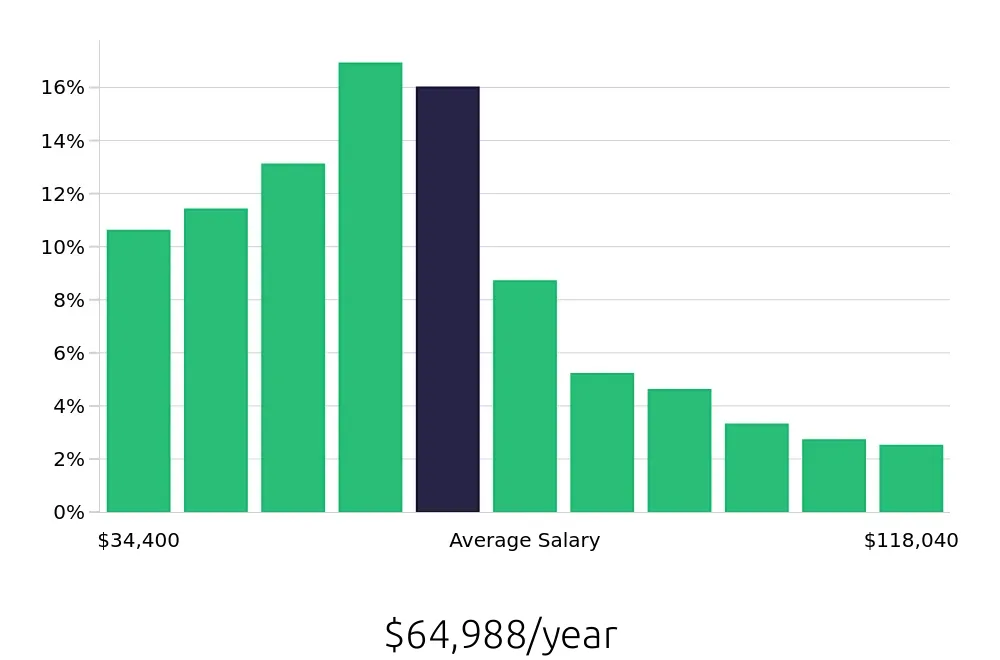
Histology Technicians enjoy a competitive salary as well. The average annual compensation stands at $62,870. This figure highlights the financial benefits of this career. Hourly wages average around $30.22, showing that the work is both valuable and rewarding. For job seekers, this means not only job security but also a good income.

Currently 162 Histology Technician job openings, nationwide.

Continue to Salaries for Histology Technician

Learn about Histology Technician salaries, top-paying cities, and hiring companies. See how much you could earn!
Position
Salary
Salaries For Histology Technician
Averge salary $63,332 per year
Graph depicting the yearly salary distribution for Histology Technician positions, showing an average salary of $63,332 with varying distribution percentages across salary ranges.