What does a Industrial Hygienist do?
An Industrial Hygienist plays a crucial role in ensuring workplace safety. They identify and evaluate potential health hazards in the workplace. This position focuses on preventing work-related injuries and illnesses. Industrial Hygienists conduct assessments to measure air quality, noise levels, and exposure to harmful substances. They analyze data to determine risks and develop strategies to mitigate them.
Industrial Hygienists work closely with management and employees to promote a healthy work environment. They design safety programs and training sessions. They also create policies and procedures to protect workers. This role requires a strong understanding of occupational health and safety regulations. Industrial Hygienists often collaborate with other professionals, including engineers, doctors, and safety officers. This position is essential for maintaining a safe and productive workplace.
How to become a Industrial Hygienist?
Becoming an industrial hygienist offers an exciting opportunity to ensure workplace safety and health. This role involves identifying and controlling risks in the workplace. It is essential for preventing illnesses and injuries. Follow these steps to start a career in this field:
First, obtain the right education. Most industrial hygienists hold a bachelor's degree in science. A degree in environmental health, biology, chemistry, or a related field can be helpful. These studies will cover important topics like chemistry, physics, biology, and statistics. These skills are vital for assessing workplace hazards.
- Gain practical experience.
- Earn certifications.
- Keep learning and stay updated.
- Network with professionals.
- Find job opportunities.
Next, gain practical experience. Internships or entry-level positions in health and safety can be very useful. Working with experienced industrial hygienists will provide valuable insights and skills. Experience in the field is often required for career advancement.
Then, earn certifications. The Board of Certified Safety Professionals (BCSP) offers the Certified Industrial Hygienist (CIH) credential. To qualify, candidates must have the right education and experience. Passing an exam is also required. This certification can boost your career prospects and credibility.
Continue learning and stay updated. Industrial hygiene is a field that constantly changes. New regulations and technologies emerge frequently. Attending workshops, seminars, and conferences can help. Joining professional organizations, like the American Industrial Hygiene Association, can also be beneficial.
Finally, network with professionals. Building relationships in the field can lead to job opportunities. Attend industry events and connect with others on professional networks like LinkedIn. Talking with experienced hygienists can provide valuable advice and support.
How long does it take to become a Industrial Hygienist?
Industrial hygienists play a vital role in ensuring workplace safety by identifying and reducing health hazards. The journey to this role involves a series of steps. First, a bachelor’s degree in a related field like environmental science or biology provides a strong foundation. Next, gaining practical experience through internships or entry-level positions helps build essential skills. Many professionals also pursue certifications, such as Certified Industrial Hygienist (CIH), to enhance their credentials.
On average, it takes about four to six years to become an industrial hygienist. This timeline can vary based on individual circumstances. Some may complete a bachelor’s degree in four years, while others might opt for a master’s degree, extending the timeline by an additional two years. Practical experience and certifications can take another one to two years, depending on availability and dedication. Each step is important, ensuring that professionals are well-prepared to protect workers' health effectively.
Industrial Hygienist Job Description Sample
We are seeking a dedicated Industrial Hygienist to join our team. The Industrial Hygienist will be responsible for identifying, evaluating, and controlling environmental health and safety hazards in the workplace. This role will involve conducting assessments, implementing safety protocols, and ensuring compliance with relevant regulations.
Responsibilities:
- Conduct regular assessments of workplace environments to identify potential health and safety hazards.
- Evaluate the effectiveness of existing safety measures and recommend improvements.
- Develop and implement industrial hygiene programs and safety protocols.
- Conduct air quality, noise, and chemical exposure assessments.
- Monitor and analyze occupational health data to identify trends and areas for improvement.
Qualifications
- Bachelor's degree in Industrial Hygiene, Environmental Health, Occupational Health, or a related field.
- Certified Industrial Hygienist (CIH) or equivalent certification preferred.
- Proven experience in an industrial hygiene role.
- Strong knowledge of occupational health and safety regulations and standards.
- Excellent analytical and problem-solving skills.
Is becoming a Industrial Hygienist a good career path?
An Industrial Hygienist plays a crucial role in ensuring workplace safety by identifying and managing health risks. This career involves assessing environments to prevent exposure to harmful substances. Industrial Hygienists conduct tests, analyze data, and recommend controls to protect workers’ health. Companies rely on them to comply with safety regulations, which is vital in industries such as manufacturing, construction, and healthcare.
This career offers several benefits. Industrial Hygienists help create safer work environments, which can reduce accidents and illnesses. They often work with diverse teams and use advanced technology. However, the job has its challenges. Industrial Hygienists may face dangerous conditions while collecting samples. The work can be physically demanding and sometimes stressful, especially when dealing with hazardous materials. Balancing these pros and cons can guide those considering this career path.
Consider these pros and cons when thinking about a career as an Industrial Hygienist:
- Pros:
- Helps protect workers’ health and safety
- Opportunities to work in various industries
- Potential for career advancement and specialization
- Use of technology and scientific methods
- Cons:
- Exposure to hazardous materials and environments
- Physical demands of fieldwork
- Potential for high stress and long hours
- Need for continuous education and certification
What is the job outlook for a Industrial Hygienist?
Industrial hygienists play a crucial role in ensuring workplace safety by identifying and mitigating health hazards. This profession provides stable job opportunities, with an average of 24,100 positions available each year. The job outlook is positive, with a projected growth of 11.2% from 2022 to 2032. This increase reflects growing concerns about workplace health and safety across various industries.
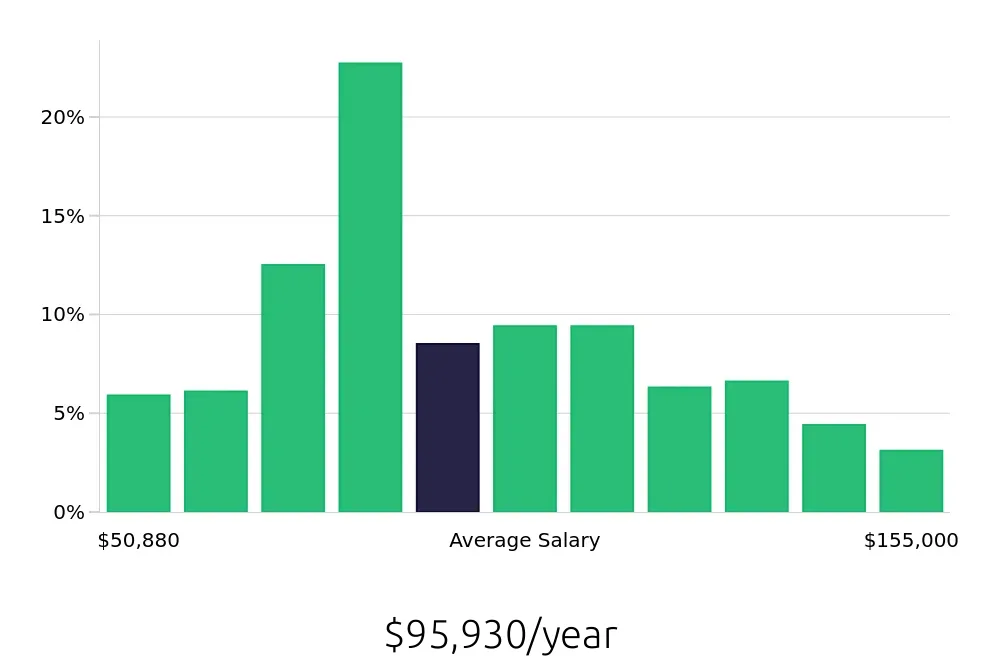
Industrial hygienists earn a competitive salary, with an average annual compensation of $103,510. The hourly rate stands at $49.76, according to the Bureau of Labor Statistics. These figures highlight the value placed on professionals who can prevent health risks in the workplace. The salary and job stability make this field attractive for career development and financial security.
Interested individuals should note that the demand for industrial hygienists continues to rise, driven by the need to comply with health regulations and protect workers. The combination of a steady number of job openings, positive growth projections, and a strong salary package makes industrial hygiene a promising career path for job seekers looking for stability and professional fulfillment.
Currently 71 Industrial Hygienist job openings, nationwide.
Continue to Salaries for Industrial Hygienist