What does a Laboratory Assistant do?
A Laboratory Assistant plays a key role in the smooth operation of a scientific lab. They support scientists and technicians by preparing materials, setting up experiments, and maintaining equipment. Tasks often include measuring and recording data, organizing materials, and ensuring cleanliness and safety in the lab. This position requires attention to detail and a strong understanding of lab procedures.
Daily duties may vary depending on the specific lab. Common tasks include:
- Preparing and maintaining lab equipment
- Assisting with experiments and research projects
- Conducting basic tests and observations
- Keeping detailed records of all experiments and results
- Ensuring all lab areas comply with safety regulations
How to become a Laboratory Assistant?
Becoming a laboratory assistant can lead to a rewarding career in scientific research and analysis. This role involves supporting scientists and technicians in their experiments and data collection. Here are the steps to start your journey in this field.
The process begins with education. A high school diploma is a basic requirement. Most employers prefer candidates with a degree in a related field such as biology, chemistry, or medical laboratory technology. These programs provide essential knowledge and skills needed in the laboratory.
- Obtain a high school diploma or equivalent.
- Enroll in a relevant degree program.
- Gain hands-on experience through internships or entry-level positions.
- Consider certification if available in your region.
- Apply for laboratory assistant positions and continue to develop skills.
After completing the educational requirements, gaining hands-on experience is crucial. Internships and entry-level positions offer the opportunity to work in a laboratory setting. This experience helps to develop practical skills and understand the daily tasks of a laboratory assistant. Certification, although not always necessary, can enhance job prospects by showing commitment to the profession. Finally, start applying for laboratory assistant positions. Continuous learning and skill development can lead to advancement in this career.
How long does it take to become a Laboratory Assistant?
To become a Laboratory Assistant, a structured educational path and some hands-on experience are necessary. Most positions require at least a high school diploma or equivalent. Some employers may prefer candidates with postsecondary education, such as a certificate or associate degree in a related field. The time it takes to complete these educational steps can vary.
A high school diploma usually takes four years to obtain. If a candidate pursues a certificate or associate degree, this can take an additional one to two years. Many educational programs offer flexible schedules, allowing students to study part-time while working. This flexibility can shorten the overall time to qualification. Some candidates may choose to gain experience through internships or on-the-job training, which can further refine skills and enhance employability.
Laboratory Assistant Job Description Sample
We are seeking a detail-oriented and highly motivated Laboratory Assistant to join our team. The ideal candidate will support laboratory operations, perform routine laboratory tasks, and assist in the maintenance of laboratory equipment and supplies.
Responsibilities:
- Prepare and set up laboratory equipment and supplies for experiments and tests.
- Assist with the collection, labeling, and storage of samples.
- Maintain accurate records of laboratory activities and data.
- Perform routine maintenance and calibration of laboratory instruments.
- Follow all safety and regulatory guidelines while handling materials and chemicals.
Qualifications
- High school diploma or equivalent required; relevant post-secondary education preferred.
- Previous experience in a laboratory setting is preferred.
- Strong understanding of laboratory safety protocols and practices.
- Basic knowledge of laboratory equipment and instruments.
- Attention to detail and accuracy in data recording and sample handling.
Is becoming a Laboratory Assistant a good career path?
A Laboratory Assistant plays a key role in scientific research and testing. They work in labs and hospitals, supporting scientists and technicians. They handle tasks like preparing samples, maintaining equipment, and recording data. This job requires attention to detail and careful following of safety rules. It is a good choice for those who enjoy working with science and technology.
Choosing a career as a Laboratory Assistant has many benefits. First, it offers hands-on experience with scientific equipment. This job helps you learn about different lab processes. You can gain skills that are useful in many science fields. Another benefit is job stability. Labs are always needed in research, healthcare, and education. Good Laboratory Assistants often find steady work. However, this career also has some challenges. The job can be repetitive, and it often involves working with chemicals and other hazardous materials. It may require working outside of regular hours, including nights and weekends.
Here are some pros and cons of being a Laboratory Assistant:
- Pros:
- Hands-on experience with lab equipment and scientific methods.
- Opportunities to work in different scientific fields.
- Stable job opportunities in research, healthcare, and education.
- Cons:
- Repetitive tasks can be a challenge.
- Possible exposure to hazardous chemicals.
- Need to work outside of regular hours, including nights and weekends.
What is the job outlook for a Laboratory Assistant?
The job outlook for Laboratory Assistants shows promising growth. The Bureau of Labor Statistics (BLS) reports about 5,500 job positions available each year. This means many opportunities open for those seeking to enter this field. With an expected percent change of 4.9% from 2022 to 2032, there are signs of steady growth in this career path. Job seekers should find it easier to find positions over the next decade.
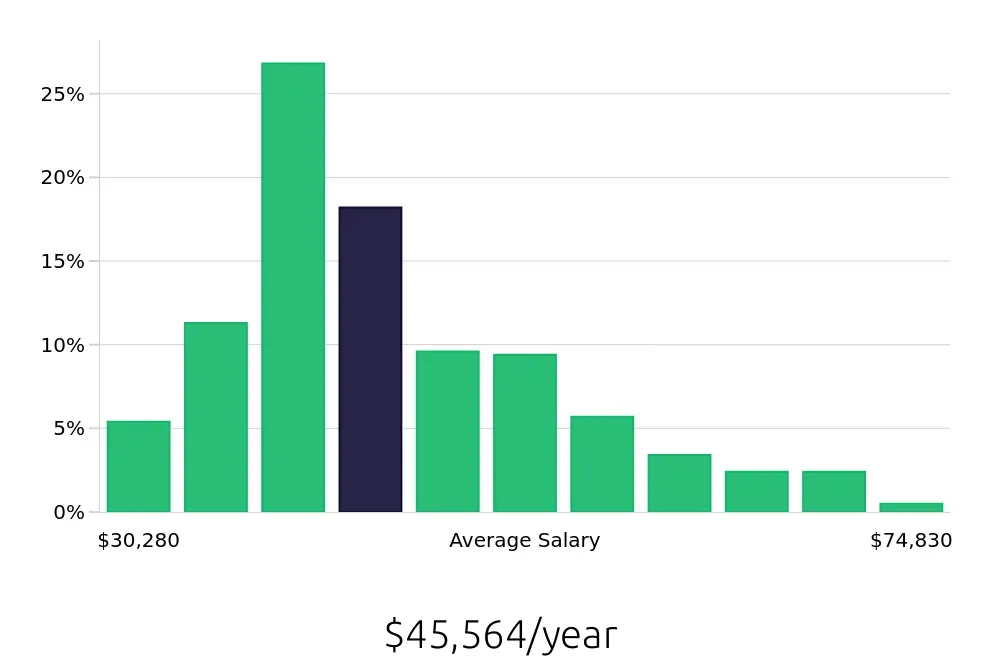
A career as a Laboratory Assistant also offers a competitive salary. The average national annual compensation stands at $50,660, according to the BLS. This figure highlights the potential for a stable income. On an hourly basis, Laboratory Assistants earn an average of $24.36. This rate reflects the value employers place on their skills and contributions. For job seekers, these figures suggest a chance at a rewarding and financially sound career.
For those interested in a Laboratory Assistant role, the combination of job availability and salary makes it a compelling choice. The BLS data indicates both growth and stability in this field. This outlook provides confidence to job seekers looking to start or advance their careers in laboratory settings.
Currently 616 Laboratory Assistant job openings, nationwide.
Continue to Salaries for Laboratory Assistant