What does a Laboratory Assistant do?
A Laboratory Assistant supports scientific research by handling various tasks in a lab. This role involves preparing samples, setting up experiments, and maintaining equipment. They work closely with scientists and researchers to ensure smooth operations. Daily duties may include measuring chemicals, operating machinery, and recording data. This position requires attention to detail and the ability to follow precise instructions.
Laboratory Assistants play a crucial role in the accuracy and efficiency of scientific work. They ensure that experiments proceed as planned and that all materials are ready for use. Assistants also manage inventory, order supplies, and clean lab spaces. This position demands a strong commitment to safety and cleanliness. They must adhere to protocols to maintain a safe working environment. This role provides valuable support to the research team, helping them achieve their goals.
How to become a Laboratory Assistant?
Becoming a Laboratory Assistant offers a rewarding career path in the scientific field. This role supports scientists and researchers by conducting tests and experiments. It requires attention to detail and a passion for science. Understanding the process can help set someone on the right track.
The journey to becoming a Laboratory Assistant involves several steps. Following these steps can lead to a successful career in this important role. Below are the essential steps to achieve this goal.
- Get a High School Diploma: Start with a high school diploma or GED. This is the basic requirement for entry into this field.
- Take Relevant Courses: Enroll in science courses in high school or community college. Focus on biology, chemistry, and physics. These courses provide a strong foundation in scientific knowledge.
- Obtain a Certification or Degree: Pursue a certification or associate degree in laboratory technology or a related field. This formal education provides practical skills and knowledge necessary for the job.
- Gain Experience: Look for internships or entry-level positions in laboratories. This hands-on experience helps to understand laboratory procedures and equipment.
- Network and Apply: Connect with professionals in the field through job fairs or industry events. Apply for positions that match your skills and experience. Prepare a resume and cover letter that highlight your education and relevant experience.
How long does it take to become a Laboratory Assistant?
Interested in a career as a laboratory assistant? It usually takes a mix of education and practical training. Most people start with a high school diploma or a GED. Some employers might prefer or require a postsecondary certificate or associate degree in a related field, such as medical laboratory technology.
Postsecondary programs can range from a few months to two years. They often include coursework in biology, chemistry, and laboratory procedures. During these programs, students gain hands-on experience through lab work and internships. This practical training is key to preparing for the job. After completing the necessary education and training, the pathway to becoming a laboratory assistant is clear and achievable.
Laboratory Assistant Job Description Sample
The Laboratory Assistant will support scientists and researchers by performing a variety of routine tasks and experiments to ensure the smooth operation of the laboratory. This role involves handling laboratory equipment, maintaining records, and assisting in the preparation of samples and experiments.
Responsibilities:
- Assist in setting up and maintaining laboratory equipment and supplies.
- Conduct routine laboratory tests and experiments under supervision.
- Prepare and organize samples, reagents, and solutions as directed.
- Maintain accurate records of experiments, observations, and data.
- Clean and sterilize laboratory equipment and workspaces.
Qualifications
- High school diploma or equivalent required; a degree in a science-related field is preferred.
- Previous experience in a laboratory setting is highly desirable.
- Knowledge of laboratory equipment and standard laboratory techniques.
- Ability to follow detailed instructions and maintain accuracy in record-keeping.
- Strong attention to detail and organizational skills.
Is becoming a Laboratory Assistant a good career path?
A Laboratory Assistant plays a vital role in scientific and medical research. They help scientists and technicians by preparing samples, conducting basic tests, and maintaining laboratory equipment. This job involves working in a variety of settings, including research labs, hospitals, and educational institutions. It is an entry-level position that can lead to more specialized roles with experience.
There are many benefits to working as a Laboratory Assistant. One of the main pros is the opportunity to work in a hands-on environment. This role allows individuals to be directly involved in experiments and research. It also offers a chance to learn about new technologies and scientific methods. Another benefit is the potential for career advancement. With additional training and experience, Laboratory Assistants can move into higher positions such as Lab Technician or Research Scientist. However, it is important to consider the cons as well. This job can be repetitive and may require long hours, especially during busy periods. The work can also involve handling hazardous materials, which requires careful safety training and precautions.
Before choosing this career path, consider the following pros and cons:
- Pros:
- Hands-on work environment
- Opportunities for learning and training
- Pathways for career advancement
- Cons:
- Potential for repetitive tasks
- Long hours during busy times
- Handling hazardous materials
What is the job outlook for a Laboratory Assistant?
The job outlook for Laboratory Assistants is positive. Each year, about 5,500 new positions open. This number is expected to grow by 4.9% from 2022 to 2032, according to the Bureau of Labor Statistics (BLS). This growth suggests many opportunities for those interested in this career.
Laboratory Assistants play a crucial role in scientific research and testing. They work in various settings, including medical labs, educational institutions, and government agencies. This versatility allows for a wide range of job options. With the increasing demand for laboratory services, job seekers have many paths to explore.
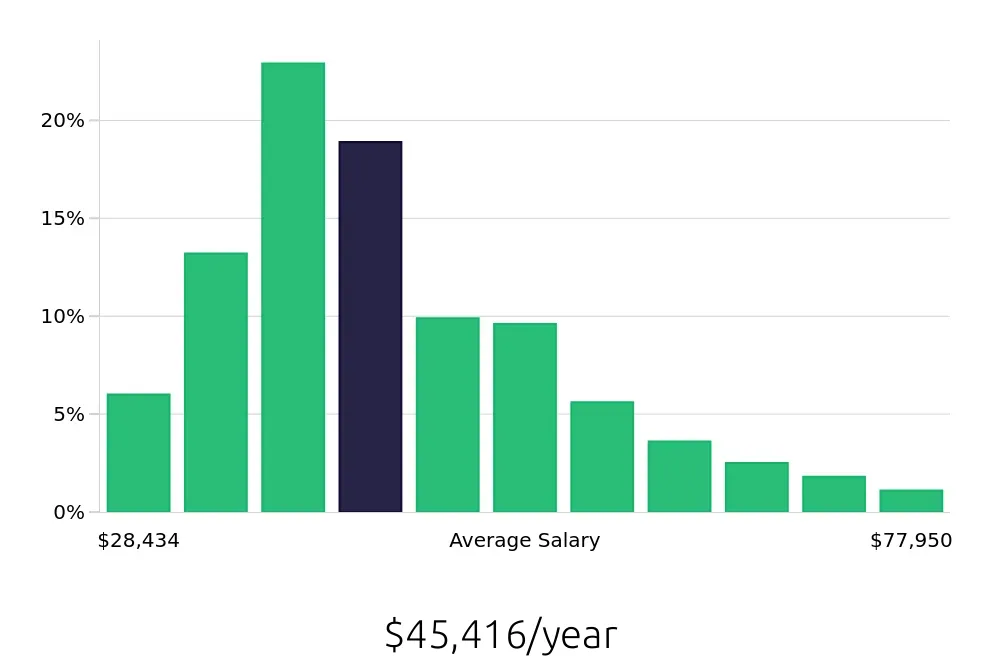
In terms of pay, the average annual compensation for Laboratory Assistants is $50,660. Hourly, they earn about $24.36. These figures reflect the value of the skills and expertise that Laboratory Assistants bring to their work. With experience and additional training, there are good chances for career advancement and salary growth. The BLS reports that these positions offer a stable and rewarding career path.
Currently 1,293 Laboratory Assistant job openings, nationwide.
Continue to Salaries for Laboratory Assistant