Position
Overview

What does a Physician do?

Physicians play a vital role in healthcare. They diagnose and treat illnesses, manage patients' health, and provide medical care. Physicians examine patients, review their medical history, and order tests. They interpret test results and diagnose conditions. Physicians then create treatment plans. These plans may include medication, lifestyle changes, or surgery. Physicians also offer advice on how to prevent future health issues. They provide check-ups and vaccinations. Physicians work in hospitals, clinics, and private practices.

A physician’s responsibilities also include educating patients about their health. They explain test results and discuss treatment options. Physicians must keep up with the latest medical research. This ensures they offer the best care. They work with other healthcare professionals, such as nurses and specialists. This teamwork helps patients receive comprehensive care. Physicians must be skilled in communication and empathy. They must listen to patients and understand their concerns. This helps build trust and leads to better health outcomes.

View Physician jobs nearby

How to become a Physician?

Becoming a physician is a rewarding career choice that requires dedication and hard work. This journey involves several key steps, each essential for progressing through medical education and training. The process begins with acquiring the right educational background and ends with completing a residency program. Here is an overview of the steps to becoming a physician:

  1. Earn a bachelor's degree. Start with a four-year undergraduate program. Focus on science courses such as biology, chemistry, and physics.
  2. Take the Medical College Admission Test (MCAT). This standardized test is a key part of medical school applications. Study well to perform your best.
  3. Apply to medical school. Submit applications, transcripts, MCAT scores, and letters of recommendation. Choose a medical school that fits your goals.
  4. Complete medical school. Medical school lasts four years. The first two years focus on classroom and lab work. The last two years involve clinical rotations in various medical settings.
  5. Complete a residency program. After medical school, choose a specialty. Residency programs last between three to seven years, depending on the specialty.

Each step in this process is critical. Start with a strong foundation in science and aim for high scores on the MCAT. Choose a medical school that offers the best opportunities for your career goals. During medical school and residency, gain practical experience and learn from experienced physicians. By following these steps, a dedicated individual can successfully become a physician.

How long does it take to become a Physician?

Many people choose to become physicians. This career path typically requires four years of undergraduate study, four years of medical school, and three to seven years in a residency program. Each step provides necessary skills and knowledge. Medical school demands rigorous coursework and clinical practice. Students must complete rotations in various specialties to understand different medical fields. Residency programs allow new physicians to practice under supervision in their chosen specialty. This training helps them gain the experience needed for independent practice.

The journey to becoming a physician involves several key steps. First, completing a bachelor's degree takes about four years. During this time, students focus on science courses.

Next, aspiring physicians attend medical school, which lasts another four years. Here, they study a wide range of medical topics and gain practical experience. The journey does not end with medical school. After graduation, new doctors must complete a residency program. This training lasts from three to seven years, depending on the specialty chosen. Residency allows doctors to practice medicine under supervision, gaining valuable skills and experience. Finally, many choose to take board exams to become certified in their specialty.

Physician Job Description Sample

We are seeking a highly skilled and compassionate Physician to join our healthcare team. The ideal candidate will provide comprehensive medical care, diagnose and treat illnesses, and promote overall health and wellness for our patients.

Responsibilities:

  • Conduct thorough patient assessments, including medical history reviews and physical examinations.
  • Diagnose and treat acute and chronic medical conditions.
  • Develop and implement individualized patient care plans.
  • Order and interpret diagnostic tests, such as lab work and imaging studies.
  • Provide preventive care, including vaccinations and health screenings.

Qualifications

  • Medical degree from an accredited institution.
  • Completion of residency training in a relevant specialty.
  • Valid medical license to practice in the state of employment.
  • Board certification in a relevant specialty (if applicable).
  • Excellent diagnostic and clinical skills.

Is becoming a Physician a good career path?

Choosing a career as a physician offers a path filled with rewarding opportunities and challenges. Physicians diagnose and treat illnesses, manage patient care, and work in various medical settings. This role requires years of education, including undergraduate studies, medical school, and residency training. Physicians may specialize in areas like cardiology, pediatrics, or oncology. They often enjoy the respect of their community and the satisfaction of helping people.

A career in medicine has many benefits and some drawbacks. Here are some pros and cons to consider.

  • Pros:
  • High earning potential: Physicians often make a good salary.
  • Job security: The demand for healthcare services keeps this career stable.
  • Variety of specialties: Physicians can choose to focus on areas that interest them most.
  • Opportunities for advancement: Physicians can move into roles like teaching or research.
  • Cons:
  • Long education: Becoming a physician takes many years of study and training.
  • High stress: The job can be stressful, especially in emergency settings.
  • Irregular hours: Physicians may need to work evenings, weekends, or holidays.
  • Emotional toll: Dealing with serious illnesses and patient deaths can be hard.

What is the job outlook for a Physician?

The job outlook for physicians remains strong, with an average of 300 job positions opening each year according to the Bureau of Labor Statistics (BLS). This steady demand highlights the ongoing need for healthcare services. The BLS projects a 1% increase in job openings from 2022 to 2032, indicating a stable career path for those in this profession.

Physicians can expect to earn a competitive salary as well. The average annual compensation stands at $162,520, reflecting the high level of skill and education required for this role. Hourly compensation averages $78.14, offering a solid return on investment for medical education and training.

For those considering a career in medicine, these statistics suggest a promising and rewarding field. The combination of job stability, competitive pay, and the ability to make a significant impact on patients' lives makes this profession both challenging and fulfilling.

Currently 2,795 Physician job openings, nationwide.

Continue to Salaries for Physician

Learn about Physician salaries, top-paying cities, and hiring companies. See how much you could earn!
Position
Salary
Salaries For Physician
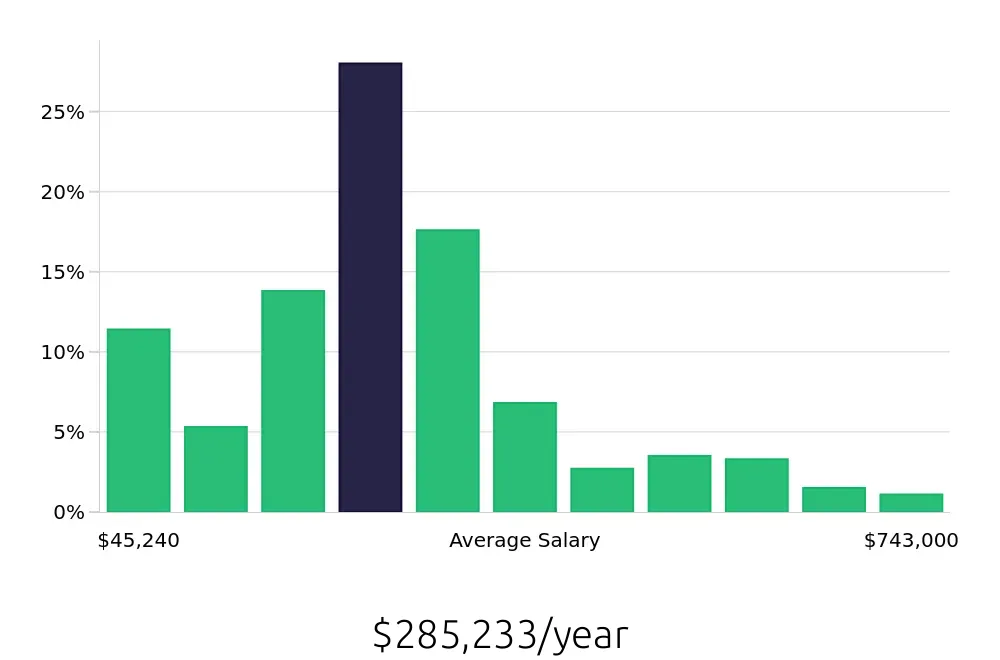
Averge salary $283,351 per year
Graph depicting the yearly salary distribution for Physician positions, showing an average salary of $283,351 with varying distribution percentages across salary ranges.