What does a Pricing Actuary do?
A Pricing Actuary plays a crucial role in insurance and financial industries. They assess the risks of new or existing policies. They use statistical models to estimate the costs of future events. This helps companies set accurate prices for their products. They analyze data to predict outcomes based on past trends. They ensure the company remains profitable while offering competitive rates.
This role requires strong analytical skills. They must be detail-oriented and excellent with numbers. They often work with teams to refine pricing strategies. They must stay updated on market trends and regulations. Their work ensures that insurance policies are fair and sustainable. They help businesses manage their financial risks effectively.
How to become a Pricing Actuary?
Becoming a Pricing Actuary can lead to a rewarding career in financial services. This role involves assessing risks and pricing products for insurance companies. It requires a mix of strong analytical skills and specific knowledge. Here is a clear process to follow:
Start by earning a bachelor's degree in a field like mathematics, statistics, or actuarial science. This sets a solid foundation for future studies. Next, pass a series of professional exams administered by actuarial organizations. These exams cover topics like probability, finance, and economics. Preparing for these exams requires dedication and focused study. After passing the exams, gain practical experience through internships or entry-level positions in the field. This experience is crucial for understanding real-world applications. Continuing education is key in this industry. Stay updated with new trends and techniques by attending seminars and workshops.
Here are the five steps to becoming a Pricing Actuary:
- Earn a relevant bachelor's degree.
- Pass professional actuarial exams.
- Gain practical experience through internships or entry-level jobs.
- Continue education with workshops and seminars.
- Stay updated with industry trends and new techniques.
How long does it take to become a Pricing Actuary?
Pursuing a career as a pricing actuary offers a stable and rewarding path for those interested in insurance and finance. This specialized role requires a blend of education, experience, and professional certifications. Generally, it takes about five to six years to reach a point where someone can start working as a pricing actuary.
First, a person needs a bachelor's degree in actuarial science, mathematics, statistics, or a related field. This education usually takes four years. Following this, passing a series of actuarial exams adds another one to two years. These exams cover a range of topics from basic mathematics to more specific actuarial skills. Each exam requires study and practice. Some candidates take longer to pass all exams, especially those who need to retake one or more. Gaining experience through internships or entry-level jobs also plays a key role. Many actuarial firms prefer candidates with some practical experience, which can take an additional six months to a year. With the right education, exam success, and experience, a person is ready to work as a pricing actuary.
Pricing Actuary Job Description Sample
The Pricing Actuary is responsible for developing and maintaining actuarial models used in the pricing and risk management of insurance products. This role involves collaborating with various departments to ensure the accuracy and effectiveness of pricing strategies.
Responsibilities:
- Develop and maintain actuarial models for pricing insurance products.
- Collaborate with underwriters, risk managers, and finance teams to ensure pricing accuracy.
- Analyze historical data to forecast future trends and identify risk factors.
- Prepare pricing proposals and presentations for senior management and stakeholders.
- Conduct sensitivity analyses to understand the impact of different assumptions on pricing.
Qualifications
- Bachelor's degree in Actuarial Science, Mathematics, Statistics, or related field.
- Certification by a recognized actuarial body (e.g., SOA, CAS) preferred.
- Proven experience as an Actuarial Analyst or similar role in the insurance industry.
- Strong proficiency in actuarial modeling and software (e.g., Excel, R, SAS).
- Excellent analytical and problem-solving skills.
Is becoming a Pricing Actuary a good career path?
A Pricing Actuary works in the insurance industry, determining the right prices for insurance policies. This role requires a mix of math, statistics, and business skills. People in this job analyze risk and calculate the likelihood of certain events happening. They use this data to set prices for insurance products. This job can be exciting for those who enjoy solving complex problems and working with numbers.
Working as a Pricing Actuary offers several benefits. The job can be very rewarding, both financially and intellectually. Actuaries often earn good salaries and may receive bonuses. This career path also offers opportunities for advancement. Many actuaries move into management or specialized consulting roles over time. Additionally, the skills gained in this job are highly transferable. Experience in risk management and analysis can lead to opportunities in other industries, such as finance or healthcare.
However, there are some challenges to consider. The job can be demanding and requires a lot of study and training. Actuaries must pass a series of exams to become certified. This process can take several years. The work can also be stressful, especially during periods of high demand or economic uncertainty. Actuaries must stay up-to-date with changes in the industry and adapt to new regulations. This job requires a strong attention to detail and the ability to handle complex calculations under pressure.
Here are some pros and cons to consider:
- Pros:
- Good pay and potential for bonuses
- Opportunities for career advancement
- Transferable skills to other industries
- Cons:
- Long and challenging certification process
- High-stress environment
- Requires strong attention to detail and analytical skills
What is the job outlook for a Pricing Actuary?
The field of pricing actuary is seeing steady growth, making it an attractive career for job seekers. According to the Bureau of Labor Statistics (BLS), there are about 2,300 average job positions per year. This outlook indicates a consistent demand for skilled professionals in this field.
Job opportunities for pricing actuaries are expected to grow by 23.2% from 2022 to 2032, as reported by the BLS. This positive growth rate suggests that companies will continue to need skilled actuaries to help set prices for insurance and other financial products. This growth offers many job seekers the chance to enter a field with a strong future.
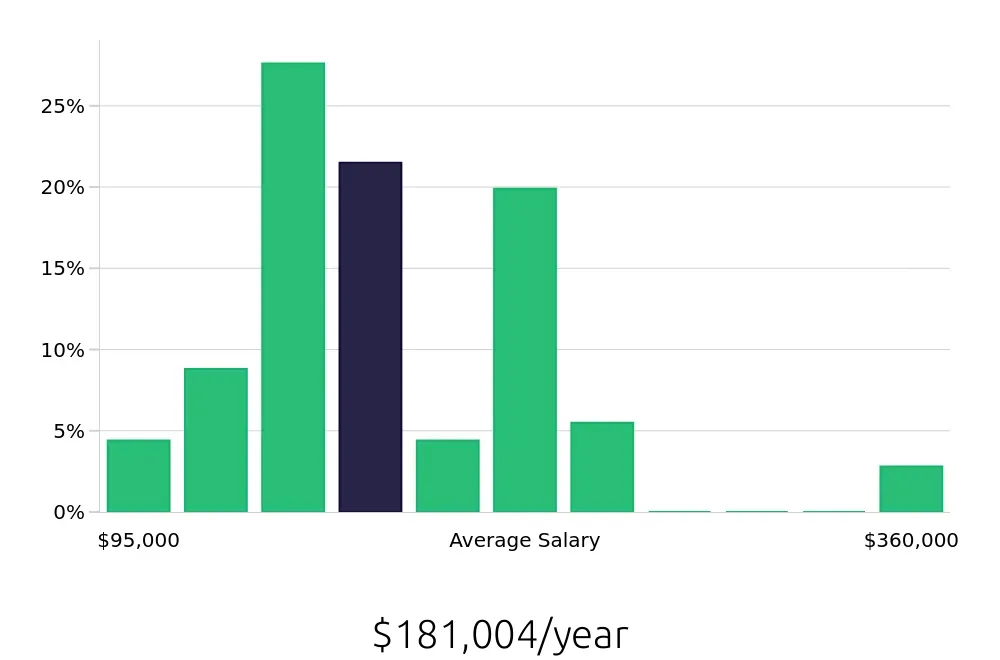
Pricing actuaries can expect a competitive salary, with an average national annual compensation of $132,500, according to the BLS. On an hourly basis, the average compensation is $63.7. These figures highlight the financial rewards that come with a successful career in this field. Job seekers can look forward to both job stability and a good income in the role of a pricing actuary.
Currently 89 Pricing Actuary job openings, nationwide.
Continue to Salaries for Pricing Actuary