Position
Overview

What does a Production Associate do?

A Production Associate plays a crucial role in the manufacturing process. This position involves operating machinery, assembling products, and ensuring quality standards are met. The Production Associate works closely with other team members to maintain production schedules and meet deadlines. They must follow safety protocols to prevent accidents and ensure a safe working environment. Attention to detail is key, as the Production Associate must inspect products for defects and report any issues to supervisors.

The Production Associate also contributes to continuous improvement efforts. This includes suggesting ways to enhance efficiency and productivity. They may participate in training sessions to learn new techniques and technologies. The role requires strong communication skills, as the Production Associate often works in a team setting and must collaborate effectively with colleagues. This position is ideal for individuals who enjoy hands-on work and take pride in producing high-quality products.

View Production Associate jobs nearby

How to become a Production Associate?

Becoming a Production Associate can be a rewarding career choice. This role is essential in many industries, from manufacturing to food processing. It involves working on assembly lines, operating machinery, and ensuring products meet quality standards. Here is a clear guide to help someone start this career path.

The journey to becoming a Production Associate involves several steps. Each step is designed to prepare someone for the responsibilities of the job. Follow these steps to increase chances of success in this field.

  1. Research the Industry: Start by learning about the industry. Understand what products are made and the processes involved. This knowledge will help in understanding the role better.
  2. Get the Necessary Education: While a high school diploma is often enough, some companies may prefer candidates with additional training. Consider taking courses in manufacturing or related fields.
  3. Gain Relevant Experience: Look for entry-level positions or internships. This experience will provide hands-on training and make someone more attractive to future employers.
  4. Develop Key Skills: Focus on skills like attention to detail, teamwork, and problem-solving. These skills are crucial for a Production Associate.
  5. Apply for Jobs: Once prepared, start applying for Production Associate positions. Tailor each resume to the job description and highlight relevant experience and skills.

How long does it take to become a Production Associate?

Training programs for Production Associate roles typically last from a few weeks to a few months. These programs focus on teaching essential skills and safety procedures. They prepare candidates for the fast-paced environment of production lines. Employers often provide on-the-job training, which can take several weeks to a few months. This hands-on experience helps new hires understand specific tasks and company protocols. Companies value candidates who are quick learners and can adapt to new roles.

The journey to becoming a Production Associate varies based on several factors. Most positions require a high school diploma or equivalent. Some employers may prefer candidates with post-secondary education or vocational training. This training can include courses in manufacturing processes or safety protocols. These courses can take a few months to a year to complete.

On-the-job training is another key step. This training helps new hires understand the specific tasks and equipment used in their role. The length of this training can differ. It often takes several weeks to a few months. Some companies offer structured training programs. Others may have a more informal approach. Regardless, gaining hands-on experience is crucial. It helps new associates feel confident and competent in their job duties. This training period ensures that new hires can meet the demands of the role effectively.

Production Associate Job Description Sample

The Production Associate is responsible for supporting the production process by performing various tasks to ensure the efficient and effective operation of the production line. This role is crucial in maintaining production schedules, ensuring quality standards, and contributing to the overall success of the production team.

Responsibilities:

  • Assist in the setup and operation of production equipment.
  • Monitor production processes to ensure they meet quality standards.
  • Perform routine maintenance and cleaning of equipment.
  • Assist in the packaging and labeling of products.
  • Collaborate with team members to meet production targets and deadlines.

Qualifications

  • High school diploma or equivalent required; additional education or training in a related field is a plus.
  • Previous experience in a production or manufacturing environment is preferred.
  • Strong understanding of production processes and quality control principles.
  • Ability to work in a fast-paced and dynamic environment.
  • Good communication skills and ability to work effectively in a team.

Is becoming a Production Associate a good career path?

A career as a Production Associate offers a hands-on role in manufacturing and assembly lines. This position involves working with machinery and materials to create finished products. It is a vital role in many industries, including automotive, electronics, and food processing. The job requires attention to detail and the ability to follow instructions precisely. It provides a stable work environment with opportunities for advancement.

Working as a Production Associate has its own set of advantages and challenges. Consider these pros and cons before pursuing this career path. The benefits include steady employment, the chance to learn new skills, and the opportunity to work in a team-oriented environment. On the downside, the job can be repetitive and physically demanding. It may also require working in shifts, including evenings and weekends. Understanding these factors can help in making an informed decision about this career choice.

Here are some pros and cons to consider:

  • Pros:
  • Steady employment in many industries
  • Opportunities to learn new skills
  • Work in a team-oriented environment
  • Cons:
  • Repetitive tasks can be monotonous
  • Physical demands may lead to fatigue
  • Shift work can disrupt personal schedules

What is the job outlook for a Production Associate?

The job outlook for Production Associates is promising, with an average of 42,700 job positions available each year, according to the Bureau of Labor Statistics (BLS). This steady demand highlights the importance of skilled production associates in various industries. The BLS also projects a 4.2% growth in job openings from 2022 to 2032, indicating a positive trend for those entering this field.

Production Associates enjoy a competitive average national annual compensation of $57,610, as reported by the BLS. This figure reflects the value placed on their role in manufacturing and production processes. Additionally, the average hourly wage stands at $27.7, offering a stable income for professionals in this sector. These figures make the role of a Production Associate attractive to job seekers looking for both growth and financial stability.

For job seekers, the role of a Production Associate offers a blend of job security, growth potential, and a solid compensation package. With the BLS data showing a consistent demand and positive growth outlook, this career path is a reliable choice for those seeking stability and advancement in the job market.

Currently 4,321 Production Associate job openings, nationwide.

Continue to Salaries for Production Associate

Learn about Production Associate salaries, top-paying cities, and hiring companies. See how much you could earn!
Position
Salary
Salaries For Production Associate
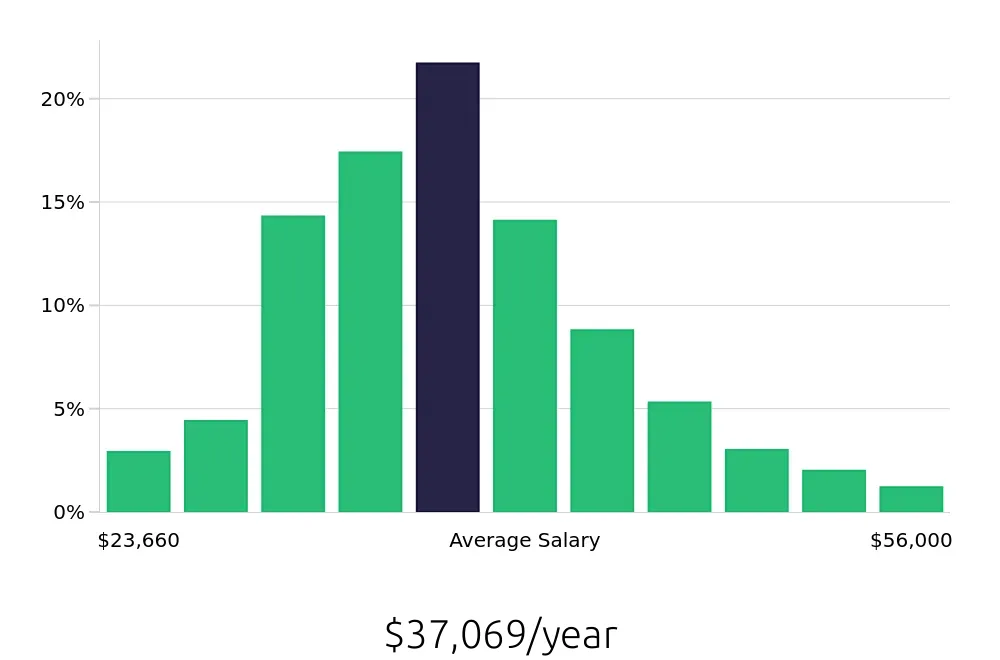
Averge salary $37,035 per year
Graph depicting the yearly salary distribution for Production Associate positions, showing an average salary of $37,035 with varying distribution percentages across salary ranges.