What does a Schedule Hanger do?
A Schedule Hanger is a professional who helps manage and organize work schedules. This role involves coordinating shifts to ensure teams have the right number of people on the job at the right times. Schedule Hangers must communicate effectively with staff to understand their availability and needs. They ensure that each shift is fully covered without over-scheduling any one employee.
This job requires attention to detail and strong organizational skills. Schedule Hangers often use computer software to create and update schedules. They need to be proactive in handling changes and scheduling conflicts. They work closely with management to ensure that all scheduling needs align with business goals. Being a Schedule Hanger means playing a vital role in keeping operations running smoothly.
How to become a Schedule Hanger?
Becoming a schedule hanger offers an opportunity to work in a hands-on industry. This job involves installing schedules, signs, and other materials in various locations. The work can be fulfilling and comes with its own set of skills and requirements. Follow these steps to start your career as a schedule hanger.
First, consider the educational background. While formal education is not mandatory, possessing a high school diploma or equivalent is beneficial. Understanding basic math and reading skills will help with measuring and reading instructions. Next, gain experience in related fields like construction or carpentry. This experience can be valuable when starting as a schedule hanger.
- Research job openings and companies that hire schedule hangers.
- Prepare a resume that highlights relevant experience and skills.
- Submit applications to companies of interest.
- Prepare for interviews by practicing common questions.
- Once hired, follow on-the-job training to learn specific tasks and safety procedures.
How long does it take to become a Schedule Hanger?
Starting as a Schedule Hanger often requires a few steps. Most people start with training programs that can last from a few weeks to several months. These programs teach the skills needed for the job. They cover topics like reading blueprints, using tools, and safety practices. Some employers offer on-the-job training. This hands-on experience can be a valuable way to learn.
Experience plays a big role in becoming a skilled Schedule Hanger. Entry-level positions may start with tasks like helping more experienced workers or handling simple jobs. With time, individuals can take on more complex tasks. Gaining experience can take about one to three years. Schedule Hangers who master their trade can find more opportunities and higher pay. Continuous learning and skill improvement can open doors to better positions.
Schedule Hanger Job Description Sample
We are seeking a skilled Schedule Hanger to join our team. The Schedule Hanger will be responsible for hanging and installing schedules, signs, and displays in various settings, ensuring they are secure, properly aligned, and visually appealing.
Responsibilities:
- Hang and install schedules, signs, and displays in accordance with project specifications and client requirements.
- Measure, mark, and prepare surfaces for installation, ensuring proper alignment and security of installations.
- Use various tools and equipment, such as ladders, drills, and measuring tapes, to complete installations efficiently.
- Inspect installations for quality and accuracy, making necessary adjustments to ensure proper appearance and functionality.
- Collaborate with other team members to coordinate installation activities and ensure timely completion of projects.
Qualifications
- High school diploma or equivalent required; additional education or training in a related field is a plus.
- Previous experience in scheduling, installation, or a similar role is preferred.
- Strong attention to detail and ability to follow precise instructions and specifications.
- Good communication and interpersonal skills, with the ability to work collaboratively in a team environment.
- Physical stamina and ability to work in various environments, including outdoors and at heights.
Is becoming a Schedule Hanger a good career path?
Working as a Schedule Hanger offers many chances to grow and learn in the construction field. This job involves hanging various building materials, such as insulation, drywall, and acoustic panels. Schedule Hangers work with other construction workers to ensure that each job site runs smoothly. They use tools like hammers, saws, and drills. Some Schedule Hangers also need to lift heavy items and work at heights.
Choosing this path has its own set of pros and cons. For those interested, below are some points to consider:
- Pros:
- Job stability: The construction industry often has a steady demand for skilled Schedule Hangers.
- Good pay: Experienced Schedule Hangers can earn a competitive salary.
- Opportunities for growth: This role can lead to higher positions, like foreman or construction manager.
- Variety of work: Each job site presents different challenges and tasks.
However, this career path also has some drawbacks:
- Cons:
- Physical demands: The job can be physically demanding and may involve heavy lifting.
- Hazardous conditions: Schedule Hangers often work in hazardous conditions, such as heights or confined spaces.
- Long hours: The job may require long hours and working on weekends.
- Seasonal work: Some Schedule Hangers may face periods of unemployment during off-seasons.
What is the job outlook for a Schedule Hanger?
The job outlook for Schedule Hangers looks promising, with an average of 19,800 positions available each year, according to the Bureau of Labor Statistics (BLS). This career offers stability and consistent opportunities for those entering the field. While some job growth is expected, the outlook indicates a slight decrease of 8.3% from 2022 to 2032. Despite this, the industry remains steady, providing a reliable path for professionals.
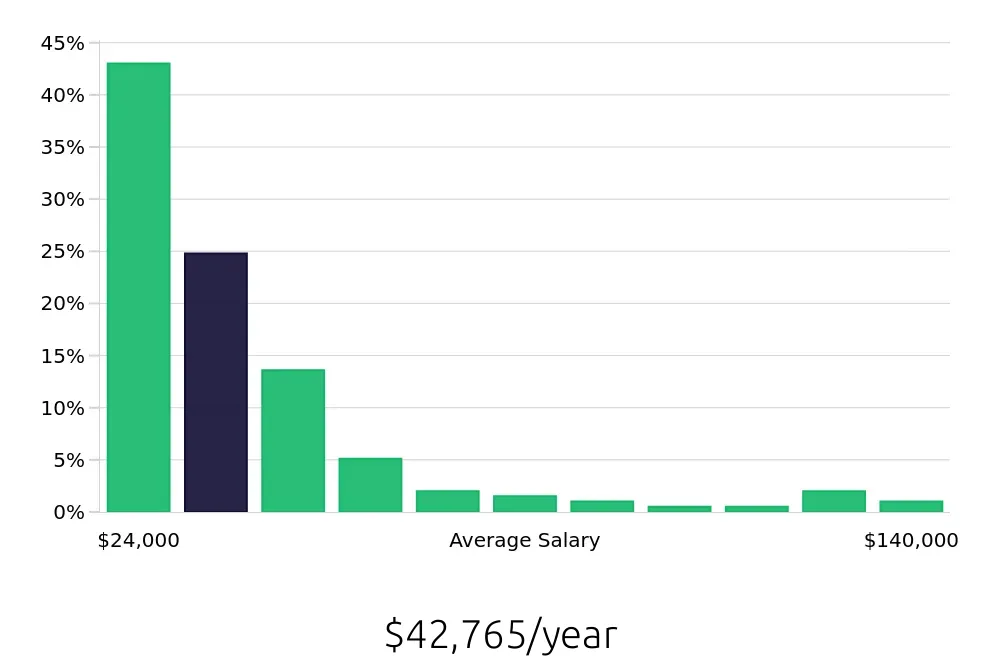
Professionals in this role can expect an average annual compensation of $46,620. The hourly rate stands at $22.41, reflecting a competitive pay structure. These figures highlight the financial rewards that can come from a career as a Schedule Hanger. Job seekers can anticipate both job security and decent earnings, making this a worthwhile field to consider.
In summary, a career as a Schedule Hanger offers good job prospects and stable employment. Although there is a projected decline in job openings, the industry provides a solid foundation for those looking to build a lasting career. The compensation is attractive, with an average annual salary and a competitive hourly rate. Job seekers can feel confident about pursuing this path.
Currently 31 Schedule Hanger job openings, nationwide.
Continue to Salaries for Schedule Hanger