What does a Security Guard do?
A Security Guard plays a crucial role in ensuring safety and security in various environments. They monitor the premises, watch for suspicious activities, and protect assets and people. This role involves patrolling the area, checking for security breaches, and responding to incidents. A Security Guard maintains a visible presence to deter crime and ensures that everyone adheres to the security policies.
Key responsibilities of a Security Guard include maintaining accurate logs of daily activities and incidents, communicating with law enforcement when needed, and providing emergency assistance. They often work in shifts and must remain vigilant at all times. This position requires strong observational skills, quick decision-making abilities, and the capability to handle stressful situations calmly. Security Guards help create a safe and secure environment, making it an essential role in many organizations.
How to become a Security Guard?
Becoming a security guard can be a rewarding career choice. It offers the chance to protect people, property, and important information. To start this career, follow these steps:
- Check local requirements. Different areas have different rules. Most places need guards to be at least 18 years old.
- Complete required training. This training teaches important skills like how to handle conflicts and respond to emergencies. Some places require a specific number of training hours.
- Get a security guard license. This license proves you have the skills and knowledge needed. Apply through your local law enforcement agency or a state licensing board.
- Pass a background check. Employers need to know you have a clean record. This check looks at your criminal history and past employment.
- Start applying for jobs. Look for openings at security firms, businesses, or government agencies. Highlight your training and any related experience.
Starting as a security guard can lead to other career opportunities. With experience, one can move into higher roles within the security field. Always follow the rules and do your job well to advance in this career.
How long does it take to become a Security Guard?
The journey to becoming a security guard often begins with a simple yet crucial step: meeting the age requirement. Most jurisdictions require candidates to be at least 18 years old. This initial qualification sets the foundation for further steps. Job seekers should also ensure they possess a valid driver’s license and a clean criminal record.
Once basic eligibility is confirmed, the next steps involve training and certification. Many states mandate a certain number of training hours, which typically range from 20 to 40 hours. This training covers essential skills like emergency response, conflict resolution, and the use of non-lethal force. After completing the required training, candidates must pass a written exam and a physical fitness test. This process often takes a few weeks to a couple of months, depending on individual circumstances and the availability of training programs. Securing a state license, which is necessary to legally work as a security guard, usually concludes this period.
Security Guard Job Description Sample
We are seeking a vigilant and professional Security Guard to join our team. The ideal candidate will be responsible for ensuring the safety and security of our premises, personnel, and assets. This role involves monitoring surveillance equipment, patrolling the premises, and responding to emergencies.
Responsibilities:
- Monitor and patrol assigned premises to ensure a safe and secure environment.
- Respond promptly to alarms, emergency calls, and other incidents to prevent loss or damage.
- Conduct regular patrols of the premises, both on foot and in a vehicle, to detect and prevent unauthorized access.
- Maintain detailed logs of activities, incidents, and observations during shifts.
- Assist with crowd control, access control, and other duties as needed to maintain order.
Qualifications
- Valid Security Guard License or certification (where required).
- Previous experience in security, law enforcement, or a related field is preferred.
- Strong observational and analytical skills.
- Excellent communication and interpersonal skills.
- Ability to remain calm and effective in high-pressure situations.
Is becoming a Security Guard a good career path?
Being a security guard offers a straightforward career path that prioritizes safety and order. This job usually requires basic training and minimal formal education. It provides an opportunity to protect people, property, and assets. Job settings range from airports to shopping centers. The role demands vigilance, quick decision-making, and communication skills.
A security guard often works in shifts, which can include nights, weekends, and holidays. This can offer flexibility for those who prefer varied schedules. However, it may not suit everyone who wants a traditional 9-to-5 job. Security guards also play a crucial role in community safety, which can be fulfilling for those who enjoy helping others.
Consider these pros and cons before pursuing a career as a security guard:
- Pros:
- Entry-level job with basic training requirements.
- Flexible work shifts, including evenings, weekends, and holidays.
- Opportunity to work in various environments, from airports to retail stores.
- Role is essential for community safety and security.
- Cons:
- Shift work may not suit everyone, especially those seeking a traditional schedule.
- Potential for long hours standing and patrolling, which can be physically demanding.
- Limited opportunities for advancement without additional training or education.
- Occasional need to handle stressful situations, such as conflicts or emergencies.
What is the job outlook for a Security Guard?
Job seekers interested in a career as a Security Guard can look forward to stable opportunities. The Bureau of Labor Statistics (BLS) reports about 151,700 job positions each year. Although there is a slight decrease of 1.3% in job openings from 2022 to 2032, the role remains vital. Security Guards protect people and property, ensuring safety in various settings.
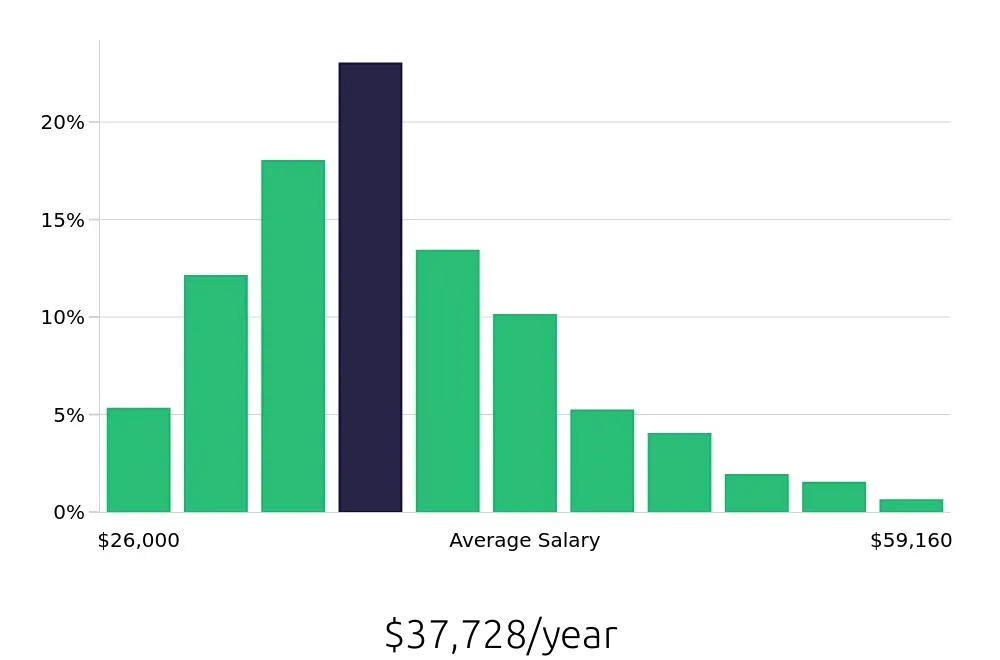
The average national annual compensation for Security Guards is $40,460, with an hourly rate of $19.45. This compensation reflects the important work Security Guards do. Compensation may vary based on location, experience, and specific employer. For those committed to protecting others, the financial rewards can be both fair and fulfilling.
Entering this field offers many benefits. Security Guards can find jobs in many places, including businesses, shopping centers, and public events. The role provides practical experience and potential for growth. With the right qualifications and dedication, job seekers can enjoy a stable and rewarding career.
Currently 5,544 Security Guard job openings, nationwide.
Continue to Salaries for Security Guard