What does a Stock Clerk do?
A Stock Clerk plays a vital role in maintaining the inventory of a business. They are responsible for receiving, checking, and storing goods. This position ensures that all items are accurately recorded and available when needed. Stock Clerks work closely with the warehouse team to keep stock levels up and manage the flow of goods. They help to prevent shortages and overstock situations, ensuring the business runs smoothly.
Every day, a Stock Clerk will perform tasks such as unloading delivery trucks, inspecting items for damage, and logging stock into the system. They must keep detailed records of all transactions. Additionally, Stock Clerks often assist in organizing the stockroom to maximize space and accessibility. This role requires attention to detail and strong organizational skills. It is a hands-on position that contributes directly to the efficiency of the supply chain.
How to become a Stock Clerk?
Becoming a stock clerk is a rewarding career path for those who enjoy working in a fast-paced environment and have an eye for detail. The role involves managing inventory, ensuring items are stocked correctly, and assisting with warehouse operations. To embark on this journey, follow a clear and straightforward process designed to equip you with the necessary skills and knowledge.
The first step is to obtain the appropriate education and training. Many employers prefer candidates with a high school diploma or equivalent. Some may also require or prefer additional training, such as courses in inventory management or warehouse operations. This education provides a foundational understanding of the role and prepares you for the tasks ahead. The next step is to gain experience in a relevant position, such as a warehouse worker or material handler. This experience is valuable and can often be acquired through internships or entry-level positions. It offers practical insights into the day-to-day operations of a warehouse and helps build essential skills like time management and attention to detail.
- Education and Training: Obtain a high school diploma or equivalent. Consider additional courses in inventory management or warehouse operations.
- Gain Experience: Work in a related role, such as a warehouse worker or material handler. Seek internships or entry-level positions to build practical skills.
- Develop Skills: Hone key skills like attention to detail, time management, and the ability to follow instructions accurately.
- Prepare a Resume: Create a professional resume highlighting your education, experience, and relevant skills. Tailor it to the job description of a stock clerk.
- Apply for Jobs: Search for stock clerk positions through job boards, company websites, and networking. Submit your resume and cover letter, and prepare for interviews.
How long does it take to become a Stock Clerk?
The journey to becoming a Stock Clerk can vary depending on several factors. Most Stock Clerk positions require a high school diploma or equivalent. Some employers may prefer candidates with post-secondary education or vocational training in logistics or business. This education often takes two to four years to complete.
Training specific to the stock clerk role typically includes on-the-job training, which can last from a few weeks to several months. During this period, new clerks learn about inventory management systems, safety procedures, and company-specific policies. Experience in retail or warehouse settings can be beneficial and might reduce the time needed for on-the-job training.
Stock Clerks who gain additional skills, such as proficiency in inventory software or forklift operation, may find more job opportunities and potential for advancement. Continuing education and professional development can further enhance career prospects.
Stock Clerk Job Description Sample
The Stock Clerk is responsible for maintaining accurate inventory records, processing shipments, and ensuring the proper storage of all stock items within the warehouse. This role plays a crucial part in the supply chain and logistics operations of the company.
Responsibilities:
- Maintain accurate records of inventory levels, locations, and status of stock items.
- Receive, verify, and log incoming shipments of goods and materials.
- Process stock orders and fulfill customer orders by picking, packing, and shipping items.
- Conduct regular physical counts of inventory to ensure accuracy and address any discrepancies.
- Assist in the preparation of reports related to stock levels and inventory management.
Qualifications
- High school diploma or equivalent required; additional coursework in logistics or supply chain management is a plus.
- Previous experience as a Stock Clerk or similar role is preferred.
- Strong attention to detail and accuracy in data entry and record-keeping.
- Basic knowledge of inventory management software and Microsoft Office applications.
- Ability to lift and move stock items weighing up to 50 pounds.
Is becoming a Stock Clerk a good career path?
A career as a Stock Clerk can be an excellent starting point for those interested in logistics and supply chain management. This role involves tracking inventory, ordering supplies, and ensuring the stockroom is well-organized. A Stock Clerk works closely with warehouse managers and purchasing agents to maintain accurate inventory records.
The job provides practical experience in inventory management and attention to detail. It often leads to more advanced roles in logistics, supply chain, or warehouse management. The work environment can be fast-paced, requiring good organizational skills and the ability to handle repetitive tasks efficiently. Companies appreciate Stock Clerks who can contribute to smoother operations and help avoid stock shortages.
When considering a career as a Stock Clerk, it's important to weigh some pros and cons.
- Pros:
- Opportunities for advancement in logistics and supply chain roles.
- Gain experience in inventory management and organizational skills.
- Direct contribution to a company's operational efficiency.
- Potential for flexible work hours, especially in smaller businesses.
- Cons:
- Physical demands, such as lifting heavy items and standing for long periods.
- Repetitive tasks that may lead to boredom over time.
- Often requires working in less desirable environments, such as warehouses.
- Limited opportunities for career advancement without additional education or experience.
What is the job outlook for a Stock Clerk?
Becoming a stock clerk offers promising job opportunities for those entering the workforce. The Bureau of Labor Statistics (BLS) reports an average of 4,300 job positions opening annually. While the job outlook shows a slight decline of 8.9% from 2022 to 2032, this trend remains steady, indicating reliable prospects for those qualified.
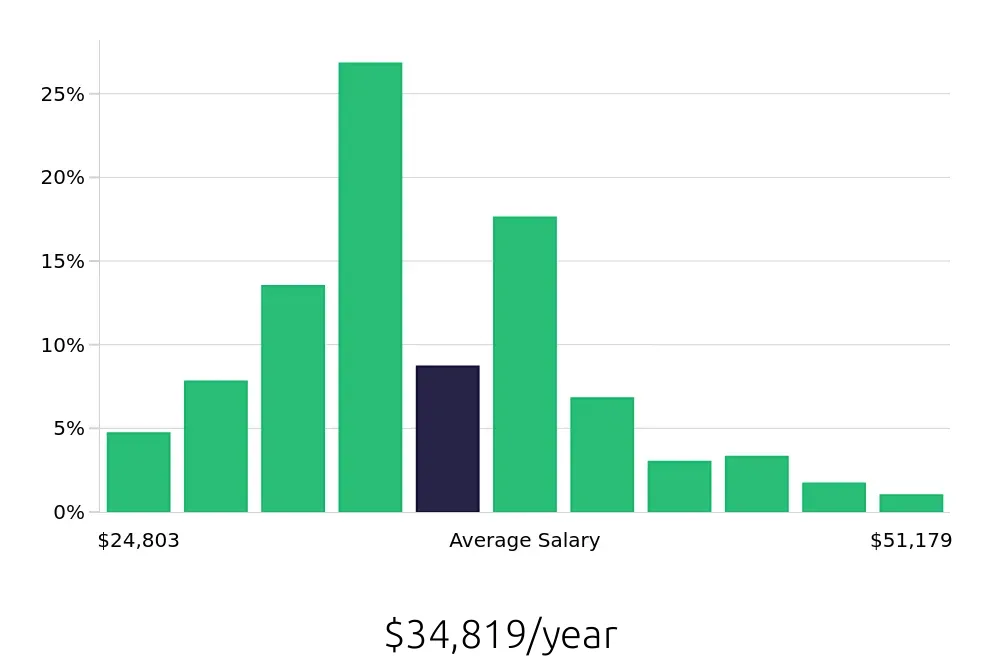
The average national annual salary for stock clerks stands at $63,130, according to the BLS. This compensation reflects the essential role stock clerks play in maintaining inventory and supply chains. With experience and skill, stock clerks can expect to earn competitive wages, making it a viable career choice for many job seekers.
Stock clerks also earn an average of $30.35 per hour, according to the BLS. This hourly rate provides a clear picture of the financial benefits associated with this occupation. Job seekers will find that stock clerk roles offer a stable income with potential for growth and advancement in the supply chain and logistics industries.
Currently 421 Stock Clerk job openings, nationwide.
Continue to Salaries for Stock Clerk