What does a Teller do?
A Teller helps people manage their money at a bank. They assist customers by processing transactions such as deposits, withdrawals, and transfers. Tellers ensure that all financial records are accurate and up-to-date. They also answer questions about bank services and products. Being friendly and efficient is key to providing good customer service. Tellers often work in a fast-paced environment and need to stay focused to avoid errors.
In addition to handling cash and checks, Tellers may help customers with opening new accounts or applying for loans. They take care of paperwork and ensure that all necessary forms are filled out correctly. Tellers also play a role in maintaining a clean and organized workspace. This job requires strong communication skills and the ability to handle multiple tasks at once. Tellers need to be detail-oriented to avoid mistakes that could affect customers' accounts.
A Teller should be knowledgeable about banking products and services. They often receive training on new offerings and updates to existing services. This knowledge helps them provide accurate information to customers. Tellers also need to follow strict security protocols to protect both the bank and its customers. This includes safeguarding sensitive information and ensuring that all transactions are secure.
How to become a Teller?
Becoming a teller involves a clear and straightforward process. It begins with meeting basic educational and experience requirements. Following this, individuals must complete necessary training and obtain relevant certifications. Next, applicants can apply for teller positions at financial institutions. After securing a job, ongoing training and performance evaluations will help professionals grow in this role. Each step is designed to ensure individuals are well-prepared to manage transactions and provide excellent customer service.
The first step to becoming a teller starts with education. Most employers require a high school diploma or equivalent. Some may prefer candidates with post-secondary education. Gaining experience in customer service or banking can be beneficial. This initial preparation sets the foundation for a successful career. The next step involves completing a teller training program. These programs teach essential skills, such as handling cash and using bank software. They also cover important topics like security and fraud prevention. After training, obtaining a certification can be advantageous. Certifications, such as the Certified Bank Teller (CBT) credential, enhance job prospects. With these steps complete, job seekers can confidently apply for teller positions.
- Complete high school education or equivalent.
- Gain relevant experience in customer service or banking.
- Enroll in a teller training program.
- Obtain a teller certification, if available.
- Apply for teller positions at financial institutions.
How long does it take to become a Teller?
The path to becoming a teller often begins with a high school diploma or GED. This initial step is crucial and sets the foundation for future banking roles. Tellers must handle money transactions, so a strong understanding of basic math is important. Many employers prefer candidates with some college education or vocational training.
Most tellers gain experience through on-the-job training, which can last a few weeks to a couple of months. This training covers bank policies, customer service, and security procedures. Gaining experience can take time, but it provides the necessary skills for the job. Individuals interested in this career should be patient and ready to learn from experienced professionals.
Teller Job Description Sample
The Teller is responsible for providing exceptional customer service while handling transactions such as deposits, withdrawals, and balance inquiries. The Teller ensures accuracy, maintains customer confidentiality, and promotes the bank's services.
Responsibilities:
- Accurately process deposits, withdrawals, and balance inquiries.
- Provide excellent customer service and address customer inquiries and concerns.
- Ensure the accuracy of transactions and maintain customer confidentiality.
- Promote and sell bank products and services to customers.
- Monitor cash drawers and ensure compliance with bank policies and procedures.
Qualifications
- High school diploma or equivalent required.
- Previous experience as a Teller or in a customer service role preferred.
- Basic understanding of banking operations and financial transactions.
- Strong customer service skills and the ability to work in a fast-paced environment.
- Proficient in using computer systems and cash handling equipment.
Is becoming a Teller a good career path?
A career as a teller offers an entry-level position in the financial sector, providing valuable customer service experience. Tellers handle transactions such as deposits, withdrawals, and account inquiries. This role demands excellent communication skills and attention to detail. It serves as a foundation for those looking to advance into higher-level banking positions.
Becoming a teller has its benefits. For starters, it offers a stable job with predictable hours. Tellers often work in a secure environment, which adds a sense of safety. This job also provides opportunities to interact with a variety of people, enhancing social skills. Many financial institutions offer training programs to help tellers develop new skills. Some companies even provide tuition assistance for further education.
However, there are some downsides to consider. The job can be repetitive and may lack excitement for some individuals. It requires standing for long periods, which can be physically demanding. While the entry-level position offers stability, it may not provide significant opportunities for advancement without additional education or experience. Job growth in this sector can be slow, especially in areas hit hard by automation.
Here are some pros and cons to think about:
- Pros:
- Stable job with predictable hours
- Opportunities for training and skill development
- Interaction with a diverse group of people
- Potential for tuition assistance
Here are some cons:
- Can be repetitive and lack excitement
- Requires standing for long periods
- Limited opportunities for advancement without further education
- Potentially slow job growth in certain areas
What is the job outlook for a Teller?
The teller job outlook presents a steady demand within the financial services industry. According to the Bureau of Labor Statistics (BLS), there are typically around 7,700 job positions available each year. This role involves handling cash transactions and providing customer service in banks and credit unions. Job seekers can look forward to a career with consistent opportunities, allowing for professional growth and stability.
Despite some changes in the job market, the teller occupation shows a projected decrease in job openings by 10.8% from 2022 to 2032, as reported by the BLS. This decline can be attributed to technological advancements and automation within banking services. However, the demand for tellers remains important, particularly in areas where personal interaction with customers is valued. Job seekers should focus on acquiring additional skills to remain competitive in this evolving field.
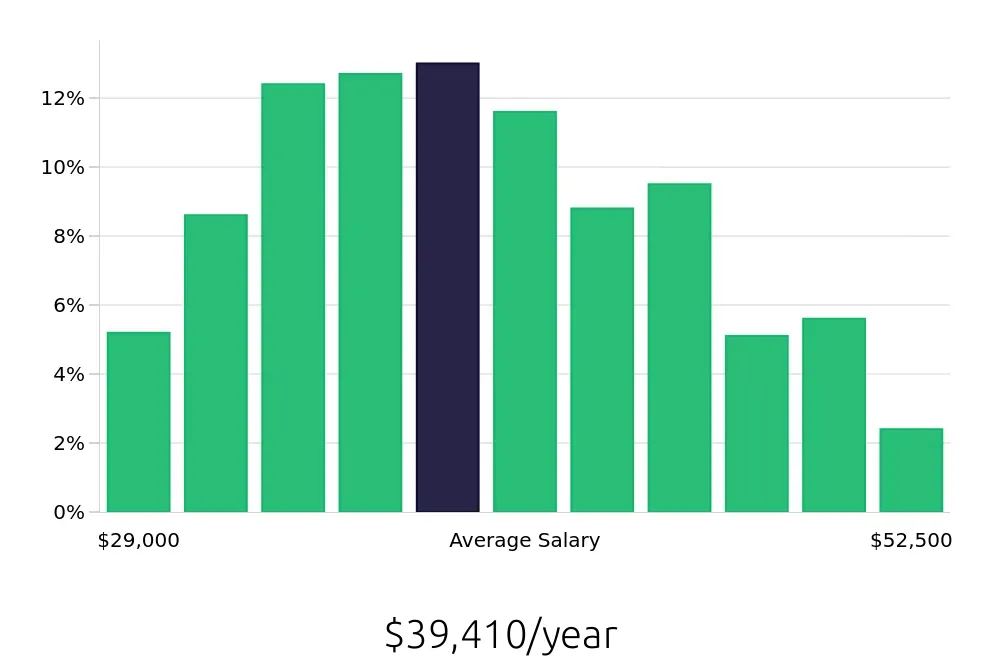
In terms of compensation, tellers enjoy a respectable annual salary. The BLS data indicates an average national annual compensation of $48,290. On an hourly basis, this translates to approximately $23.22. These figures reflect the value placed on the role of a teller in financial institutions. With the right skills and experience, job seekers can anticipate a rewarding career both financially and professionally.
Currently 3,709 Teller job openings, nationwide.
Continue to Salaries for Teller