
How much does a Propulsion Engineer make?
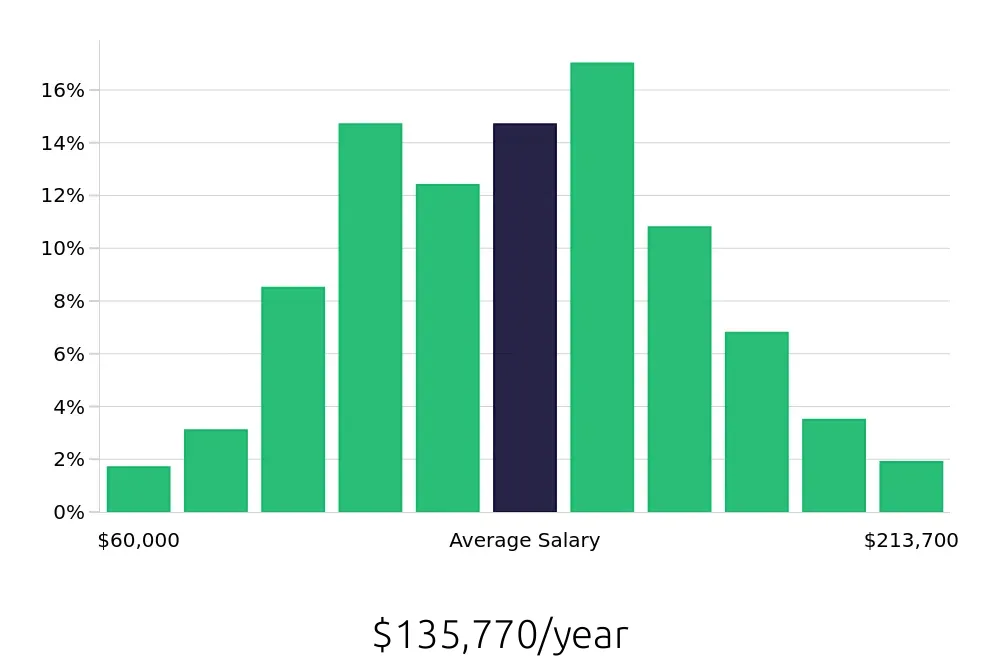
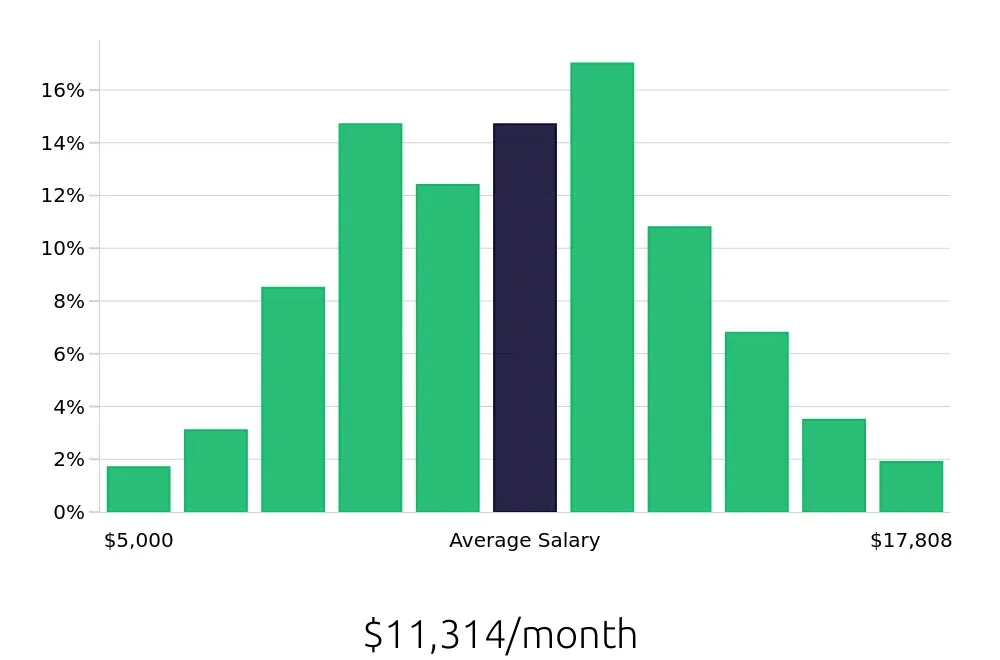
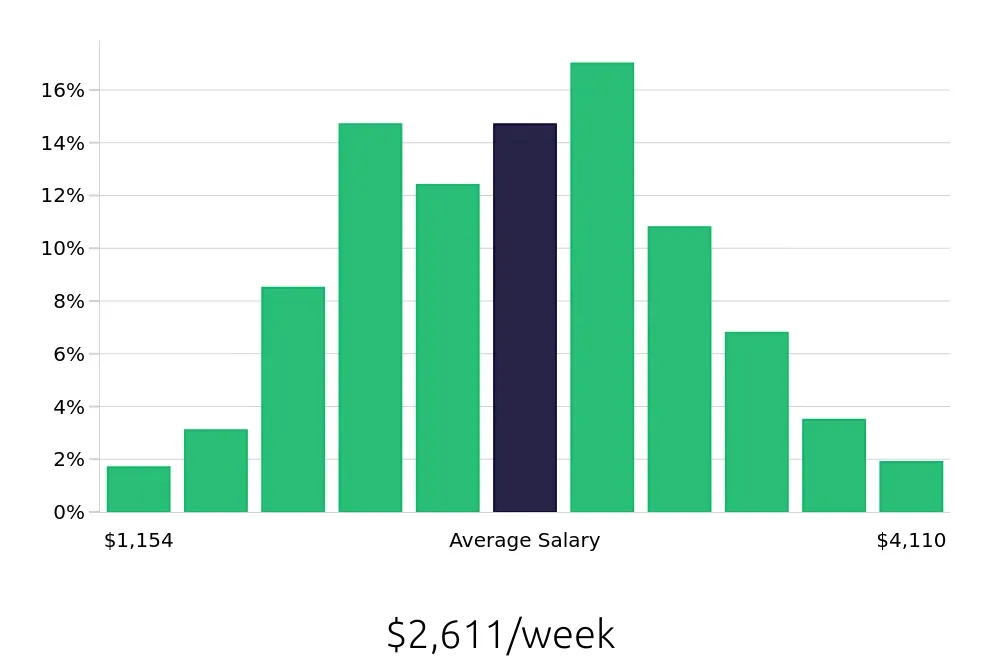
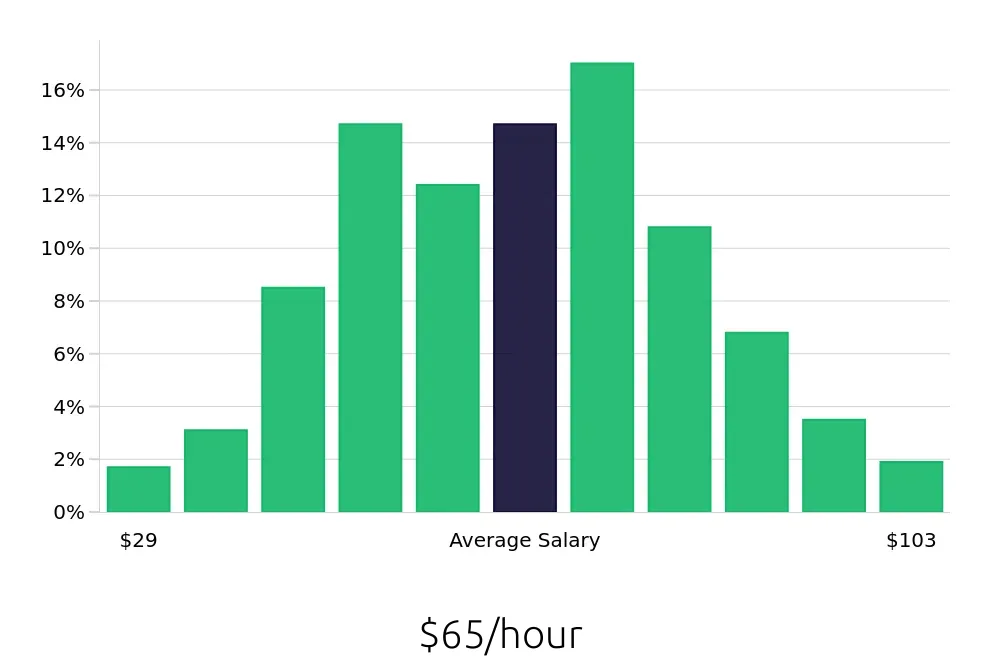
A Propulsion Engineer earns a competitive salary. On average, they make about $135,770 each year. This job offers solid pay that reflects the skills and knowledge needed for the role. Engineers in this field design and test propulsion systems, ensuring they work well and safely.
The salary can change based on experience and location. For those just starting, salaries may be lower. However, as engineers gain more experience, their pay often increases. Engineers working in areas with a higher cost of living might also see higher salaries. This role demands a lot of education and expertise, which is why the pay is so good.
What are the highest paying cities for a Propulsion Engineer?
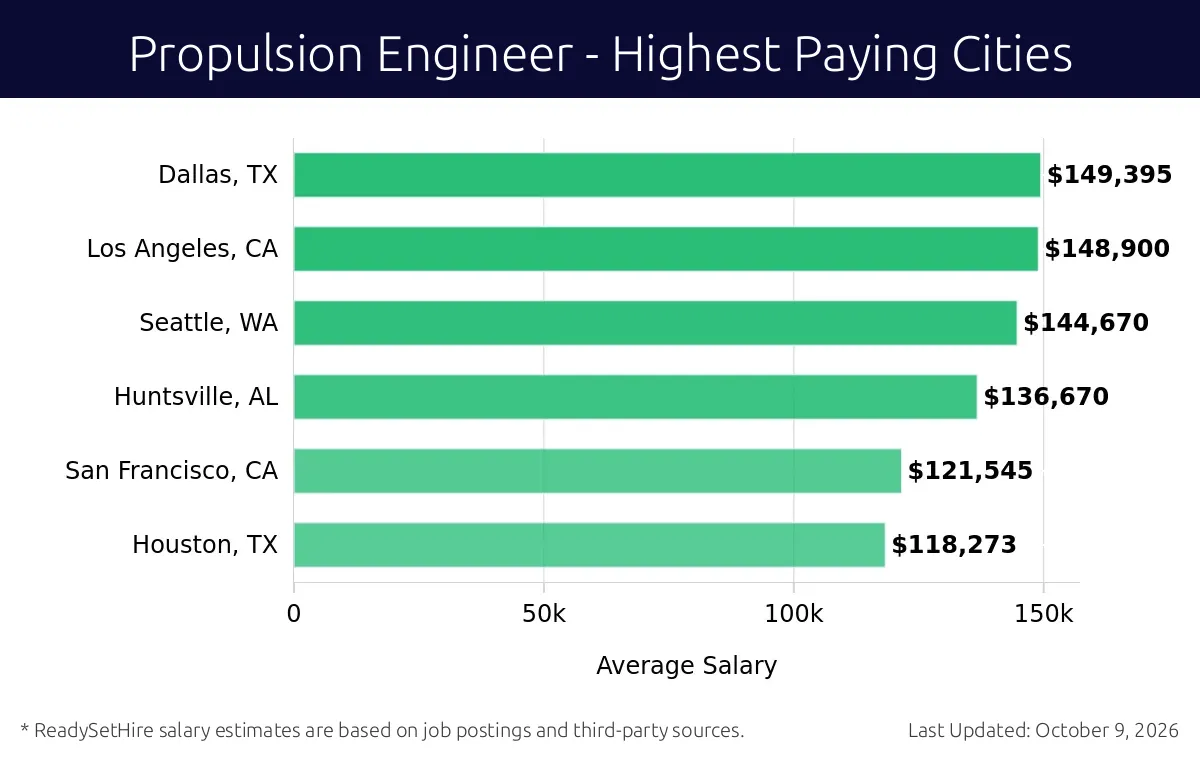
-
Dallas, TX
Average Salary: $149,395
In Dallas, engineers work on cutting-edge aerospace and defense projects. Companies like Boeing and Raytheon Technologies offer great opportunities.
Find Propulsion Engineer jobs in Dallas, TX
-
Los Angeles, CA
Average Salary: $148,900
Los Angeles brings together automotive and aerospace sectors. Working here offers a chance to innovate with giants like SpaceX and Aerojet Rocketdyne.
Find Propulsion Engineer jobs in Los Angeles, CA
-
Seattle, WA
Average Salary: $144,670
Seattle stands out for its tech-savvy environment. Engineers here find jobs with Boeing and Blue Origin, pushing boundaries in space exploration.
Find Propulsion Engineer jobs in Seattle, WA
-
Huntsville, AL
Average Salary: $136,670
Huntsville is a hub for defense and space industries. With companies like Lockheed Martin, engineers contribute to national security and space missions.
Find Propulsion Engineer jobs in Huntsville, AL
-
San Francisco, CA
Average Salary: $121,545
San Francisco's tech scene mixes well with aerospace. Engineers here can find roles with firms like Tesla, working on sustainable transportation solutions.
Find Propulsion Engineer jobs in San Francisco, CA
-
Houston, TX
Average Salary: $118,273
Houston offers a unique blend of oil, space, and engineering. Engineers collaborate with NASA and Halliburton to advance technology in these fields.
Find Propulsion Engineer jobs in Houston, TX
What are the best companies a Propulsion Engineer can work for?
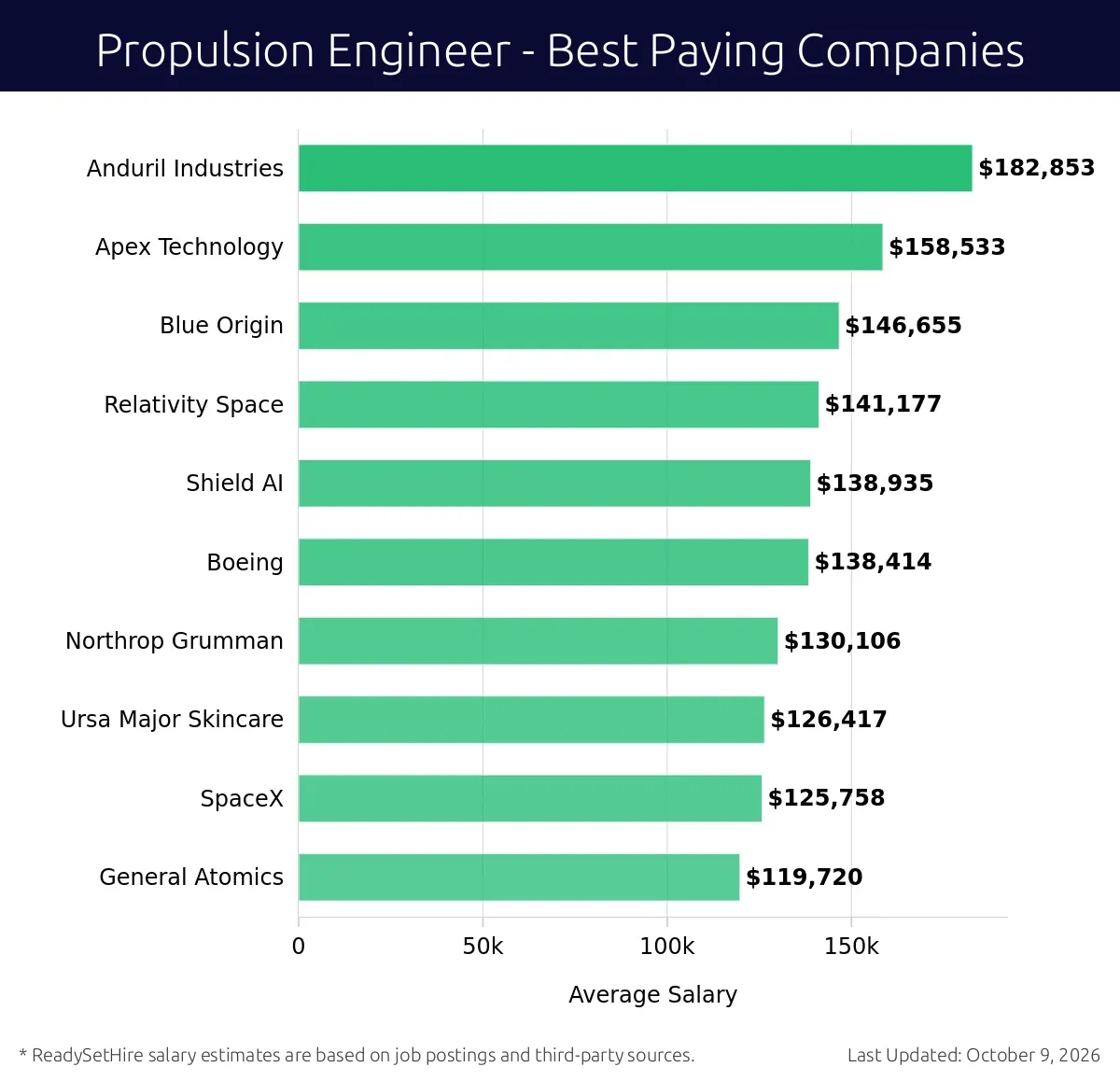
-
Anduril Industries
Average Salary: $182,853
Anduril Industries is a leading aerospace company specializing in advanced technologies for defense and space. The company operates from its headquarters in Los Angeles, California, and has offices across the United States. Propulsion Engineers at Anduril work on innovative propulsion systems, contributing to cutting-edge aerospace projects.
-
Apex Technology
Average Salary: $158,533
Apex Technology is a renowned aerospace company that focuses on developing high-performance propulsion systems. Based in Redmond, Washington, the company has multiple facilities across the U.S. Propulsion Engineers at Apex Technology are involved in projects that push the boundaries of aerospace engineering.
-
Blue Origin
Average Salary: $146,655
Blue Origin is a pioneering aerospace company known for its space exploration technologies. The company is headquartered in Kent, Washington, with additional sites in Texas, Florida, and West Virginia. Propulsion Engineers at Blue Origin play a key role in developing advanced propulsion systems for space missions.
-
Relativity Space
Average Salary: $141,177
Relativity Space is an innovative aerospace company focused on manufacturing and launching rockets. Located in Los Angeles, California, the company aims to revolutionize space travel. Propulsion Engineers at Relativity Space work on cutting-edge propulsion systems for rocket manufacturing and launch operations.
-
Shield AI
Average Salary: $138,935
Shield AI is an advanced technology company specializing in artificial intelligence for aerospace applications. The company operates out of San Francisco, California. Propulsion Engineers at Shield AI collaborate on projects that integrate AI with propulsion systems for enhanced performance.
-
Boeing
Average Salary: $138,414
Boeing is a global aerospace leader with a focus on aircraft, defense, and space technologies. The company has a presence worldwide, with headquarters in Chicago, Illinois. Propulsion Engineers at Boeing contribute to the development of propulsion systems for various aerospace applications.
-
Northrop Grumman
Average Salary: $130,106
Northrop Grumman is a major aerospace and defense technology company. With facilities across the United States, the company is based in Falls Church, Virginia. Propulsion Engineers at Northrop Grumman work on defense-related propulsion systems, ensuring state-of-the-art technology for national security.
-
Ursa Major Skincare
Average Salary: $126,417
Ursa Major Skincare is a company that specializes in aerospace propulsion systems with a focus on sustainability. Operating from its headquarters in Longmont, Colorado, the company has a growing presence in the aerospace industry. Propulsion Engineers at Ursa Major work on developing eco-friendly propulsion technologies.
-
SpaceX
Average Salary: $125,758
SpaceX is a leading aerospace manufacturer and space transportation company. The company's headquarters are in Hawthorne, California, with additional sites in Texas and Florida. Propulsion Engineers at SpaceX are part of a dynamic team working on cutting-edge propulsion systems for space exploration.
-
General Atomics
Average Salary: $119,720
General Atomics is a defense and aerospace technology company known for its unmanned aerial vehicles (UAVs). Based in San Diego, California, the company has a significant impact on national defense. Propulsion Engineers at General Atomics develop propulsion systems for various defense applications.
How to earn more as a Propulsion Engineer?
Propulsion engineers play a critical role in the aerospace industry. They design and test propulsion systems for aircraft and spacecraft. They often seek ways to improve efficiency and performance. A higher salary can come from gaining more experience and skills. It can also come from working in certain industries or regions.
Consider these factors to increase earnings as a propulsion engineer:
- Gain advanced degrees: Earning a master’s or doctorate can lead to higher-paying jobs. These degrees often qualify you for specialized roles.
- Obtain certifications: Certifications from recognized bodies can boost your credibility. They can also lead to higher salaries. Look for certifications that match your area of expertise.
- Work in high-demand industries: Jobs in the aerospace and defense sectors typically offer higher pay. These industries often have more funding for research and development.
- Gain experience in cutting-edge technologies: Working with the latest technologies can increase your value. Engineers who master electric propulsion, hybrid systems, or sustainable fuels often earn more.
- Move to high-cost areas
Jobs in cities like Seattle, Los Angeles, or Washington D.C. often come with higher salaries. This trend is due to the higher cost of living in these areas.



