
What is the average salary in Merrimack, NH?

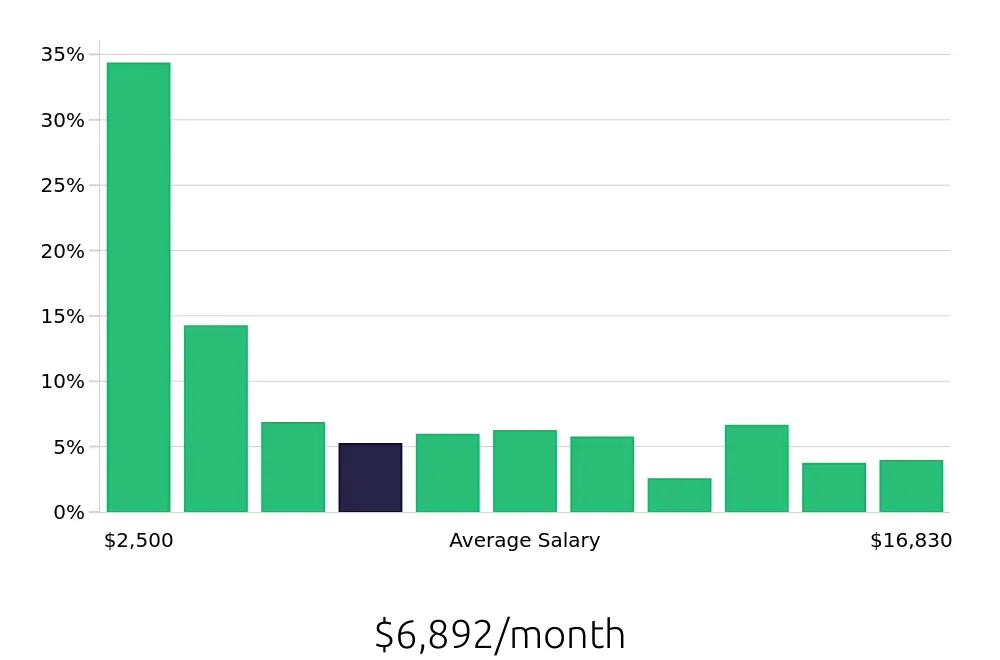


Merrimack, NH, offers a variety of job opportunities with competitive salaries. The average yearly salary is about $82,709. This range supports professionals in many industries. Job seekers can find roles that match their skills and experience.
Different industries in Merrimack offer different salary levels. For example, roles in healthcare and information technology often pay more. Here is a look at the salary distribution:
- 34.35% of jobs pay around $30,000.
- 14.18% of jobs pay about $45,633.
- 6.82% of jobs offer around $61,265.
- 5.17% of jobs are around $76,898.
- 5.92% of jobs pay close to $92,531.
- 6.21% of jobs offer about $108,164.
- 5.67% of jobs pay around $123,796.
- 2.48% of jobs are about $139,429.
- 6.64% of jobs pay close to $155,062.
- 3.66% of jobs offer around $170,695.
- 3.91% of jobs pay about $186,327.
What are the best paying jobs in Merrimack, NH?
-
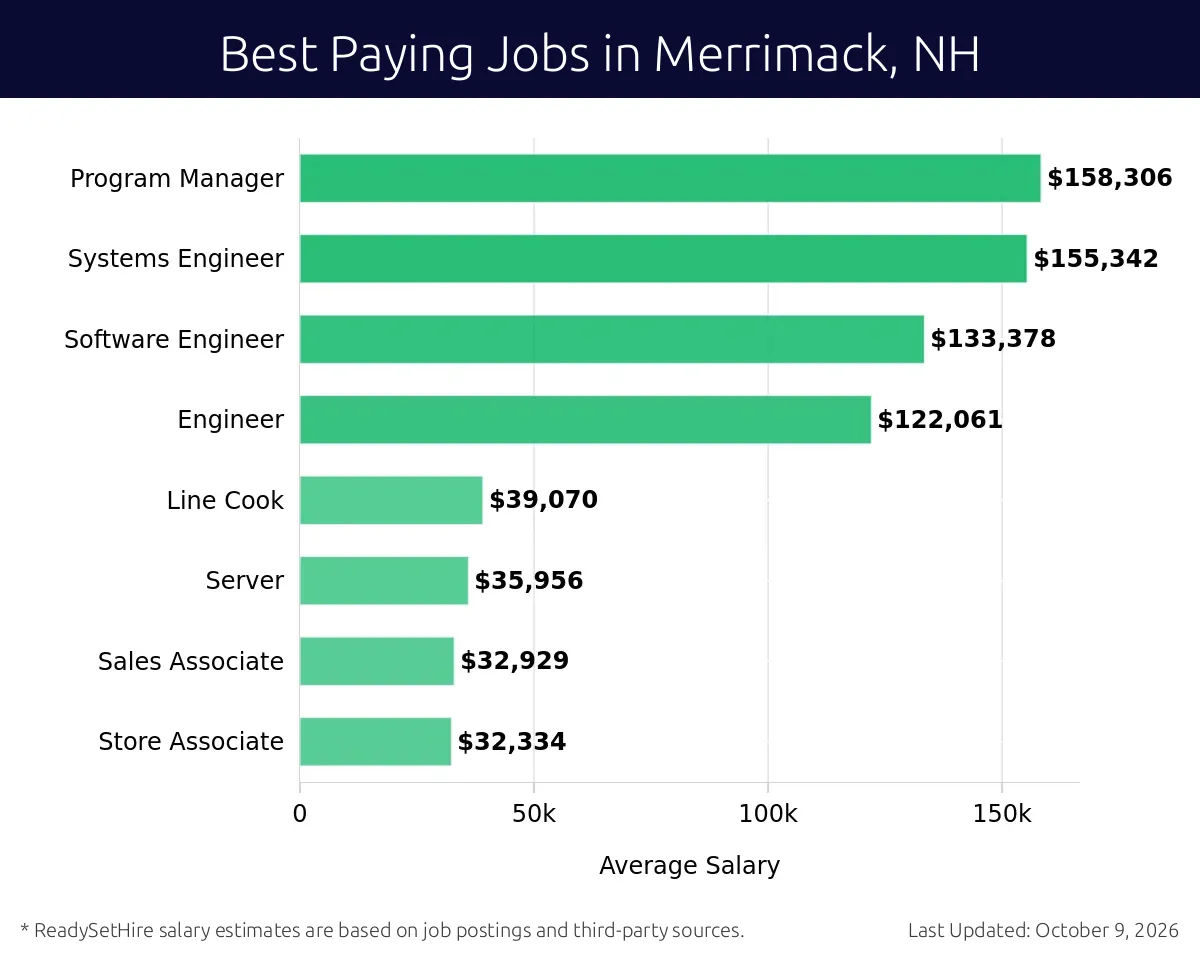
Program Manager
Average Salary: $158,306
Manage projects to ensure they are completed on time and within budget. Work with cross-functional teams to achieve goals. Companies like BAE Systems and BAE Systems Information and Digital Solutions offer opportunities.
Find Program Manager jobs in Merrimack, NH
-
Systems Engineer
Average Salary: $155,342
Design, develop, and maintain IT systems. Ensure systems run smoothly and efficiently. Local firms like BAE Systems Information and Digital Solutions provide these roles.
Find Systems Engineer jobs in Merrimack, NH
-
Software Engineer
Average Salary: $133,378
Develop software applications and systems. Test and debug code. Companies like BAE Systems Information and Digital Solutions are good options for software engineers.
Find Software Engineer jobs in Merrimack, NH
-
Engineer
Average Salary: $122,061
Plan and oversee construction and manufacturing projects. Ensure quality and safety standards are met. BAE Systems and BAE Systems Information and Digital Solutions offer engineering opportunities.
Find Engineer jobs in Merrimack, NH
-
Line Cook
Average Salary: $39,070
Prepare meals quickly and efficiently. Work in fast-paced kitchen environments. Local restaurants provide many line cook positions.
Find Line Cook jobs in Merrimack, NH
-
Server
Average Salary: $35,956
Take orders and serve food and beverages to customers. Ensure a positive dining experience. Many restaurants in Merrimack offer server roles.
Find Server jobs in Merrimack, NH
-
Sales Associate
Average Salary: $32,929
Assist customers with purchases. Provide product information and handle transactions. Retail stores in Merrimack offer these positions.
Find Sales Associate jobs in Merrimack, NH
-
Store Associate
Average Salary: $32,334
Maintain store cleanliness and organization. Help customers find products. Retail stores provide many store associate roles.
Find Store Associate jobs in Merrimack, NH
What are the best paying jobs in Merrimack, NH without a degree?

-
Line Cook
Average Salary: $39,070
Preparing meals in fast-paced settings, Line Cooks work with chefs to prepare fresh dishes. Popular places in the area employ Line Cooks. They focus on producing high-quality food quickly.
Find Line Cook jobs in Merrimack, NH
-
Server
Average Salary: $35,956
Serving guests in various restaurants, Servers take orders and provide excellent service. They are the face of the restaurant, ensuring customers have a pleasant dining experience. Local eateries value skilled Servers.
Find Server jobs in Merrimack, NH
-
Barista
Average Salary: $34,642
Crafting coffee drinks, Baristas work in coffee shops and cafes. They know how to make popular beverages and interact with customers. Popular chains and local coffee shops hire Baristas who can provide a friendly service.
Find Barista jobs in Merrimack, NH
-
Dishwasher
Average Salary: $32,440
Cleaning dishes and kitchen tools, Dishwashers keep the area tidy. They work in restaurants and cafes, ensuring everything is ready for the next service. Reliable Dishwashers are needed to maintain a clean environment.
Find Dishwasher jobs in Merrimack, NH
-
Food Service Aide
Average Salary: $31,100
Helping with kitchen tasks, Food Service Aides assist cooks and other staff. They prepare ingredients, clean up, and help maintain the kitchen. Restaurants and cafes depend on them to keep operations running smoothly.
Find Food Service Aide jobs in Merrimack, NH
Which companies offer the top salaries in Merrimack, NH?
-
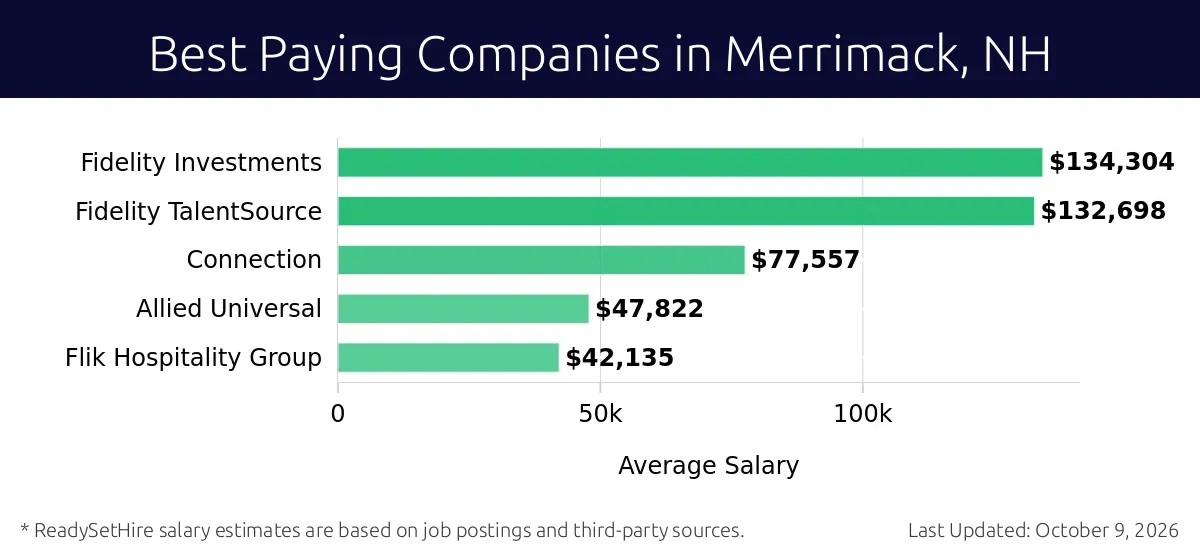
Fidelity Investments
Average Salary: $134,304
Fidelity Investments is a leading financial services firm. It offers a wide range of investment products and services. The company is known for its stability and strong performance.
-
Fidelity TalentSource
Average Salary: $132,698
Fidelity TalentSource specializes in staffing and recruiting services. It is part of Fidelity Investments. The company focuses on finding the right talent for its clients and candidates.
-
Connection
Average Salary: $77,557
Connection is a staffing and recruitment agency. It places professionals in various industries. The company values talent and aims to match the right people with the right jobs.
-
Allied Universal
Average Salary: $47,822
Allied Universal provides security and facility services. It offers a range of services including security guards and janitorial services. The company aims to protect and maintain its clients' properties.
-
Flik Hospitality Group
Average Salary: $42,135
Flik Hospitality Group manages and operates hotels and resorts. It focuses on providing excellent guest experiences. The company values service and strives to create a welcoming environment.
How does the cost of living in Merrimack, NH compare to the national average?
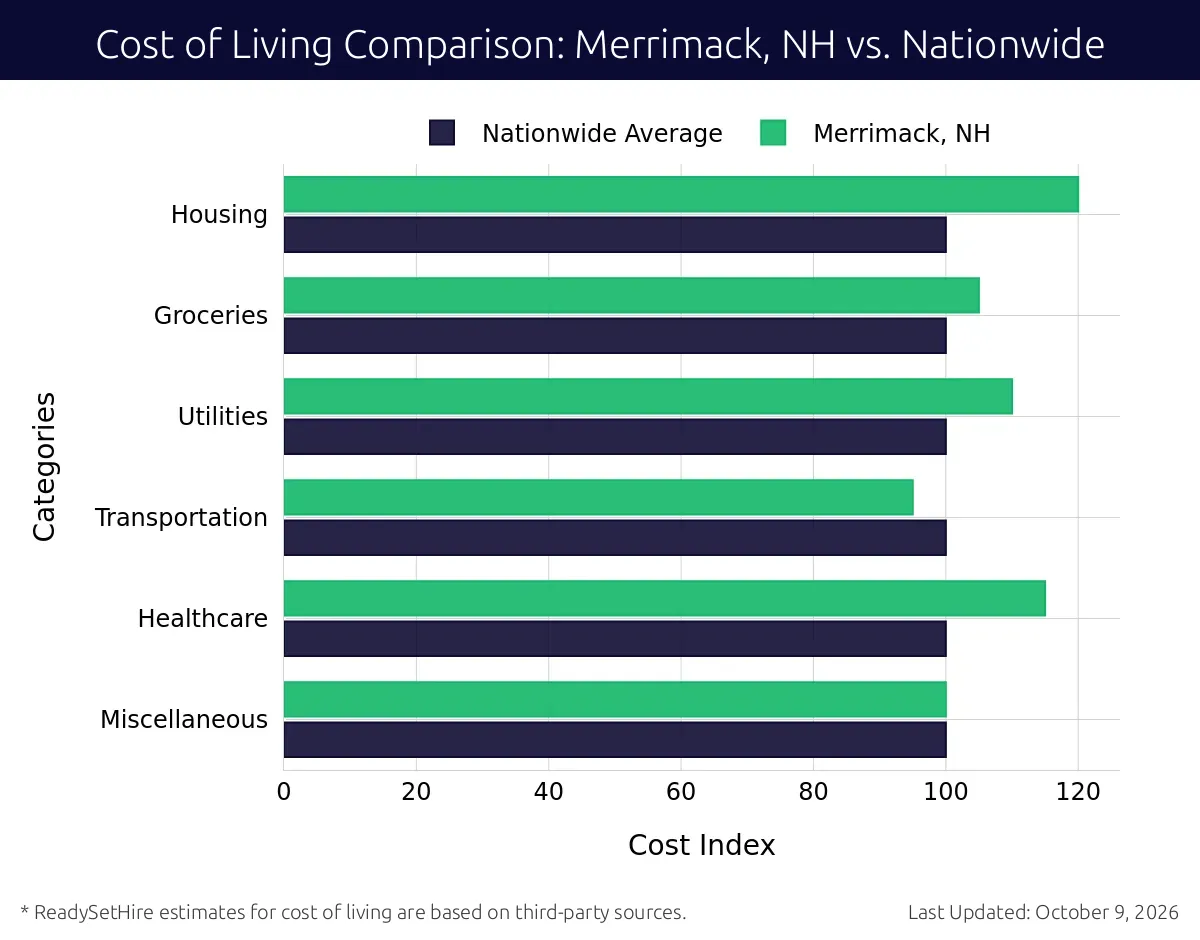
The cost of living in Merrimack, NH, compared to the nationwide average, shows some variation across different categories. Housing costs in Merrimack stand at 120, meaning they are 20% higher than the average. This increase reflects the higher demand for living spaces in the area, as well as potentially higher property values and rental rates. Groceries in Merrimack are slightly above the average, with an index of 105, indicating a 5% increase in grocery expenses compared to the national average.
Utilities in Merrimack also show a higher cost, with an index of 110, reflecting a 10% increase. This could be due to various factors such as local energy prices or service fees. On the flip side, transportation costs are relatively lower, with an index of 95, meaning they are 5% below the national average. Healthcare costs in Merrimack are at 115, which is 15% higher than the average, likely influenced by medical service prices and insurance rates. Miscellaneous expenses in Merrimack match the national average, with an index of 100, suggesting no significant difference in this category.



