What does a Equal Opportunity Specialist do?
An Equal Opportunity Specialist plays a vital role in ensuring fair practices in the workplace. This professional focuses on preventing discrimination and promoting diversity. They work with human resources to create policies that comply with laws and regulations. They also investigate complaints and provide training to employees. By doing so, they help create a workplace where everyone feels valued and respected.
This role involves collaborating with various departments to implement equal opportunity strategies. An Equal Opportunity Specialist gathers data and analyzes trends to identify areas needing improvement. They develop training programs to educate staff about diversity and inclusion. Additionally, they advise management on best practices for hiring and promoting employees. By taking these actions, they contribute to a more equitable workplace culture.
How to become a Equal Opportunity Specialist?
Interested in becoming an Equal Opportunity Specialist? This role involves ensuring fair treatment in the workplace. It is important for creating an inclusive work environment. Follow these steps to pursue this rewarding career.
First, gaining education is crucial. Many employers seek candidates with a bachelor's degree in human resources, business administration, or a related field. This education provides a strong foundation in HR principles and laws.
- Earn a relevant degree. A degree in human resources or a related area offers essential knowledge.
- Gain experience. Seek internships or entry-level HR positions. Experience helps build practical skills.
- Understand equal opportunity laws. Study laws like the Civil Rights Act and the Equal Employment Opportunity Commission guidelines. Knowledge of these laws is vital.
- Develop communication skills. This role requires clear and effective communication. Practice writing and speaking skills to handle workplace issues.
- Network and apply. Connect with professionals in the field. Attend HR conferences and job fairs. Apply for Equal Opportunity Specialist positions when ready.
Following these steps creates a path to becoming an Equal Opportunity Specialist. It helps ensure fairness in the workplace and fosters a positive work environment.
How long does it take to become a Equal Opportunity Specialist?
An Equal Opportunity Specialist plays a key role in ensuring fair treatment at work. To step into this role, one can expect a journey that involves both education and experience. Typically, a bachelor's degree in a related field, such as human resources, business administration, or social sciences, takes about four years. This education covers topics like labor laws, discrimination prevention, and conflict resolution.
After obtaining the necessary degree, gaining experience in the workforce is important. Many employers look for candidates with at least two to three years of experience in human resources or a similar field. This can include internships, part-time jobs, or full-time positions. Certifications, such as those from the Society for Human Resource Management (SHRM), can also boost one’s qualifications. All these steps help build the skills and knowledge needed to succeed as an Equal Opportunity Specialist.
Equal Opportunity Specialist Job Description Sample
The Equal Opportunity Specialist is responsible for ensuring compliance with equal employment opportunity laws and regulations, promoting diversity and inclusion within the organization, and addressing discrimination and harassment issues.
Responsibilities:
- Investigate and resolve complaints of discrimination, harassment, and retaliation in accordance with applicable laws and company policies.
- Conduct training sessions and workshops on equal employment opportunity, diversity, and inclusion for employees and management.
- Develop and implement policies and procedures to promote a diverse and inclusive workplace.
- Assist in the development and monitoring of equal employment opportunity metrics and reports.
- Collaborate with human resources, legal, and other departments to ensure compliance with equal employment opportunity laws and regulations.
Qualifications
- Bachelor's degree in Human Resources, Business Administration, Law, or a related field.
- Minimum of 3-5 years of experience in equal employment opportunity, diversity and inclusion, or a related field.
- Knowledge of equal employment opportunity laws and regulations, including Title VII of the Civil Rights Act, the Americans with Disabilities Act, and the Age Discrimination in Employment Act.
- Strong understanding of diversity and inclusion principles and best practices.
- Excellent communication, interpersonal, and problem-solving skills.
Is becoming a Equal Opportunity Specialist a good career path?
Equal Opportunity Specialists play a key role in ensuring fairness and compliance in the workplace. They investigate complaints of discrimination and promote inclusive practices. This role offers a mix of challenges and rewards for those committed to social justice.
Working as an Equal Opportunity Specialist involves several advantages and challenges. Below are some pros and cons to consider when thinking about this career path.
- Pros:
- Impact: Helping to create fair and inclusive workplaces.
- Variety: Diverse cases and challenges keep the job interesting.
- Skills: Develop strong communication and problem-solving skills.
- Cons:
- Stress: Dealing with difficult and sensitive issues can be tough.
- Pressure: High stakes in ensuring compliance with laws and regulations.
- Demands: Long hours and a need for strong attention to detail.
Choosing this path means embracing a role that values equality and justice, while also preparing for some demanding aspects of the job.
What is the job outlook for a Equal Opportunity Specialist?
Job seekers interested in a role as an Equal Opportunity Specialist will find the job outlook promising. According to the Bureau of Labor Statistics (BLS), there are about 31,000 job openings annually. This number shows steady demand for professionals in this field. Moreover, the BLS predicts a 4.6% growth in job openings from 2022 to 2032, highlighting increasing opportunities in the sector.
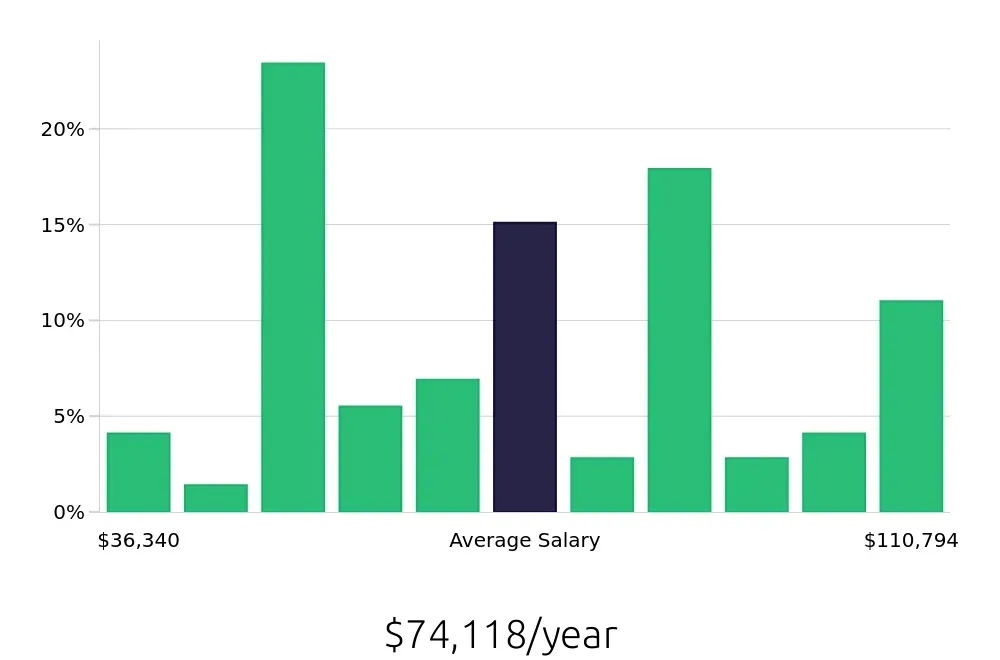
Equal Opportunity Specialists can expect a competitive salary. The BLS reports an average annual compensation of $80,190. This figure reflects the value placed on their work in ensuring fairness and compliance in the workplace. On an hourly basis, the average compensation is $38.55, offering a solid financial incentive for those entering or considering this career path.
These statistics make the Equal Opportunity Specialist role attractive for job seekers. The combination of stable job openings and a strong average salary presents a positive career outlook. This role not only contributes to organizational fairness but also offers a rewarding professional journey.
Currently 9 Equal Opportunity Specialist job openings, nationwide.
Continue to Salaries for Equal Opportunity Specialist