What does a Human Resources Specialist do?
A Human Resources Specialist plays a key role in ensuring a company operates smoothly. This role manages various aspects of human resources, including hiring, training, and employee relations. The specialist works to create a positive work environment by addressing employee concerns and implementing company policies.
The specialist also handles administrative tasks such as maintaining employee records, coordinating benefits programs, and ensuring compliance with labor laws. They work closely with management to develop strategies that support the company's goals. This position requires strong communication skills and the ability to handle sensitive information with discretion.
Key responsibilities include:
- Recruiting and onboarding new employees
- Assisting with employee training and development
- Managing payroll and benefits
- Resolving employee issues and complaints
- Ensuring compliance with employment laws
How to become a Human Resources Specialist?
Becoming a Human Resources Specialist involves a series of strategic steps that can lead to a rewarding career in management and employee relations. This role requires a mix of education, experience, and specialized skills. By following these steps, you can build a strong foundation and advance in the field.
Start with earning a relevant degree. Most employers look for candidates with at least a bachelor’s degree in human resources, business administration, or a related field. Coursework should cover topics such as employment law, organizational behavior, and labor relations. During your studies, gain practical experience through internships or part-time jobs in HR departments. This real-world experience helps you understand HR processes and build a network of contacts.
Next, acquire necessary certifications. Obtaining credentials such as the PHR (Professional in Human Resources) or SPHR (Senior Professional in Human Resources) can boost your resume and demonstrate your commitment to the field. These certifications require passing exams that test your knowledge in various HR areas.
- Earn a relevant degree.
- Gain practical experience.
- Acquire necessary certifications.
- Apply for entry-level positions.
- Continue professional development.
Apply for entry-level HR positions. Look for roles such as HR assistant or HR coordinator. These positions provide hands-on experience and a platform to apply what you've learned in school. Use your resume and certifications to stand out in your applications. Networking can also be valuable in finding job opportunities. Attend industry events, join professional organizations, and connect with HR professionals on LinkedIn.
Continue professional development. The HR field is always changing, with new laws, technologies, and best practices emerging regularly. Stay current by attending workshops, taking additional courses, and reading industry publications. This ongoing learning helps you stay competitive and opens doors to advancement opportunities.
How long does it take to become a Human Resources Specialist?
Pursuing a career as a Human Resources Specialist requires time and dedication. Most people take a few steps to qualify for the role. First, many choose to earn a bachelor's degree in human resources, business, or a related field. This step usually takes about four years. Completing this education provides a strong foundation for HR roles.
After earning a degree, some HR Specialists seek certifications to boost their credentials. Certifications from the Society for Human Resource Management (SHRM) or the HR Certification Institute (HRCI) can take a few months to obtain. These certifications show dedication and knowledge in HR practices. Many HR Specialists also gain experience through internships or entry-level positions in HR departments. This practical experience can take about one to two years. Combining education, certification, and experience typically prepares a professional for a role as an HR Specialist in three to five years.
Human Resources Specialist Job Description Sample
The Human Resources Specialist plays a crucial role in managing various HR functions to support the overall business objectives. This role involves recruiting, onboarding, employee relations, benefits administration, and compliance with employment laws and regulations. The successful candidate will be detail-oriented, organized, and capable of maintaining confidentiality in all HR-related matters.
Responsibilities:
- Assist in the recruitment and selection process, including posting job openings, screening resumes, and coordinating interviews.
- Support the onboarding process for new hires, including orientation and completion of necessary paperwork.
- Maintain and update employee records and HR systems accurately and efficiently.
- Handle employee inquiries regarding policies, benefits, and other HR-related matters.
- Support the development and implementation of HR policies and procedures.
Qualifications
- Bachelor’s degree in Human Resources, Business Administration, or a related field.
- 1-3 years of experience in a Human Resources role.
- Knowledge of employment laws and regulations, including FMLA, ADA, and EEOC.
- Strong organizational and time-management skills.
- Excellent communication and interpersonal skills.
Is becoming a Human Resources Specialist a good career path?
A Human Resources Specialist plays a key role in managing the workforce within an organization. They handle everything from hiring and onboarding to training and performance management. This career demands a mix of interpersonal skills, knowledge of HR laws, and an understanding of business operations. HR specialists ensure that a company's employees are well-managed, happy, and productive.
HR specialists often work in various settings, such as offices, hospitals, schools, or government agencies. They might start as HR assistants, working their way up through experience and education. To succeed, they need to be detail-oriented and have strong communication skills. They must also keep up with changes in HR laws and trends. A bachelor's degree in HR or a related field is often needed, along with some certifications to boost job prospects.
Working as an HR specialist has its benefits and challenges. Consider these points before pursuing this career path:
- Pros:
- Helping employees grow and succeed.
- Working closely with different departments.
- Opportunities for career advancement.
- Cons:
- Dealing with employee conflicts can be stressful.
- Long hours, especially during hiring seasons.
- Frequent changes in HR laws and regulations.
What is the job outlook for a Human Resources Specialist?
The job market for Human Resources Specialists looks promising. The Bureau of Labor Statistics (BLS) reports an average of 84,100 job positions available each year. This trend suggests steady demand for qualified professionals in human resources. Companies need HR specialists to manage hiring, training, and employee relations.
Looking ahead, the BLS forecasts a 5.4% growth in job openings from 2022 to 2032. This steady growth indicates a strong outlook for those entering the field. Economic expansion and business growth are key drivers of this increase. More companies will need HR specialists to support their expanding workforces.
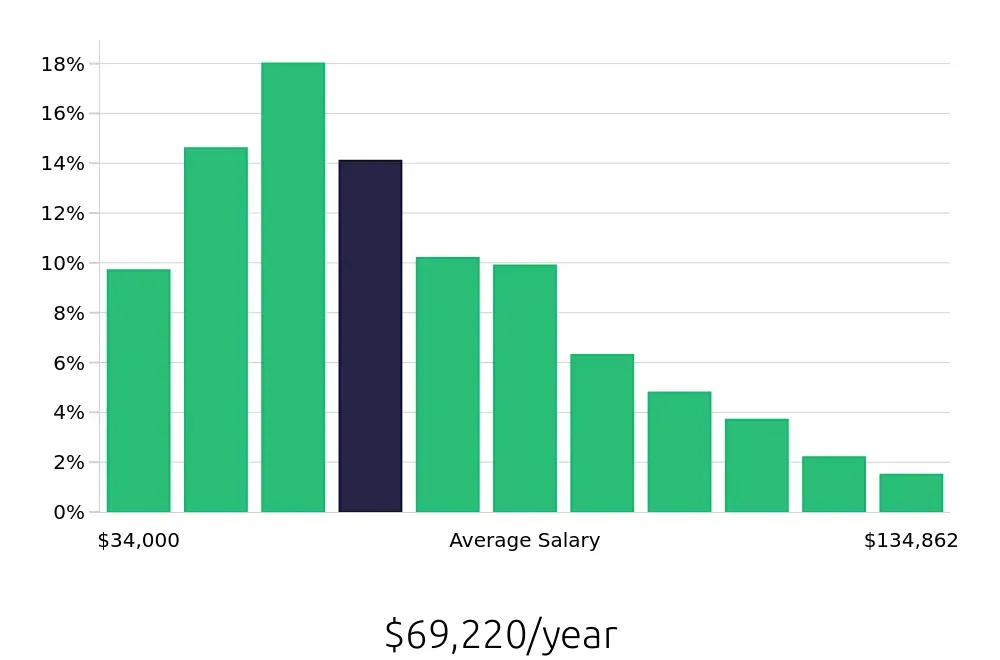
The compensation for Human Resources Specialists is competitive. The BLS reports an average national annual salary of $77,260. Hourly, the average compensation stands at $37.15. These figures reflect the value and importance of HR roles in businesses. With a stable job market and good pay, this career path is attractive to many job seekers.
Currently 469 Human Resources Specialist job openings, nationwide.
Continue to Salaries for Human Resources Specialist