What does a Marketing Strategist do?
A Marketing Strategist plays a crucial role in shaping a company's market presence. This professional develops and implements marketing plans that align with the overall business strategy. They analyze market trends, study consumer behavior, and identify new opportunities for growth. By using data-driven insights, the Marketing Strategist ensures that campaigns are effective and resonate with the target audience.
This role requires creativity and analytical skills. The Marketing Strategist works closely with various departments, including sales, product development, and customer service. They collaborate to create cohesive marketing messages that drive engagement and sales. The Marketing Strategist manages budgets, oversees advertising and promotional efforts, and measures the success of campaigns. They are also responsible for staying current with industry trends and emerging marketing technologies.
Responsibilities of a Marketing Strategist include:
- Conducting market research and analysis
- Creating marketing plans and strategies
- Developing and managing advertising campaigns
- Monitoring and analyzing campaign performance
- Collaborating with other departments to ensure brand consistency
How to become a Marketing Strategist?
Becoming a Marketing Strategist requires a mix of education, experience, and skill development. This career path can lead to exciting opportunities in various industries. To embark on this journey, follow these key steps.
First, obtain a relevant degree. A bachelor's degree in marketing, business, communications, or a related field lays the foundation. This education teaches essential concepts and skills.
- Gain experience. Start with entry-level marketing roles. Work in digital marketing, market research, or advertising. Each position builds valuable skills and knowledge.
- Develop key skills. Sharpen your analytical, creative, and communication abilities. Use data analysis tools to understand market trends. Create compelling marketing campaigns. Practice clear and persuasive communication.
- Network. Connect with professionals in the marketing industry. Attend conferences, join professional groups, and engage on social media. Networking opens doors to job opportunities and mentorship.
- Pursue certifications. Consider certifications in digital marketing, SEO, or social media marketing. These credentials can enhance your resume and validate your expertise.
- Seek advanced roles. Apply for positions that require strategic planning and execution. Roles like Marketing Manager or Brand Manager provide experience in leading marketing initiatives.
By following these steps, a professional can become a successful Marketing Strategist. This career offers the chance to shape brand messages and drive business growth.
How long does it take to become a Marketing Strategist?
The journey to becoming a marketing strategist often begins with foundational education. Most start with a bachelor's degree in marketing, business, or a related field. This academic path usually takes four years. During this time, students learn essential skills like market research, consumer behavior, and strategic planning.
After college, many choose to gain practical experience. This can include internships or entry-level marketing positions. These roles can range from marketing assistants to social media coordinators. Real-world experience helps build a strong portfolio. It can take about two to five years to move up to mid-level positions, such as marketing manager or brand manager. With several years of experience and the right credentials, one can then aim for the role of a marketing strategist.
Marketing Strategist Job Description Sample
We are seeking a talented and strategic Marketing Strategist to join our dynamic marketing team. The ideal candidate will have a passion for crafting compelling marketing campaigns, a deep understanding of market trends, and the ability to drive brand awareness and customer engagement.
Responsibilities:
- Develop and implement comprehensive marketing strategies that align with the company's goals and objectives.
- Conduct market research and analysis to identify trends, customer needs, and competitive landscape.
- Collaborate with cross-functional teams to create integrated marketing campaigns across various channels including digital, social media, email, and traditional media.
- Manage and optimize the marketing budget to ensure efficient use of resources and maximize ROI.
- Monitor and analyze marketing metrics and KPIs to measure the effectiveness of campaigns and make data-driven decisions.
Qualifications
- Bachelor's degree in Marketing, Business, Communications, or a related field.
- Proven experience (5+ years) in a marketing strategist or similar role.
- Demonstrated success in developing and executing marketing strategies that drive business growth.
- Strong analytical skills with the ability to interpret complex data and make strategic decisions.
- Proficiency in digital marketing tools and platforms (e.g., Google Analytics, SEO/SEM, CRM software, social media management tools).
Is becoming a Marketing Strategist a good career path?
A Marketing Strategist shapes a company's brand and message to connect with the target audience. This role requires a mix of creativity and analytical skills. Marketing Strategists develop campaigns, analyze data, and adjust strategies to meet goals. They work with other teams to ensure that marketing efforts align with the company's objectives.
The role offers many rewards. Marketing Strategists enjoy working on diverse projects that keep the work interesting. They can see the direct impact of their ideas on a company's success. Collaboration with different departments allows them to learn and grow. However, it also comes with challenges. Marketing Strategists often work under tight deadlines and high pressure. The job can be unpredictable, with rapidly changing trends. Balancing creativity and data analysis requires constant learning and adaptation.
Here are some pros and cons to consider:
- Pros:
- Creativity: Engage in innovative projects
- Impact: See the direct effect of your work
- Collaboration: Work with different teams
- Variety: Experience diverse tasks and projects
- Cons:
- Pressure: Work under tight deadlines
- Uncertainty: Face rapidly changing trends
- Complexity: Balance creative and analytical skills
What is the job outlook for a Marketing Strategist?
The career outlook for Marketing Strategists is strong and growing. The Bureau of Labor Statistics (BLS) reports an average of 94,600 job openings per year. This means plenty of opportunities for job seekers. With a projected growth of 13.4% from 2022 to 2032, the field continues to expand. This growth shows increasing demand for skilled marketing strategists in various industries.
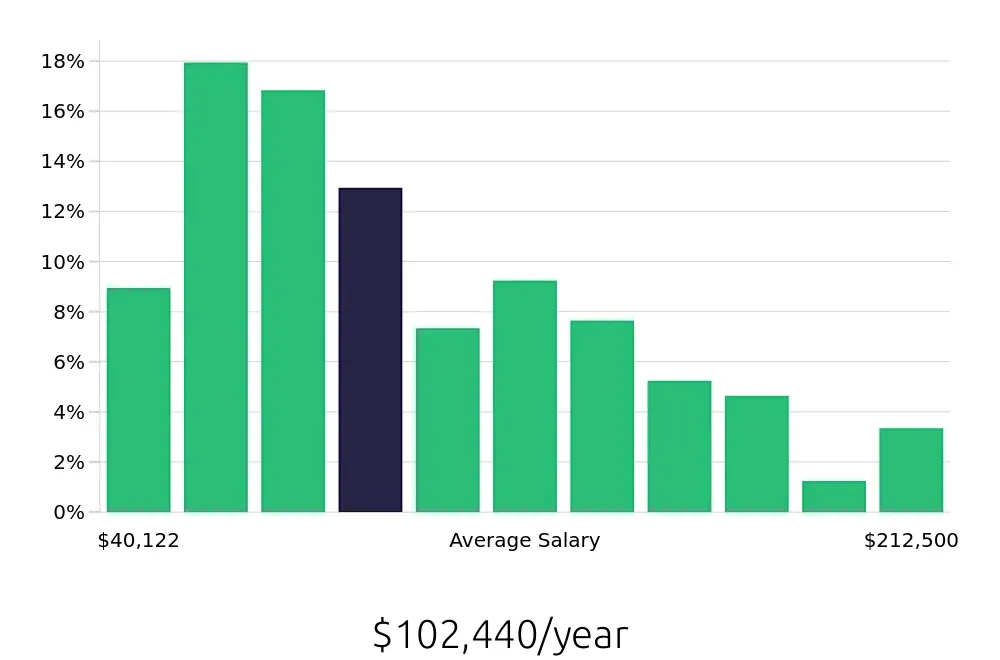
Marketing Strategists earn a competitive salary. The average annual compensation stands at $83,190, according to BLS data. This figure highlights the value of their expertise in driving business success. On an hourly basis, the average compensation is $40.00. This income reflects the high demand for professionals who can create and implement effective marketing strategies. For those entering this field, this salary offers a promising financial reward.
Job seekers can look forward to a stable and rewarding career in marketing strategy. The combination of ample job positions, positive growth, and strong compensation makes this a great field to explore. Marketing Strategists will find themselves in high demand as companies seek to connect with consumers and drive growth. This career path offers both professional fulfillment and financial benefits.
Currently 94 Marketing Strategist job openings, nationwide.
Continue to Salaries for Marketing Strategist