What does a Payroll Coordinator do?
A Payroll Coordinator plays a crucial role in ensuring that employees receive their wages on time. This position involves managing the payroll process from start to finish. The coordinator collects and verifies employee time and attendance records. They calculate wages, deductions, and taxes accurately. The coordinator also processes payroll payments and maintains records. This role requires attention to detail and strong organizational skills.
The Payroll Coordinator works closely with the HR department and finance team. They ensure that payroll data aligns with company policies and legal requirements. This position often involves using payroll software and other tools to streamline the process. The coordinator may also handle payroll-related inquiries from employees. They must stay updated on changes in tax laws and payroll regulations. This role is essential for maintaining employee satisfaction and trust.
How to become a Payroll Coordinator?
Becoming a Payroll Coordinator involves a clear path of education, skills, and experience. This role is crucial in managing employee payments and ensuring compliance with tax laws. The journey to this position can be straightforward with the right steps.
First, obtaining a high school diploma or equivalent is essential. This forms the foundation for any further education or training. Next, gaining relevant experience through internships or entry-level jobs in finance or human resources can be beneficial. Developing skills in accounting software and understanding payroll processes is important. Certifications in payroll management can enhance qualifications. Finally, networking with professionals in the field and applying for positions can lead to securing a job as a Payroll Coordinator.
Here are the steps to become a Payroll Coordinator:
- Complete a high school diploma or GED.
- Gain experience through internships or entry-level jobs.
- Learn to use payroll software and understand payroll processes.
- Consider obtaining certifications in payroll management.
- Network with professionals and apply for Payroll Coordinator positions.
How long does it take to become a Payroll Coordinator?
The journey to becoming a Payroll Coordinator can vary. Most people find they need a mix of education and experience. Some start with a high school diploma or GED. They may then take courses in accounting or business. Others might have a college degree in a related field. This education helps them understand the basics of payroll and accounting.
Experience plays a big role too. Many employers look for candidates who have worked in an office setting. They might have experience in administrative roles, bookkeeping, or customer service. Some people start as an intern or assistant to gain the needed skills. This hands-on experience is very valuable. It helps new Payroll Coordinators learn the specific tasks and responsibilities of the job. With the right combination of education and experience, someone can become a Payroll Coordinator in one to three years.
Payroll Coordinator Job Description Sample
The Payroll Coordinator is responsible for managing the payroll process, ensuring accurate and timely payment of employees. This role involves processing payroll, maintaining employee records, and providing support for payroll-related inquiries.
Responsibilities:
- Process payroll accurately and on time for all employees.
- Maintain and update employee records, including personal information, tax forms, and direct deposit details.
- Ensure compliance with federal, state, and local payroll laws and regulations.
- Prepare and distribute payroll reports and summaries to management.
- Handle payroll-related inquiries and resolve employee issues.
Qualifications
- Bachelor's degree in Accounting, Finance, or a related field.
- Proven experience as a Payroll Coordinator or similar role.
- Strong knowledge of payroll processes and regulations.
- Proficiency in payroll software and Microsoft Office Suite.
- Excellent attention to detail and accuracy.
Is becoming a Payroll Coordinator a good career path?
A Payroll Coordinator plays a key role in managing employee payments. This role involves processing payroll, ensuring accuracy, and handling related tasks. It is a position that requires attention to detail and strong organizational skills. Companies in various industries need Payroll Coordinators to ensure employees receive their wages on time.
Working as a Payroll Coordinator offers several benefits. It provides a stable job with consistent hours. This role often includes benefits like health insurance and paid time off. Payroll Coordinators also gain valuable experience in financial management and compliance. However, there are some challenges to consider. The job can be repetitive and requires careful attention to detail. It may also involve working under tight deadlines, especially at the end of the month or pay period. Understanding these pros and cons can help job seekers decide if this career is right for them.
Here are some pros and cons of being a Payroll Coordinator:
- Pros:
- Stable job with regular hours
- Opportunity to gain experience in financial management
- Access to benefits like health insurance and paid time off
- Cons:
- Job can be repetitive and require attention to detail
- May involve working under tight deadlines
- Limited opportunities for advancement without additional education or experience
What is the job outlook for a Payroll Coordinator?
The job outlook for Payroll Coordinators is strong and promising. Job seekers can expect to see an average of 69,600 positions available each year. The Bureau of Labor Statistics (BLS) predicts a 16% increase in job openings from 2022 to 2032. This growth highlights the demand for skilled payroll professionals. With more companies expanding and needing to manage payroll efficiently, this role is becoming increasingly important.
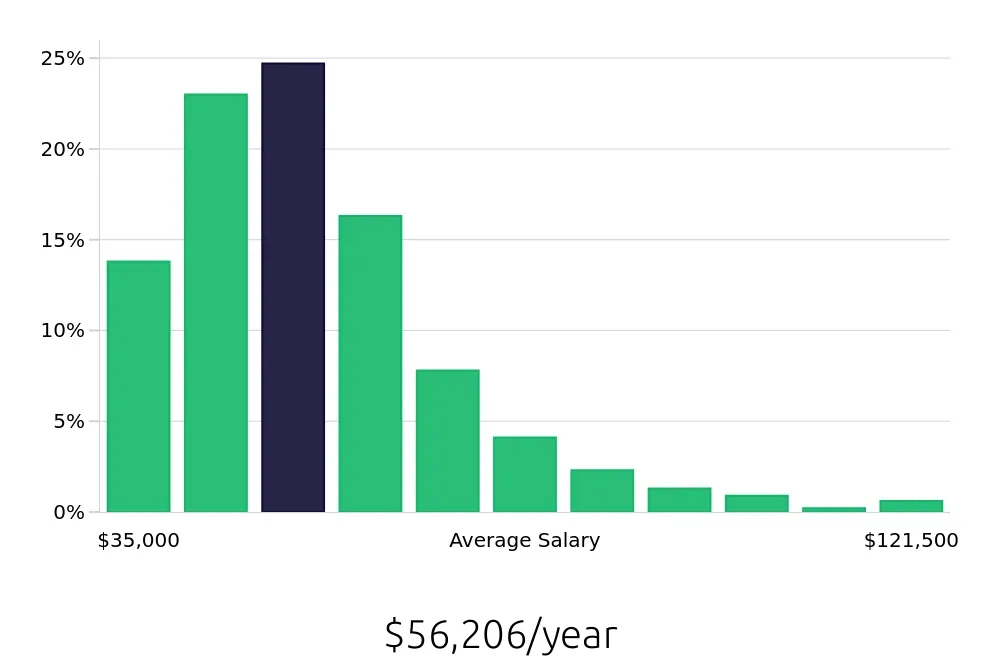
Payroll Coordinators enjoy a competitive salary. The average annual compensation stands at $174,820, according to the BLS. This figure reflects the value employers place on accurate and timely payroll processing. Hourly compensation averages $84.05, offering a stable income for those in the field. This attractive pay package makes the role appealing to many job seekers.
The combination of steady job availability and strong compensation makes the Payroll Coordinator role a great choice for job seekers. With a positive job outlook and competitive pay, this career path offers both stability and growth potential. For those looking to enter or advance in this field, the future looks bright.
Currently 224 Payroll Coordinator job openings, nationwide.
Continue to Salaries for Payroll Coordinator