What does a Procurement Manager do?
A Procurement Manager plays a crucial role in the supply chain of a company. They are responsible for sourcing and purchasing goods and services. They work with suppliers to negotiate terms and prices. They ensure the company gets the best deals. They also manage contracts and keep detailed records of all procurement activities. This role requires strong negotiation skills and attention to detail.
In this position, the manager must analyze market trends and forecast future needs. They often work closely with other departments to understand their requirements. They must also ensure compliance with all legal and regulatory requirements. The Procurement Manager coordinates with internal teams to ensure timely delivery of goods and services. They aim to maintain a steady supply of materials while controlling costs. This role is vital for the smooth operation of any business.
How to become a Procurement Manager?
Becoming a Procurement Manager can open doors to exciting career opportunities. This role involves sourcing and purchasing goods and services for a company. It requires a blend of strategic thinking, negotiation skills, and attention to detail. Here is a clear guide to help navigate the journey.
First, gaining relevant education is essential. Most employers prefer a bachelor’s degree in business, supply chain management, or a related field. Some candidates may also benefit from a master’s degree. Education provides the foundational knowledge needed for the role. Second, gaining experience is crucial. Working in roles such as a buyer, supply chain analyst, or in logistics can provide valuable insights. This hands-on experience helps in understanding the procurement process deeply.
Next, developing key skills is important. Procurement Managers need strong negotiation and communication skills. They should also be adept at problem-solving and critical thinking. Familiarity with procurement software and tools is also necessary. Networking within the industry can help in learning from experienced professionals. Volunteering for projects that involve procurement can also enhance skills and visibility. Lastly, obtaining relevant certifications can boost career prospects. Certifications such as Certified Purchasing Manager (CPM) or Certified Professional in Supply Management (CPSM) are highly regarded.
- Obtain relevant education in business or supply chain.
- Gain experience through roles in procurement or supply chain.
- Develop key skills like negotiation and problem-solving.
- Network with professionals in the procurement field.
- Obtain certifications to enhance credibility.
How long does it take to become a Procurement Manager?
Many professionals seek a career in procurement management due to its demand and growth opportunities. The time it takes to achieve this role varies. Typically, candidates need a bachelor's degree in business, supply chain, or a related field. This initial step usually takes four years. Some may choose to gain experience through internships or entry-level positions while in college.
After completing a degree, gaining relevant work experience becomes crucial. Most entry-level positions require at least two to four years of experience in procurement, supply chain, or related roles. Professionals often start as procurement assistants or analysts. They learn the basics of sourcing, negotiation, and supplier management. With dedication and skill, they can move up to more senior positions. Experienced procurement managers typically have five to ten years in the field. Continued education and professional certifications can also speed up the journey.
Certifications can enhance career prospects and help secure a promotion. Organizations like the Chartered Institute of Procurement & Supply (CIPS) offer valuable credentials. These certifications often require several years of experience and passing an exam. Holding a certification can make a candidate more competitive in the job market. It can also lead to higher-level roles more quickly.
Procurement Manager Job Description Sample
A Procurement Manager is responsible for overseeing the procurement process of goods and services for a company. They work to secure cost-effective, high-quality products and services, manage supplier relationships, and ensure compliance with procurement policies and procedures.
Responsibilities:
- Develop and implement procurement strategies, policies, and procedures.
- Manage the procurement process, including sourcing, selection, and negotiation with suppliers.
- Conduct market research and analysis to identify potential suppliers and market trends.
- Evaluate and negotiate contracts with suppliers to ensure favorable terms and conditions.
- Ensure compliance with procurement policies, regulations, and company standards.
Qualifications
- Bachelor's degree in Business Administration, Supply Chain Management, or a related field.
- Minimum of 5-7 years of experience in procurement or supply chain management.
- Professional certifications such as CIPS, CPM, or equivalent are preferred.
- Strong knowledge of procurement processes, regulations, and best practices.
- Excellent negotiation, communication, and interpersonal skills.
Is becoming a Procurement Manager a good career path?
A Procurement Manager oversees the acquisition of goods and services for an organization. This role involves negotiating with suppliers, managing contracts, and ensuring quality and cost-effectiveness. Companies in manufacturing, retail, and healthcare often need Procurement Managers. They play a key part in helping a company run smoothly and save money.
Being a Procurement Manager comes with several advantages. The role offers a mix of strategic planning and problem-solving. Managers build relationships with suppliers, enhancing communication skills. They also contribute to cost savings, which benefits the company and their career. However, there are challenges to consider. Procurement Managers often face tight deadlines and high-pressure situations. Balancing supplier relationships and company needs can be complex. The job may also require frequent travel, which can be demanding.
Below are some pros and cons of being a Procurement Manager:
- Pros:
- Strong strategic and analytical skills.
- Opportunity for cost savings and efficiency.
- Networking and relationship-building.
- Cons:
- High pressure and tight deadlines.
- Frequent travel may be required.
- Balancing supplier needs with company goals can be complex.
What is the job outlook for a Procurement Manager?
Procurement managers play a crucial role in the supply chain, ensuring that companies get the best deals on goods and services. The job outlook for procurement managers is strong, with an average of 6,100 positions opening each year. This means steady opportunities for those entering or seeking to change roles in this field.
According to the Bureau of Labor Statistics (BLS), the number of procurement manager positions is expected to grow by 4.4% from 2022 to 2032. This growth is due to the increasing complexity of supply chains and the need for skilled professionals to manage them effectively. Job seekers can look forward to a stable and growing field with many opportunities for advancement.
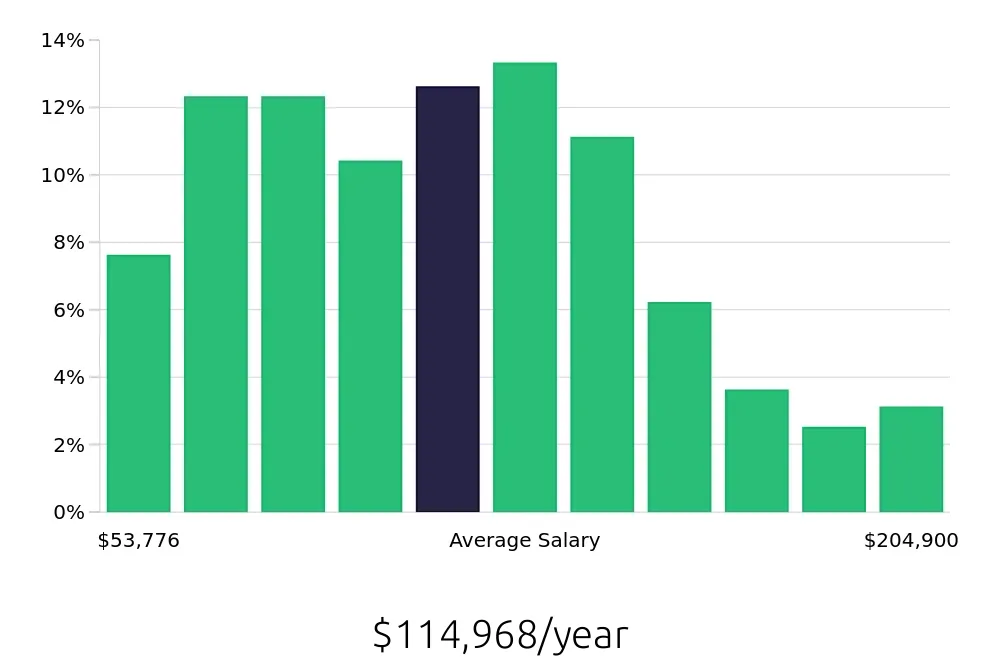
Procurement managers enjoy a competitive salary, with an average national annual compensation of $146,710, according to the BLS. On an hourly basis, the average compensation is $70.53. This salary reflects the high level of responsibility and skill required for the role, making it an attractive career choice for many professionals.
Currently 650 Procurement Manager job openings, nationwide.
Continue to Salaries for Procurement Manager