What does a Salesperson do?
A salesperson drives revenue by promoting and selling products or services. They interact with customers, understand their needs, and offer suitable solutions. Salespeople work with a team to develop strategies to reach potential clients. They make presentations, negotiate deals, and close sales to meet targets. A salesperson’s role is crucial in ensuring the company achieves its sales goals.
Responsibilities of a salesperson include identifying potential clients through research and networking. They prepare sales pitches and product presentations to show the value of what they offer. Salespeople often travel to meet with clients, attend trade shows, and engage with industry events. They track sales activities and report on performance to their managers. Communication skills, persistence, and a friendly demeanor are key traits for success in this role. A salesperson plays a dynamic part in the growth and success of a business.
How to become a Salesperson?
Becoming a salesperson involves a series of steps that lead to a rewarding career in sales. This journey requires dedication, skill development, and a strategic approach to entering the field. By following these steps, one can position themselves for success in sales.
First, gaining the necessary education is essential. Many sales roles require at least a high school diploma. Some employers prefer a bachelor’s degree in business or a related field. Education provides a foundation in business principles, communication, and customer service. This knowledge is vital for understanding the industry and for effective sales techniques.
- Get the right education: Complete high school or obtain a college degree in a relevant field.
- Develop key skills: Learn to communicate well, understand customers, and close deals.
- Gain experience: Start with internships, entry-level jobs, or freelance sales work to build practical skills.
- Network: Connect with professionals in the sales industry through events, online platforms, and groups.
- Apply for sales positions: Use your education and experience to find and apply for sales roles.
Second, developing key skills is crucial. Salespeople need strong communication skills, the ability to understand customer needs, and the determination to close deals. These skills can be developed through education, internships, and practice in real sales situations. They form the core of a salesperson’s toolkit and are essential for success.
Third, gaining experience is an important step. Start with internships, entry-level positions, or freelance sales work. This hands-on experience allows one to apply what they have learned and gain practical skills. Experience builds confidence and provides insights into the sales process.
How long does it take to become a Salesperson?
The path to becoming a salesperson can vary based on several factors. Many find success with a bachelor's degree in business or a related field. This typically takes four years to complete. Others may start with an associate degree, which usually takes two years. Some people enter the field with just a high school diploma and gain experience through entry-level positions. Experience and education together shape the journey. Companies may also offer on-the-job training, which adds valuable skills.
In many cases, a salesperson needs to develop certain skills before entering the field. These include communication, negotiation, and relationship-building skills. Internships and entry-level jobs help build these skills. Networking and sales workshops also play an important role. It often takes a combination of formal education and practical experience to become a successful salesperson. On average, this journey can take between two to four years. Dedication and continuous learning help one succeed in this dynamic career.
Salesperson Job Description Sample
We are seeking an energetic and results-driven Salesperson to join our growing team. The successful candidate will be responsible for driving sales growth, building and maintaining client relationships, and achieving sales targets.
Responsibilities:
- Identify and pursue new sales opportunities, including new markets, growth areas, trends, customers, products, and services.
- Build and maintain strong relationships with customers to ensure retention and drive sales growth.
- Develop and implement sales strategies to achieve and exceed sales targets.
- Collaborate with internal teams, including marketing and product development, to ensure effective product positioning and sales support.
- Prepare and deliver sales presentations and proposals to prospective clients.
Qualifications
- Bachelor’s degree in Business, Marketing, or a related field.
- Proven sales experience in a similar role.
- Strong knowledge of sales and marketing principles and best practices.
- Excellent communication, negotiation, and interpersonal skills.
- Ability to work independently and as part of a team.
Is becoming a Salesperson a good career path?
Sales jobs offer a dynamic career path filled with opportunities to connect with diverse individuals and industries. Salespeople engage with customers, understanding their needs and providing solutions that meet those needs. This role thrives on communication skills, persuasion, and adaptability. Sales positions can be found across various sectors, from tech to retail, making it a versatile career choice.
A career in sales has its ups and downs. On the positive side, salespeople enjoy the chance to earn commissions, leading to potentially high earnings. Meeting sales targets can bring a sense of achievement and motivation. Networking with a wide range of people can lead to valuable connections and future opportunities. However, the job requires consistent effort and persistence, which can be demanding. Salespeople often face rejection, which can be challenging to handle. The pressure to meet quotas may lead to stress, and the job can sometimes feel repetitive.
Considering a career in sales involves weighing these pros and cons. It can be a rewarding path for those who enjoy interacting with people and achieving goals.
Here are some pros and cons to consider:
- Pros:
- Potential for high earnings through commissions.
- Opportunity to develop strong communication skills.
- Diverse career opportunities across various industries.
- Ability to work independently and set personal goals.
- Cons:
- Facing rejection can be tough to handle.
- Pressure to meet sales targets can lead to stress.
- The job may feel repetitive at times.
- Requires consistent effort and persistence.
What is the job outlook for a Salesperson?
Job seekers looking to enter the sales field will find the job outlook encouraging. The Bureau of Labor Statistics (BLS) reports an average of 77,100 job positions opening for salespersons each year. This figure indicates a consistent demand for skilled professionals in this sector. With steady openings, job seekers have numerous opportunities to explore and apply for.
Another positive sign for those considering a career in sales is the projected job growth. The BLS forecasts a 2% increase in job openings from 2022 to 2032. This modest growth suggests that the demand for sales professionals will remain stable. Job seekers will find a relatively secure environment with opportunities to grow and advance in their careers.
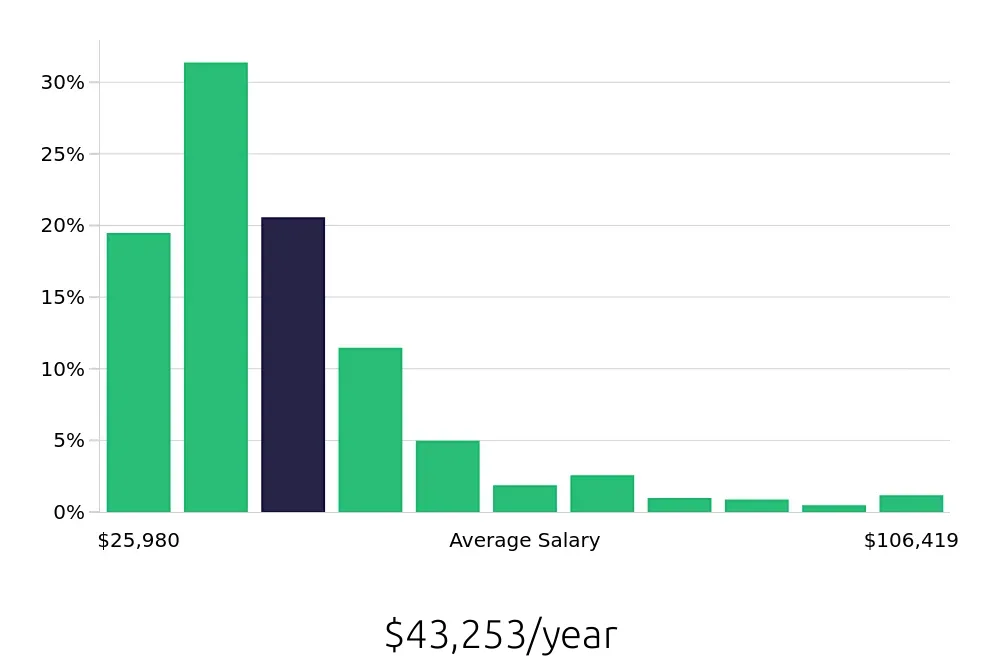
In terms of compensation, salespersons can expect a rewarding income. According to the BLS, the average national annual salary stands at $41,410. On an hourly basis, the average compensation is $19.91. These figures reflect the value placed on sales professionals in the job market. Job seekers aiming for a stable and well-paying career will find the sales field quite attractive. For more detailed data, visit the BLS website.
Currently 4,335 Salesperson job openings, nationwide.
Continue to Salaries for Salesperson