What does a Support Specialist do?
A Support Specialist plays a crucial role in ensuring customer satisfaction. They handle inquiries, complaints, and issues related to products or services. Support Specialists communicate with customers through various channels, such as phone, email, and chat. They aim to resolve problems quickly and effectively. By providing accurate information, they help customers make the most of their products or services.
This role requires strong communication skills and a positive attitude. Support Specialists must be patient and empathetic when dealing with customers. They often need to explain technical details in simple terms. Attention to detail is important, as they must understand and address specific issues. Additionally, they should be able to multitask and prioritize different tasks to meet customer needs efficiently. Their goal is to enhance the customer experience and maintain a high level of satisfaction.
How to become a Support Specialist?
Becoming a Support Specialist is a rewarding career choice. This role provides the chance to help others solve their problems and work in a dynamic environment. With the right steps, anyone can pursue this career path and achieve success.
Follow these steps to embark on a career as a Support Specialist:
- Get a High School Diploma or Equivalent: Most employers require at least a high school diploma. A GED is also acceptable.
- Gain Relevant Experience: Look for jobs or internships that involve customer service or technical support. This experience will help you learn the skills needed.
- Learn Basic Computer Skills: Understanding computers and software is key. Take courses or use online resources to build your skills.
- Get Certified: Consider certifications like CompTIA A+ or Microsoft Certified: Windows 10. These show your knowledge and can make you more attractive to employers.
- Apply for Jobs: Start applying for Support Specialist positions. Tailor your resume and cover letter to each job.
By following these steps, one can successfully become a Support Specialist. This path involves education, experience, and preparation. It leads to a fulfilling career helping others.
How long does it take to become a Support Specialist?
The path to becoming a Support Specialist can vary based on several factors. Typically, it requires some formal education and hands-on experience. Many start with a high school diploma or equivalent. Some choose to pursue a bachelor’s degree in fields like computer science or information technology. However, this is not always necessary.
In many cases, job training programs and certifications can be more beneficial. These programs often provide practical skills needed for the job. Companies may offer on-the-job training for those who lack prior experience. Certifications from recognized organizations can boost a resume. These include CompTIA A+, Cisco CCNA, or Microsoft Certified: Azure Support Engineer for Operations. Completing these steps usually takes between a few months to a year or more. This ensures candidates have the right skills to start their career as a Support Specialist.
Support Specialist Job Description Sample
We are seeking a dedicated Support Specialist to provide exceptional customer service and technical support to our clients. The ideal candidate will have strong problem-solving skills, excellent communication abilities, and a passion for helping others.
Responsibilities:
- Respond to customer inquiries via phone, email, and chat.
- Diagnose and resolve technical issues promptly and efficiently.
- Document customer interactions and resolutions in the support system.
- Collaborate with the technical team to escalate and resolve complex issues.
- Provide training and guidance to customers on product usage.
Qualifications
- Proven experience in a customer support or technical support role.
- Strong knowledge of customer service principles and practices.
- Proficiency in using CRM and support ticketing systems.
- Excellent communication and interpersonal skills.
- Ability to troubleshoot and resolve technical issues effectively.
Is becoming a Support Specialist a good career path?
A career as a Support Specialist offers a fulfilling path for those interested in customer service and problem-solving. This role requires strong communication skills and a keen ability to understand and resolve technical issues. Support Specialists often work in a fast-paced environment, assisting clients with a range of inquiries and challenges. The role can be both challenging and rewarding, as it provides opportunities to make a significant impact on customer satisfaction.
The nature of the job means Support Specialists often interact with a diverse set of issues each day. This variety can keep the work interesting and engaging. In many organizations, Support Specialists can advance to higher roles, such as Team Leader or Manager, offering clear career progression. However, it is essential to consider the demands of this role, which can include long hours and dealing with challenging situations. Balancing these factors is key to understanding whether this career path suits you.
Here are some pros and cons to consider:
- Pros:
- Opportunities for career advancement
- Diverse range of tasks and issues
- Skills development in communication and problem-solving
- Potential for high job satisfaction through customer interaction
These positives make the role of a Support Specialist attractive to many. However, it is equally important to weigh the cons:
- Cons:
- Potential for long hours and high-stress situations
- Frequent need to handle difficult customers
- Possibility of repetitive tasks
- Varied working hours, including evenings and weekends
What is the job outlook for a Support Specialist?
Job seekers interested in a career as a Support Specialist have good news. The Bureau of Labor Statistics (BLS) reports around 66,500 job openings each year. This role often supports businesses and customers with technical issues. With a job openings percent change of 5.4% from 2022 to 2032, the demand is steadily growing. This is a promising sign for those looking to enter or transition into this field.
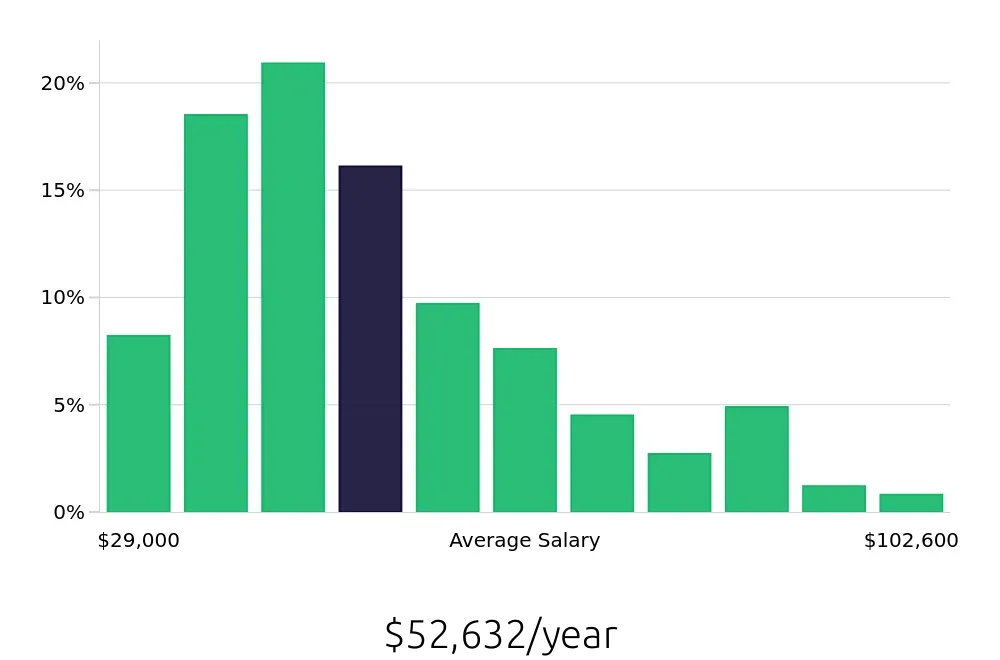
The average national annual compensation for Support Specialists is around $66,450. This figure reflects the value placed on the skills and knowledge required for the job. Hourly compensation stands at approximately $31.95. These numbers indicate a stable and rewarding career path. They also suggest a good balance between job responsibilities and remuneration.
Support Specialists can expect a wide range of job opportunities. This includes roles in various industries such as IT, customer service, and healthcare. Companies continue to need skilled individuals to handle technical support and customer inquiries. For job seekers, this means a variety of roles and the potential for career advancement. The stable outlook and decent compensation make this an attractive career choice.
Currently 2,571 Support Specialist job openings, nationwide.
Continue to Salaries for Support Specialist